Therapy · Brain health technique
Intermittent Hypoxia Training (IHT)
Evidence grade: Experimental
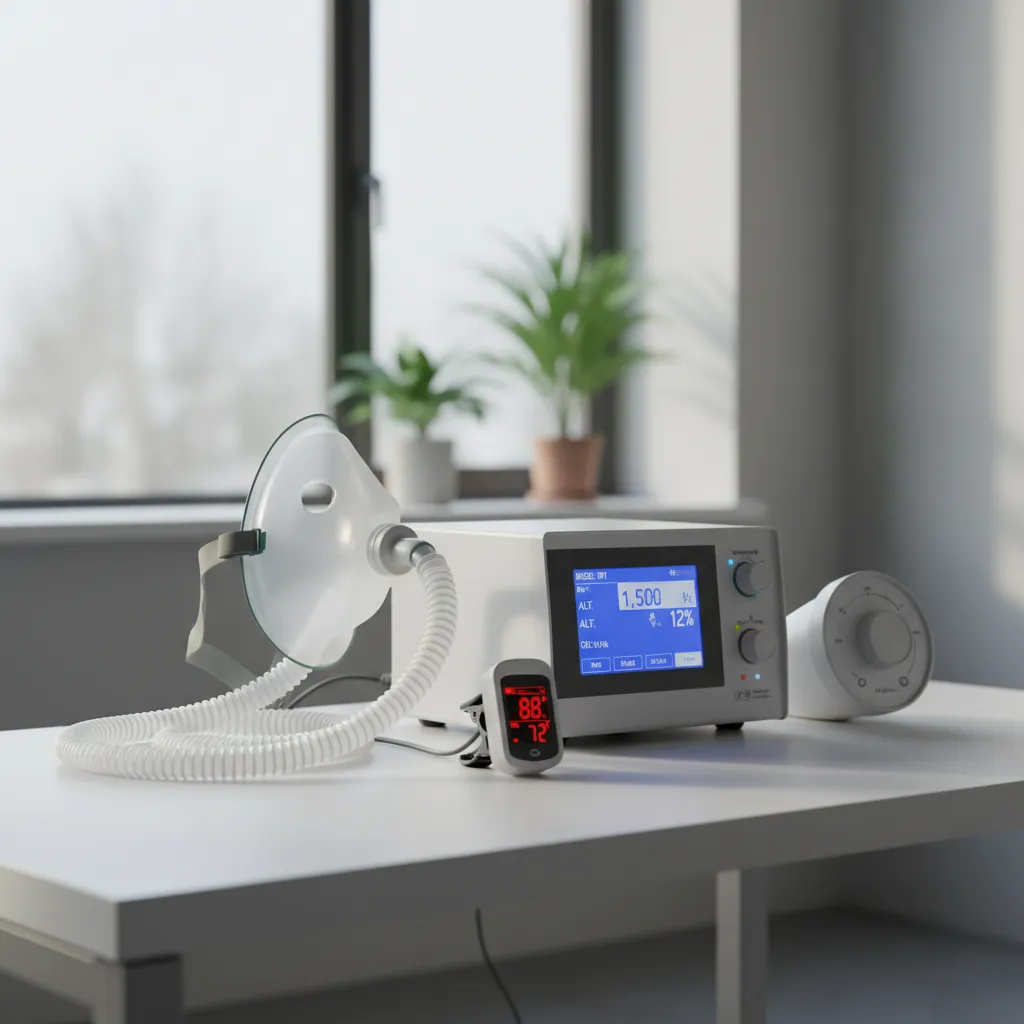
Controlled exposure to short periods of reduced oxygen (hypoxia) alternating with normal breathing to stimulate vascular and mitochondrial adaptation.
- Practice
- Therapy
- Principle
- Treatment
- Tactic
- Physiologic & Environmental
- Evidence grade
- Experimental
- Strength of evidence
- Low
How to practice Intermittent Hypoxia Training (IHT)
Perform only under professional supervision with pulse oximetry and medical screening. Typical protocols involve 5–7 cycles of 1–5 minutes of hypoxia (SpO₂ 80–88%) followed by normoxia, 2–4 sessions per week. Avoid if you have cardiovascular, pulmonary, or sleep-related breathing disorders. Evidence promising but not yet ready for unsupervised or home use.
The evidence behind Intermittent Hypoxia Training (IHT)
Limited but growing evidence shows IHT can improve cardiorespiratory fitness, cerebral blood flow, and mitochondrial signaling. Small studies report cognitive and mood benefits in older adults, but protocols vary widely. Mechanism: mild hypoxia upregulates HIF-1α and VEGF, promoting angiogenesis and metabolic flexibility. Safety and efficacy for brain health remain under investigation.
More Therapy techniques
Take control of your brain health
BetterBrain gives you a personalized protocol of techniques like these, backed by science and tailored to you.