Therapy · Brain health technique
Neuro-optometric / Vision Therapy
Evidence grade: Context Dependent
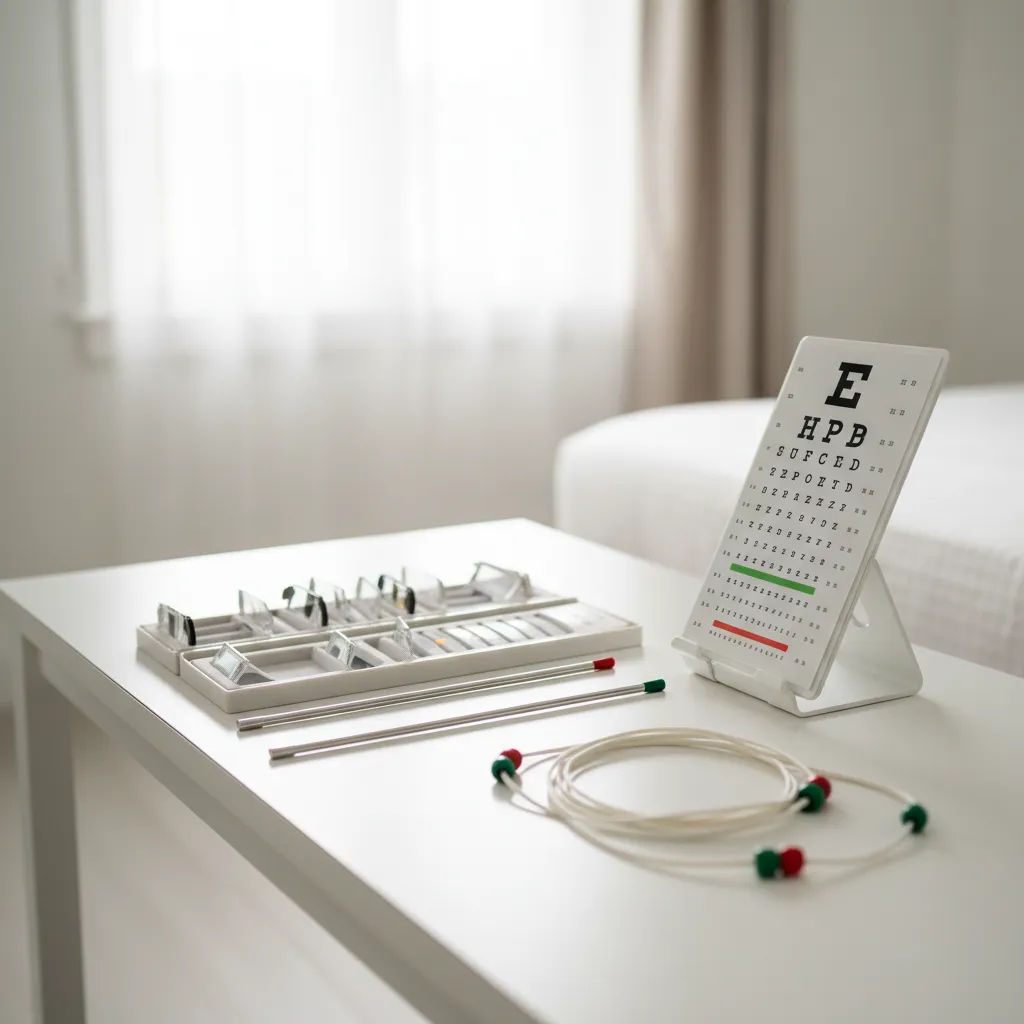
A rehabilitation program that uses targeted visual exercises, eye-tracking tasks, and perceptual-motor activities to improve eye coordination, focus, depth perception, and visual processing speed, often after concussion, stroke, or developmental visual deficits.
- Practice
- Therapy
- Principle
- Treatment
- Tactic
- Brain-directed & Cognitive
- Evidence grade
- Context Dependent
- Strength of evidence
- Medium
How to practice Neuro-optometric / Vision Therapy
Administered by neuro-optometrists or vision therapists 1–2 times weekly, with home exercises (5–15 minutes daily). Programs typically last 8–12 weeks. Effectiveness depends on individualized assessment and adherence. Avoid generalized “vision training” claims unrelated to documented oculomotor or perceptual deficits.
The evidence behind Neuro-optometric / Vision Therapy
Evidence supports vision therapy for convergence insufficiency, post-concussive oculomotor dysfunction, and some reading or attention issues. Mechanism: repetitive visual-motor training strengthens neural pathways linking visual and attentional networks. Evidence moderate, strong for specific deficits, weak for generalized cognitive improvement. Benefits often extend to reading comfort, motion sensitivity, and balance.
More Therapy techniques
Take control of your brain health
BetterBrain gives you a personalized protocol of techniques like these, backed by science and tailored to you.