Therapy · Brain health technique
Photobiomodulation / Red-Light Therapy
Evidence grade: Experimental
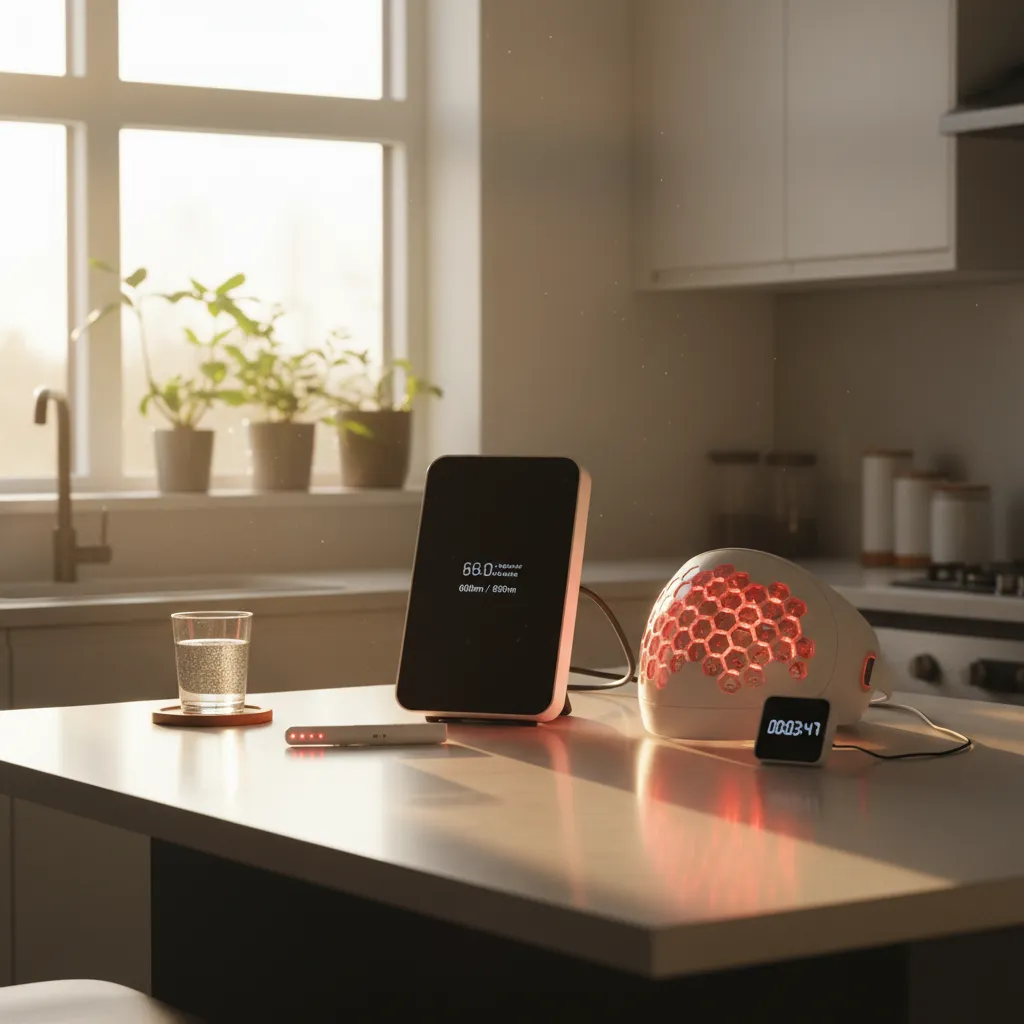
Application of low-level red or near-infrared light (600–1,000 nm) to the scalp or body to stimulate mitochondrial activity, enhance circulation, and support cellular repair.
- Practice
- Therapy
- Principle
- Treatment
- Tactic
- Physiologic & Environmental
- Evidence grade
- Experimental
- Strength of evidence
- Low
- Cost
- High
- Effort
- Low
- Time commitment
- Medium
How to practice Photobiomodulation / Red-Light Therapy
Use only devices with verified wavelength and power density.Eye protection and dose control are critical. For best results, adhere strictly to a consistent treatment schedule, as the therapeutic benefits of red light therapy are cumulative over time. Crucially, avoid the temptation to increase treatment time beyond the recommended dose, as excessive exposure can actually inhibit the desired cellular response.
The evidence behind Photobiomodulation / Red-Light Therapy
Mechanistic and small human studies show increased ATP production, reduced oxidative stress, and improved wound healing. Early trials suggest possible cognitive benefits in mild TBI and early Alzheimer’s through improved cerebral perfusion and mitochondrial efficiency. However, most data are from small, heterogeneous trials with industry funding; long-term safety and reproducibility remain uncertain. Reasonably strong evidence for hair loss and skin rejuvenation.
More Therapy techniques
Take control of your brain health
BetterBrain gives you a personalized protocol of techniques like these, backed by science and tailored to you.