Therapy · Brain health technique
Transcranial Magnetic Stimulation (TMS)
Evidence grade: Context Dependent
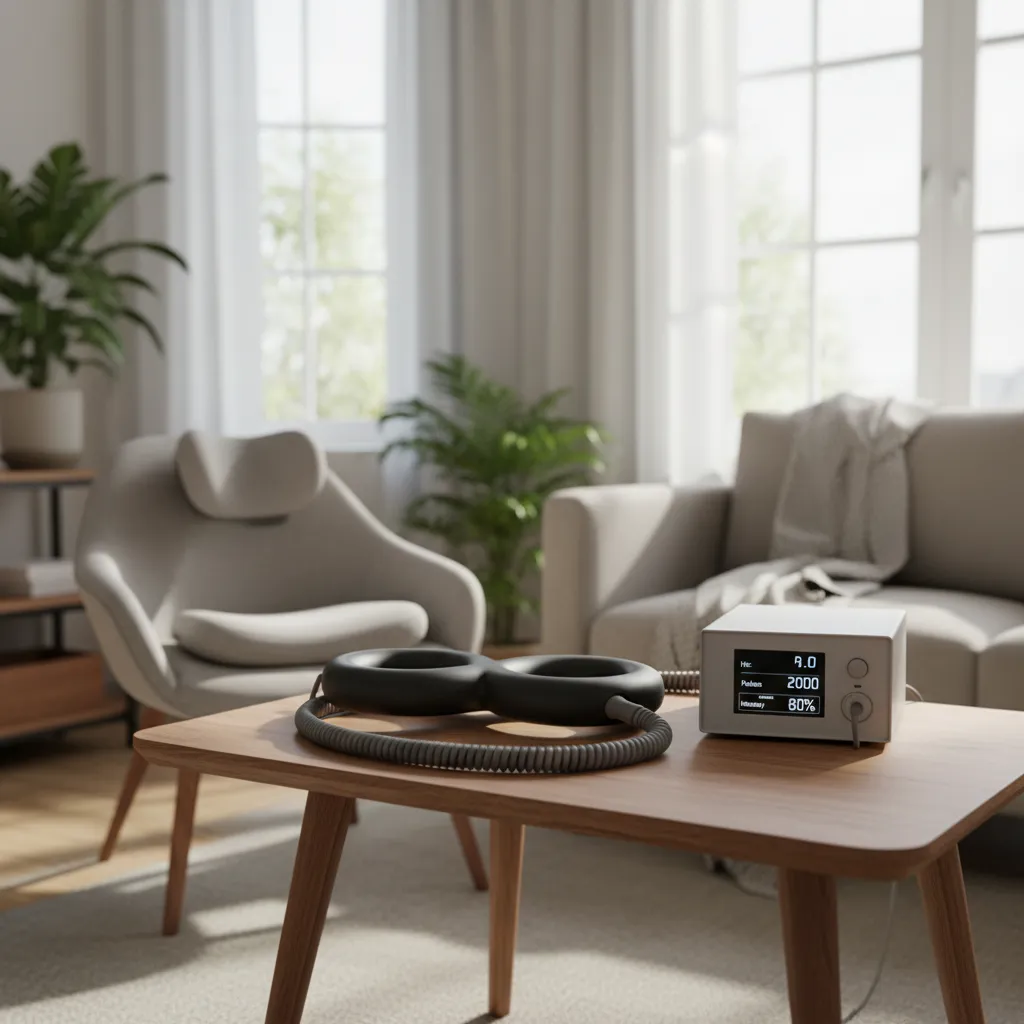
A noninvasive neuromodulation therapy that uses rapidly pulsed magnetic fields over the scalp to activate targeted brain regions, most commonly the dorsolateral prefrontal cortex, to treat depression and potentially enhance cognitive function.
- Practice
- Therapy
- Principle
- Treatment
- Tactic
- Brain-directed & Cognitive
- Evidence grade
- Context Dependent
- Strength of evidence
- Medium
How to practice Transcranial Magnetic Stimulation (TMS)
Used under physician supervision, typically 20–30 sessions over 4–6 weeks. Each session lasts 20–40 minutes. Mild scalp discomfort and transient headache are common. Maintenance sessions may help sustain benefit. Currently best supported for depression and post-stroke recovery, not general “cognitive enhancement.”
The evidence behind Transcranial Magnetic Stimulation (TMS)
Dozens of large RCTs and meta-analyses confirm TMS efficacy for treatment-resistant depression and growing evidence for post-stroke and cognitive impairment. Mechanistically, repetitive magnetic pulses induce long-term potentiation-like effects that normalize underactive cortical circuits and improve network connectivity. Evidence robust for mood disorders; preliminary but promising for cognitive outcomes.
More Therapy techniques
Take control of your brain health
BetterBrain gives you a personalized protocol of techniques like these, backed by science and tailored to you.