Sleep · Brain health technique
Use blue-blocking glasses
Evidence grade: Context Dependent
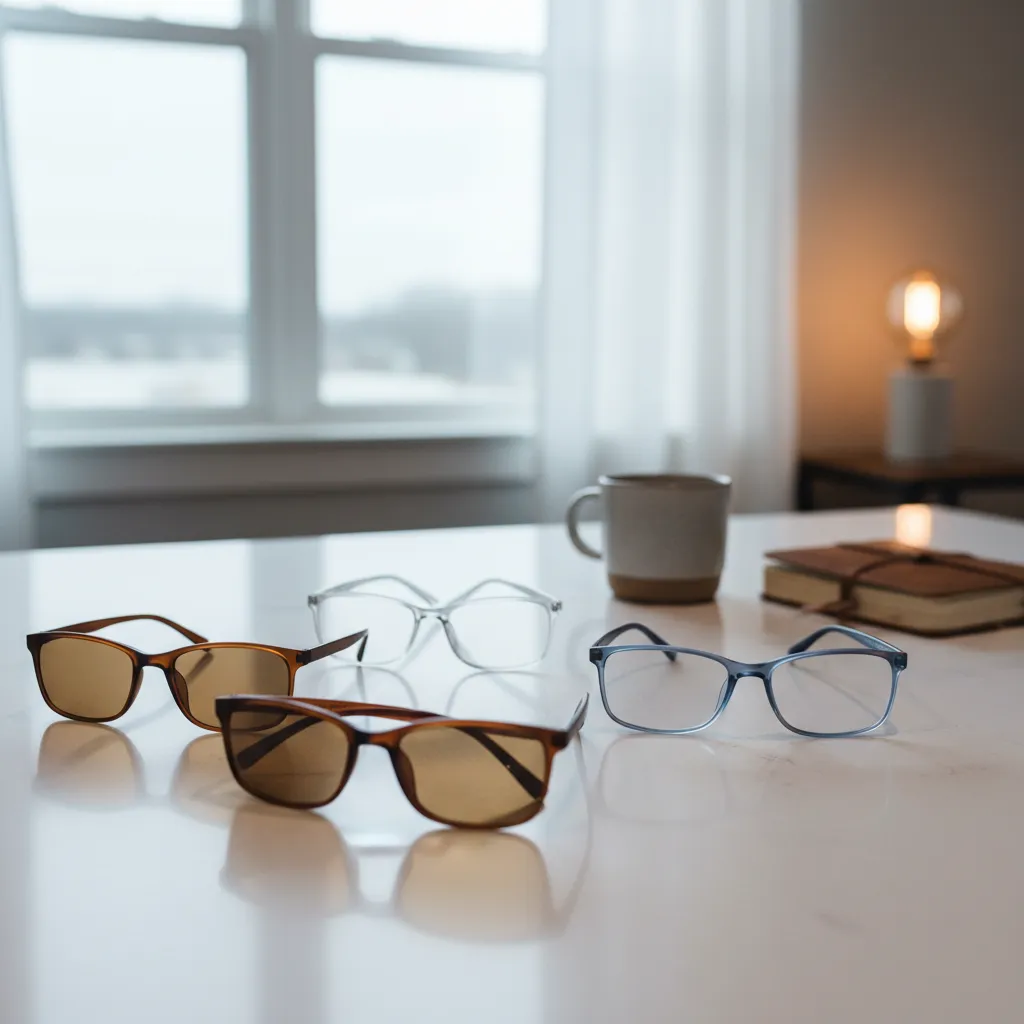
Wearing amber or orange-tinted glasses in the evening to filter blue wavelengths that delay melatonin onset and disrupt circadian rhythm.
- Practice
- Sleep
- Principle
- Restoration
- Tactic
- Managing Light And Screens
- Health domains
- hormonal
- Evidence grade
- Context Dependent
- Strength of evidence
- Medium
- Cost
- Low
- Effort
- Low
- Time commitment
- Low
How to practice Use blue-blocking glasses
Wear blue-blocking glasses starting 1–2 hours before bedtime when under artificial light or using screens. Ensure lenses block at least 90% of light below 480 nm. Combine with dimmed lighting for best results. Not a substitute for avoiding screens entirely, but a useful backup for high-light environments.
The evidence behind Use blue-blocking glasses
Small randomized studies show that blue-blocking glasses worn 1–2 hours before bed can normalize melatonin levels and improve subjective sleep quality, especially in people using screens or bright indoor lighting. Mechanistically, they reduce melanopsin activation in retinal ganglion cells. Evidence is moderate and supportive, but dependent on compliance and lens quality.
More Sleep techniques
Take control of your brain health
BetterBrain gives you a personalized protocol of techniques like these, backed by science and tailored to you.