Therapy · Brain health technique
Vestibular Therapy
Evidence grade: Context Dependent
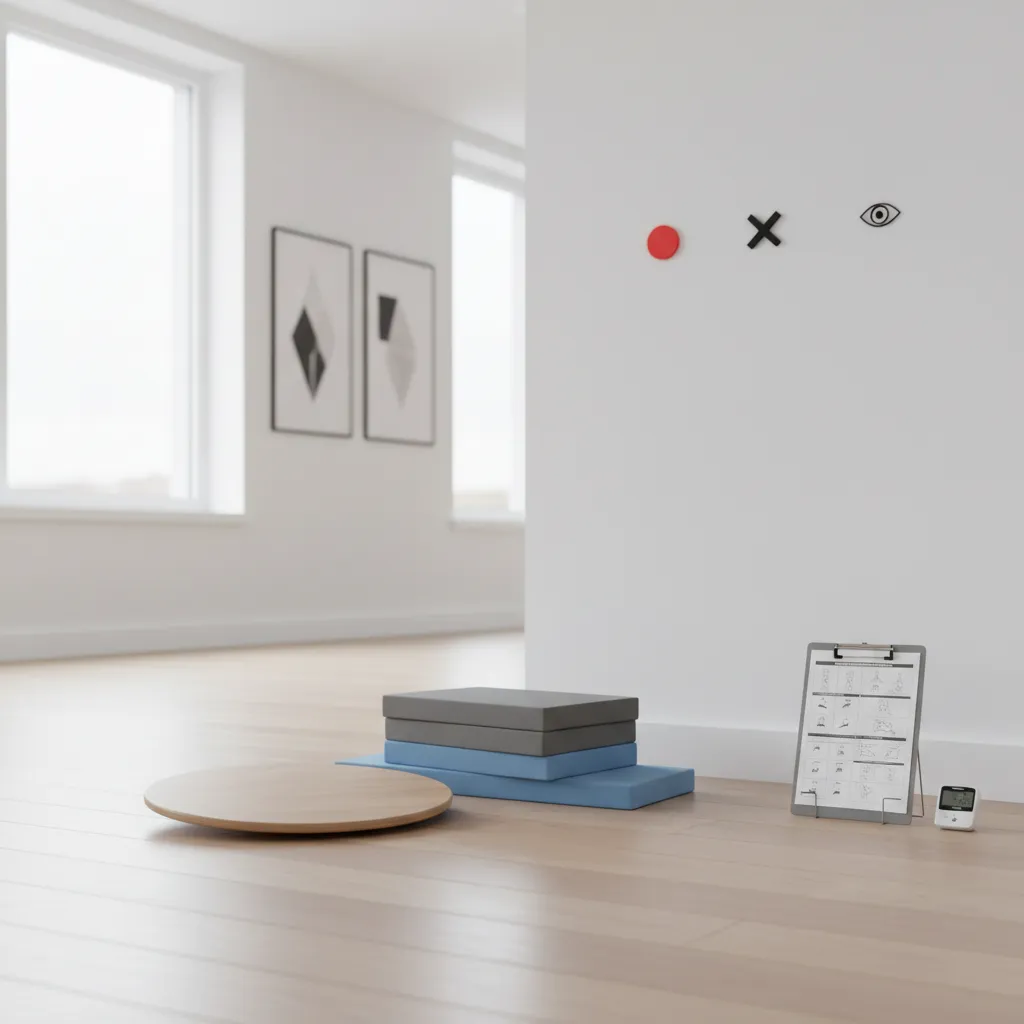
Targeted physical exercises that retrain balance, gaze stability, and spatial orientation by stimulating and recalibrating the vestibular system, often after concussion, inner-ear injury, or aging-related imbalance.
- Practice
- Therapy
- Principle
- Treatment
- Tactic
- Brain-directed & Cognitive
- Evidence grade
- Context Dependent
- Strength of evidence
- Medium
How to practice Vestibular Therapy
Conducted by trained physical or vestibular therapists over several weeks. Includes eye–head coordination, balance, and habituation drills. Practice daily at home for brief periods (10–15 minutes). Avoid self-directed high-intensity movements early in recovery; progress gradually as tolerance improves.
The evidence behind Vestibular Therapy
Strong evidence in post-concussion and vestibular dysfunction for reducing dizziness and improving gait and confidence. Mechanism: repeated exposure and gaze stabilization exercises promote sensory integration between vestibular, visual, and proprioceptive inputs. Limited direct evidence for cognition, but improved balance and confidence indirectly enhance attention and mood.
More Therapy techniques
Take control of your brain health
BetterBrain gives you a personalized protocol of techniques like these, backed by science and tailored to you.