

Key takeaways:
Most clients pay $0 with employer sponsored insurance.
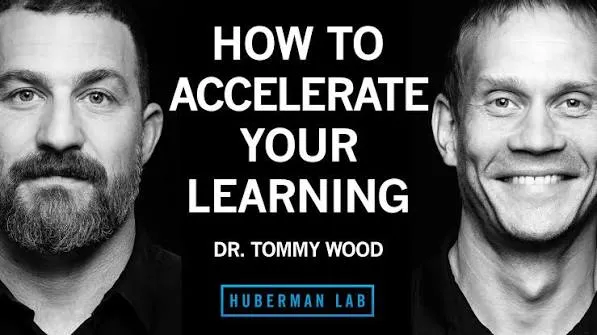
Our Chief Science Officer, Dr. Tommy Wood, joined Andrew Huberman on the Huberman Lab podcast for a nearly three-hour conversation titled "Accelerate Learning & Increase Cognitive Capacity." His core message: your brain keeps adapting to whatever you ask of it, at 40 and at 75. Staying sharp is less about your age and more about whether you keep giving your brain new, challenging inputs, move your body before and around mental work, eat a high-quality overall diet, and test your biomarkers instead of guessing at supplements.
Here are the six takeaways we think are most worth acting on, plus where to start if you want to put them into practice.
Does aging itself cause cognitive decline?
Not in the way most people assume. According to Wood, aging itself is not the primary driver of decline. Your brain keeps the capacities you use and prunes the ones you stop using, so much of what we call age-related decline comes from no longer giving the brain new, challenging inputs. Encouragingly, he notes that mental processing speed tends to hold steady until around age 60.
That reframing matters. If decline is largely about disuse rather than age, then the inputs you choose, at any age, are levers you control.
What activities actually keep your brain sharp?
The activities that build cognitive capacity share three traits: they are new, hard, and ideally social.
Crosswords and sudoku, Wood points out, are more relaxing than challenging. They exercise skills you already have. To actually build capacity, pick something that stretches you and mixes movement, thinking, and other people:
- Dancing has the best evidence, ballroom and square dancing especially
- Ball sports and martial arts
- Learning a language
Part of the trick is getting comfortable being a beginner. The discomfort of making mistakes is not a sign you picked the wrong activity. It is what drives the learning.
Do you need to be in a flow state to learn?
No. Real learning, and even peak performance, often happens in what athletes call a clutch state, where the work still feels like hard work.
What matters more is structure. Hard mental work is really only sustainable in 20 to 30 minute focused blocks, so work in chunks and protect them from distraction. Even having a phone in the room carries a cost to focus.
How does exercise improve learning and memory?
Wood describes exercise as two brain tools in one:
- In the moment: a short 20 to 30 minute jog or strength session right before mental work sharpens learning during that session.
- Over time: harder aerobic work, like intervals, builds the hippocampus and supports memory, while resistance training builds the brain's white matter and supports decision-making.
The practical answer to "cardio or weights for brain health?" is both, and if you can, schedule some of it right before your most demanding mental work.
What should you eat, and should you take supplements?
On diet, whole-food patterns like the Mediterranean and MIND diets have the best evidence, and it is overall diet quality, not any single food, that matters.
On supplements, Wood's advice is to test your levels rather than guess, because the standard "normal" lab range is not the same as the optimal one. His clearest example: omega-3 and B vitamins only work when you have both. That interdependence is exactly why we measure homocysteine and other brain-specific biomarkers in Blueprint rather than blanket-recommending a supplement stack.
For supplements with modest, real support, he points to creatine and a basic omega-3 plus B-vitamin stack. Our picks in those categories, including Advanced DHA, Thorne Creatine, and MethylAssist, are all in the Picks library, and Picks is now HSA/FSA eligible through our partnership with TrueMed.
What else protects long-term brain health?
Some of the biggest protections are indirect. Blood pressure, cholesterol, hearing, and metabolic health all shape long-term brain health. Avoiding serious illness matters too, because cognition tends to step down after a major sickness rather than declining smoothly.
One finding Wood flags as worth watching: the shingles vaccine has been associated with lower dementia risk across several large studies.
Where to start
You do not need a perfect routine or new technology. The conversation points to a short list: work on something hard and a little new, move before mental work, get real sleep, and test before you supplement.
That last step is where BetterBrain can help. Blueprint covers the testing, 50+ biomarkers plus cognitive testing and a 1:1 consultation to walk through your results, for $89 with insurance. And if you finish your results thinking "okay, but what should I actually do," that is what our 12-week Coaching Program is for. 92% of eligible customers pay $0 with insurance.
If you want to go deeper, listen to the full episode, and check out Tommy's new book, The Stimulated Mind: Future-Proof Your Brain from Dementia and Stay Sharp at Any Age, which covers the same ground in more depth through his 3-S model: challenge the brain, feed it, and let it recover.
Frequently asked questions
At what age does cognitive decline start?
Later than most people think. Wood notes that mental processing speed tends to hold steady until around age 60, and that much of what we attribute to aging actually reflects reduced challenge. The brain keeps what you use and prunes what you stop using, at any age.
Are crosswords and sudoku enough to keep your brain sharp?
Probably not. Wood describes them as more relaxing than challenging, since they exercise skills you already have. To build new capacity, choose activities that are new, hard, and social, like dancing, ball sports, martial arts, or learning a language.
What is the best exercise for brain health?
Both aerobic and resistance training, for different reasons. Harder aerobic work like intervals builds the hippocampus and supports memory, while resistance training builds white matter and supports decision-making. A 20 to 30 minute session right before mental work also sharpens learning in the moment.
Should I take supplements for brain health?
Test first. Standard "normal" lab ranges are not the same as optimal ranges, and some nutrients depend on each other. Omega-3 and B vitamins, for example, only work when you have both, which is why measuring biomarkers like homocysteine beats guessing. Creatine and a basic omega-3 plus B-vitamin stack have modest, real evidence behind them.

References
- Huberman Lab Podcast. Dr. Tommy Wood: Accelerate Learning & Increase Cognitive Capacity.
- Wood, T. The Stimulated Mind: Future-Proof Your Brain from Dementia and Stay Sharp at Any Age.