
Alzheimer's and blood sugar: why some researchers call it type 3 diabetes.
The link between blood sugar and dementia starts long before a diabetes diagnosis.
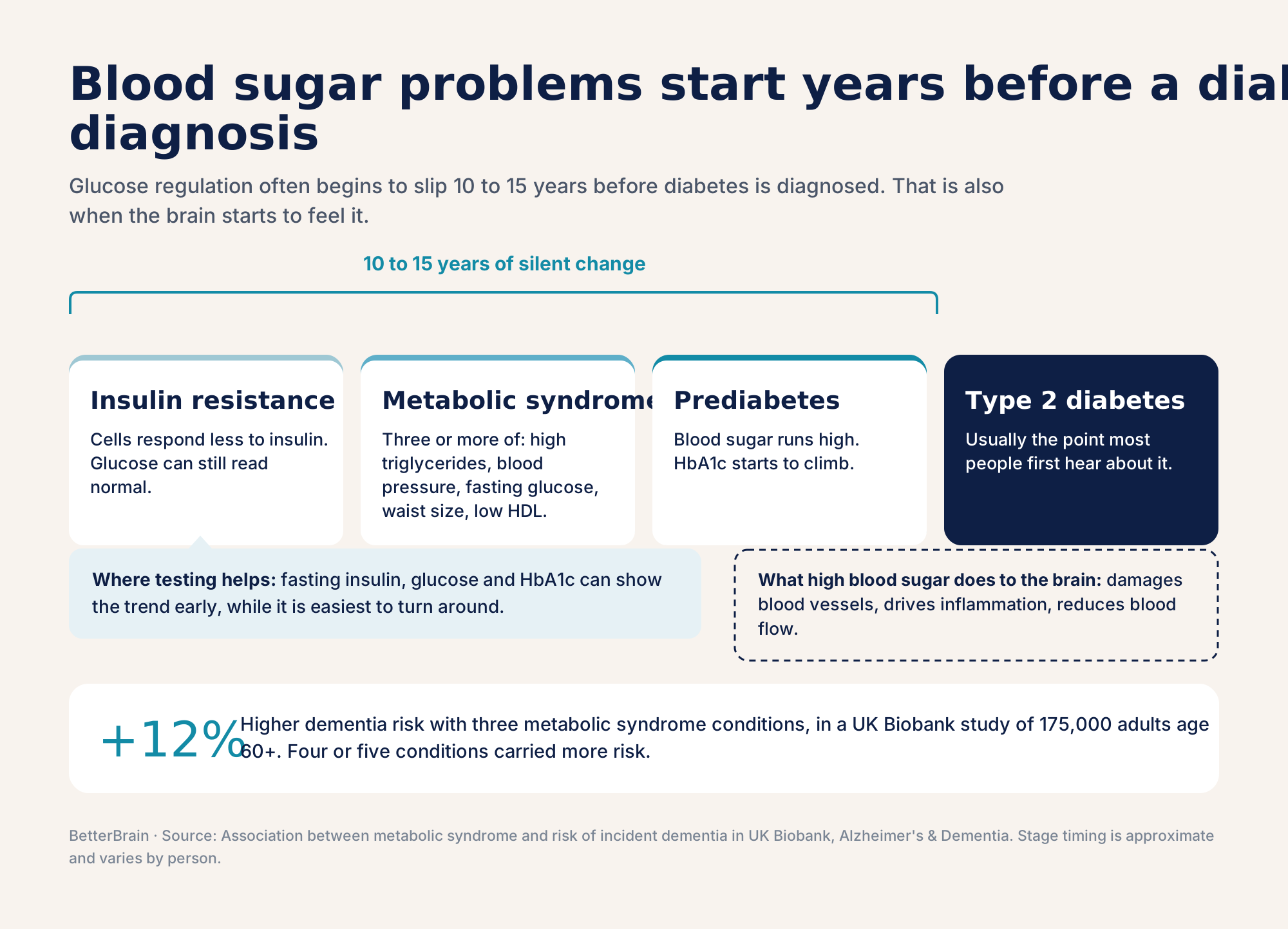
Alzheimer's disease is so closely tied to metabolic health that some experts call it type 3 diabetes. But the risk does not wait for a diabetes diagnosis: glucose regulation often starts slipping 10 to 15 years before a diagnosis, and in a study of 175,000 adults over 60, having three markers of metabolic syndrome was linked to a 12% higher dementia risk. The upside is that blood sugar is a risk factor you can measure and change.
$0 with insurance for eligible clients.
The verdict
Before anyone is diagnosed with diabetes, the body goes through years of change. Cells become less responsive to insulin, the hormone that tells them to absorb sugar from the blood. Blood sugar runs chronically high, and that starts to cause problems for the heart, liver and brain.
That in-between stage is called metabolic syndrome. It affects about 25% of adults worldwide and about 40% of U.S. adults over 60, and most of them do not know it is a health risk. For the brain, it matters well before it turns into diabetes, even for people with no family history of dementia.
Why blood sugar affects the brain
Even mildly elevated blood sugar can damage brain cells over time. High blood sugar creates oxidative stress and inflammation, impairs blood flow in the brain, and leads to damage that affects how you think. Diabetes also disrupts the blood vessels in the brain and weakens the blood-brain barrier, which keeps the brain's environment tightly controlled.
What you eat feeds into this directly. In a systematic review and meta-analysis, every cohort study found a significant link between added sugar and cognitive impairment risk, and higher sugar intake was tied to smaller brain volume and poorer memory. Whole fruit was the exception: it was associated with lower risk.
Are you in the early stage?
Metabolic syndrome is diagnosed when you have three or more of these:
- High triglycerides (150 mg/dL or higher)
- Elevated blood pressure (130 systolic or 85 diastolic or higher), or taking blood pressure medication
- High fasting glucose (100 mg/dL or higher), or taking glucose-lowering medication
- Low HDL cholesterol (under 40 mg/dL for men, under 50 for women)
- A large waist (102 cm / 40 in or more for men, 88 cm / 35 in or more for women)
In the UK Biobank study, three of these were linked to a 12% higher dementia risk, and four or five carried a stronger risk. The link was especially strong in people who do not carry APOE4, the people who usually think of themselves as lower risk.
HbA1c, your average blood sugar over about three months, is not on the official list, but it is one of the most useful markers to track. A standard physical may show you a single glucose reading. It often misses the trend.
Nancy, a 57-year-old BetterBrain client with a family history of dementia, came in with a pre-diabetic HbA1c alongside several other risk factors. With her coach she used a continuous glucose monitor to see which meals spiked her, changed what she ate, and added one HIIT session and two strength sessions a week. Three months later her HbA1c had improved, along with her energy and mood. She worked on several risk factors at once, and the effects compounded.
"The metabolic piece is really important for the brain health long term. So we look at glycemic control. What fasting insulin is doing. We have quite a few markers in that metabolic area."
Jaimie C., Brain Health Coach at BetterBrain
What helps
Metabolic health responds to small, specific changes. A few with strong evidence behind them:
Eat your carbs last. Start with vegetables, then protein and fat, then carbs. It slows how fast sugar reaches your blood.
Walk after meals, especially carb-heavy ones. Working muscles pull glucose out of the blood.
Build both strength and cardio. Both improve insulin sensitivity. Even 10 minutes of vigorous exercise a day helps.
Start the day with protein. 20 to 30 grams in the first hour or two after waking is linked to smaller glucose rises and fewer cravings later.
Protect your sleep. Poor sleep raises blood sugar.
Measure, then watch. Fasting glucose, insulin and HbA1c show where you stand. A continuous glucose monitor shows how your own meals and habits move the number in real time.
Common questions
Is Alzheimer's really type 3 diabetes?
"Type 3 diabetes" is not an official diagnosis. Some researchers use the term because Alzheimer's is so closely linked to how the body and brain handle insulin and blood sugar.
Does high blood sugar increase dementia risk?
Yes. Chronically high blood sugar is associated with higher dementia risk, especially with diabetes. Poor metabolic health raises risk well before diabetes develops.
Can prediabetes affect memory?
The changes behind prediabetes, including high blood sugar, inflammation and reduced blood flow, are the same ones linked to brain damage over time. Testing is how you find it at this stage, before a diagnosis.
What blood tests show blood sugar problems early?
Fasting glucose, fasting insulin and HbA1c. Insulin can rise before glucose does, which is why a single glucose reading can look normal while the problem is building.
- Association between metabolic syndrome and risk of incident dementia in UK Biobank. Alzheimer's & Dementia. https://alz-journals.onlinelibrary.wiley.com/doi/10.1002/alz.13439
- Refined carbohydrates, sugar and Alzheimer's risk. Alzheimer's & Dementia. https://alz-journals.onlinelibrary.wiley.com/doi/abs/10.1002/alz.12114
- Diabetes and blood-brain barrier breakdown. Diabetologia. https://link.springer.com/article/10.1007/s00125-006-0485-z
- Added sugar and cognitive impairment: systematic review and meta-analysis. Nutrients. https://pmc.ncbi.nlm.nih.gov/articles/PMC10780393/
Keep reading
Don't wait for a diabetes diagnosis to protect your brain.
The years before diabetes are when blood sugar does quiet damage and when it is easiest to change. Knowing your numbers is the first step. The plan is a few specific changes you can keep.