
Hearing loss and dementia: the risk factor you can actually treat.
Untreated hearing loss is linked to faster cognitive decline. It is also one of the few dementia risk factors with a simple, proven fix.
Hearing loss is one of the modifiable dementia risk factors named in the 2024 Lancet Commission, and the evidence for treating it is now stronger than ever. In a long-running study, hearing aid use in people under 70 with hearing loss was linked to a 61% lower dementia risk over 20 years. Even mild hearing loss matters, and many people dismiss it as part of getting older.
$0 with insurance for eligible clients.
The verdict
When hearing loss goes untreated, the brain does more than struggle to process sound. It starts to reorganize itself, and not in a helpful way.
Researchers in the Framingham Heart Study used brain imaging to follow these changes over time. Hearing loss was associated with more white matter hyperintensities, a marker of brain aging, and faster decline in executive function: the planning, problem-solving and focus skills you use all day. These effects showed up even with mild hearing loss, the level many people never get checked.
Why hearing affects the brain
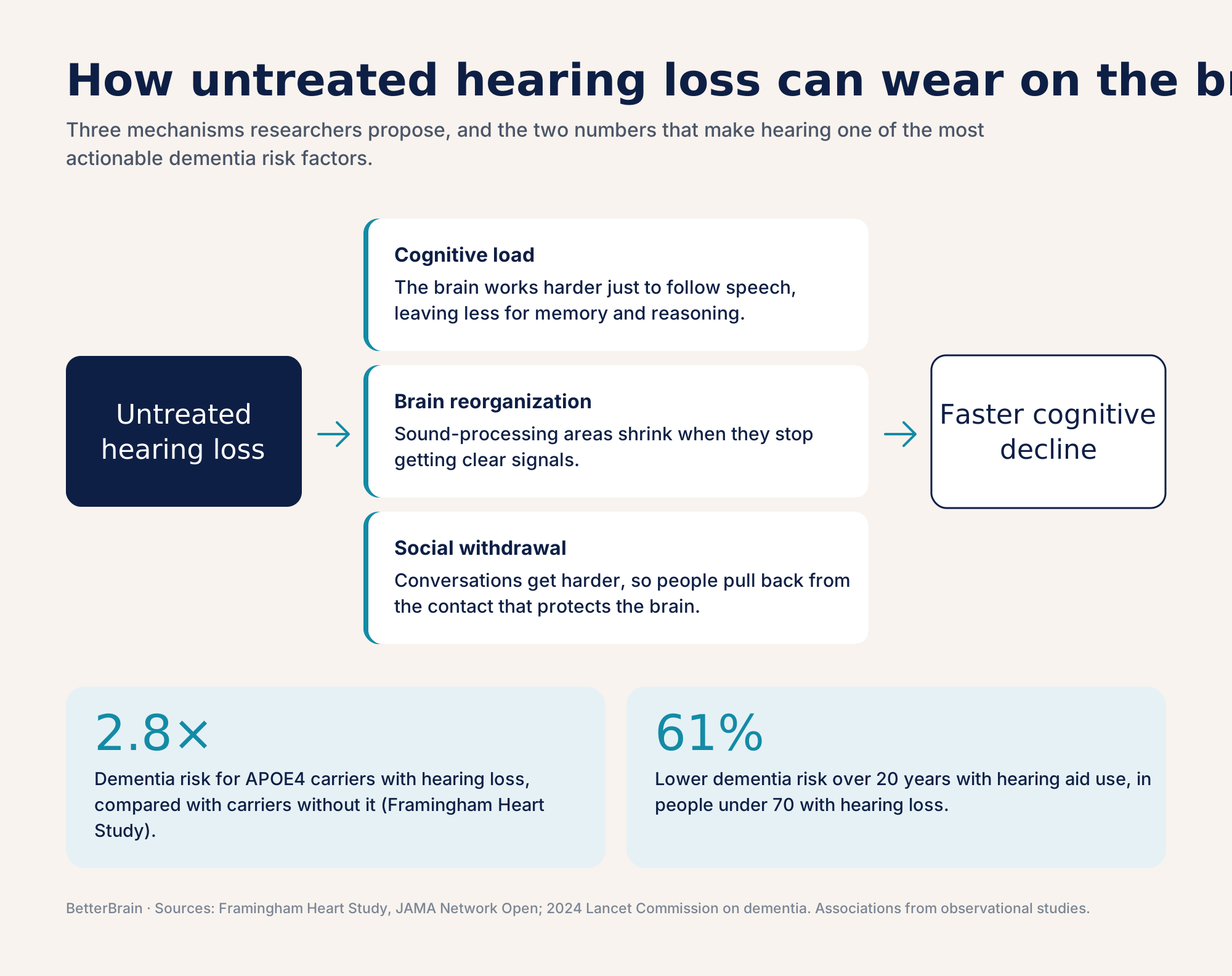
Researchers propose three ways hearing loss and cognitive decline are connected.
Cognitive load. When hearing is impaired, the brain works much harder just to understand speech. Brain imaging shows people with hearing loss recruit extra regions, especially in the frontal cortex, to follow a conversation. That leaves fewer resources for memory and reasoning.
Brain reorganization. The areas that process sound shrink when they stop getting clear signals. Over time they get recruited for other tasks or lose volume. The temporal lobes, which matter for both hearing and memory, show some of the largest changes.
Social withdrawal. When conversations get harder, people pull back from dinners, phone calls and groups. Social engagement is itself protective for the brain, so the problem compounds.
Who is most at risk
Genetics changes the stakes. In the Framingham data, APOE4 carriers with hearing loss had nearly triple the dementia risk (a hazard ratio of 2.82) of carriers without hearing loss. If you know you carry APOE4, or dementia runs in your family, your hearing deserves the same attention as your cholesterol or blood pressure. Read what APOE4 does and does not tell you.
Most people only think about their hearing when someone else complains about the TV volume. A Brain Health Coach treats it the same way they treat blood pressure: get a baseline, watch the trend, and act early. That means a screening, a plan to protect what you have, and a clear next step if the screen shows a gap, built around the rest of your risk profile rather than as a standalone fix.
"Any type of hearing loss is something we want to address as soon as possible. If you're noticing that you're starting to have trouble hearing, the concern is that the audio processing part of your brain, if that's not being stimulated adequately, then it's going to atrophy."
Camila V., Brain Health Coach at BetterBrain
What helps
Hearing loss is one of the rare dementia risk factors you can address with technology that already exists.
Get your hearing tested, even if it seems fine. Start with a free at-home hearing app (5 to 10 minutes with headphones), then get a full audiogram from an audiologist: pure-tone thresholds, speech-in-noise testing and tympanometry. That is the gold standard baseline.
Act early if you have hearing loss. Research suggests early hearing aid adoption protects the brain better than waiting until hearing loss is severe.
Wear them. The protective effect comes from using hearing aids consistently, not owning them. Regular use keeps the sound-processing pathways working and lowers the effort of everyday listening.
Protect what you have. Noise above 85 decibels, common at concerts and with power tools, damages inner ear cells permanently. Use hearing protection in loud places and keep headphones below 60% of maximum volume.
Common questions
Does hearing loss cause dementia?
Hearing loss is strongly associated with faster cognitive decline and higher dementia risk, and researchers have proposed plausible mechanisms. The studies are observational, so they show a link rather than proof of cause. The 2024 Lancet Commission considers the evidence strong enough to recommend treating hearing loss as a way to reduce risk.
Do hearing aids reduce dementia risk?
They appear to. In one large study, hearing aid use in people under 70 with hearing loss was linked to a 61% lower dementia risk over 20 years. The benefit depends on wearing them consistently.
Does mild hearing loss matter?
Yes. In the Framingham study, even mild hearing loss was linked to smaller brain volumes, more white matter damage and faster cognitive decline.
Is hearing loss a bigger risk if I carry APOE4?
In the Framingham data, APOE4 carriers with hearing loss had nearly triple the dementia risk of carriers without it. That makes hearing a priority for anyone with a genetic risk.
- Framingham Heart Study, hearing loss, brain imaging and cognition. JAMA Network Open. https://jamanetwork.com/journals/jamanetworkopen/fullarticle/2841000
- Hearing loss, APOE ε4 and dementia risk (HR 2.82). https://pmc.ncbi.nlm.nih.gov/articles/PMC12590305/
- Hearing aid use and dementia over 20 years. https://www.neurologylive.com/view/large-scale-study-suggests-protective-benefit-hearing-aids-development-dementia
- Livingston G, et al. Dementia prevention, intervention, and care: 2024 report of the Lancet standing Commission. Lancet. 2024. https://doi.org/10.1016/S0140-6736(24)01296-0
Keep reading
Hearing loss is common. Ignoring it is the part you can change.
The effects show up even with mild hearing loss, and early treatment protects better than waiting. A screening is quick, and treating hearing loss is one of the most practical moves in dementia prevention.