
Sleep and dementia: what deep sleep does for your brain.
Deep sleep is when your brain clears out waste linked to Alzheimer's. Here is how poor sleep relates to dementia risk, and what protects the hours that matter most.
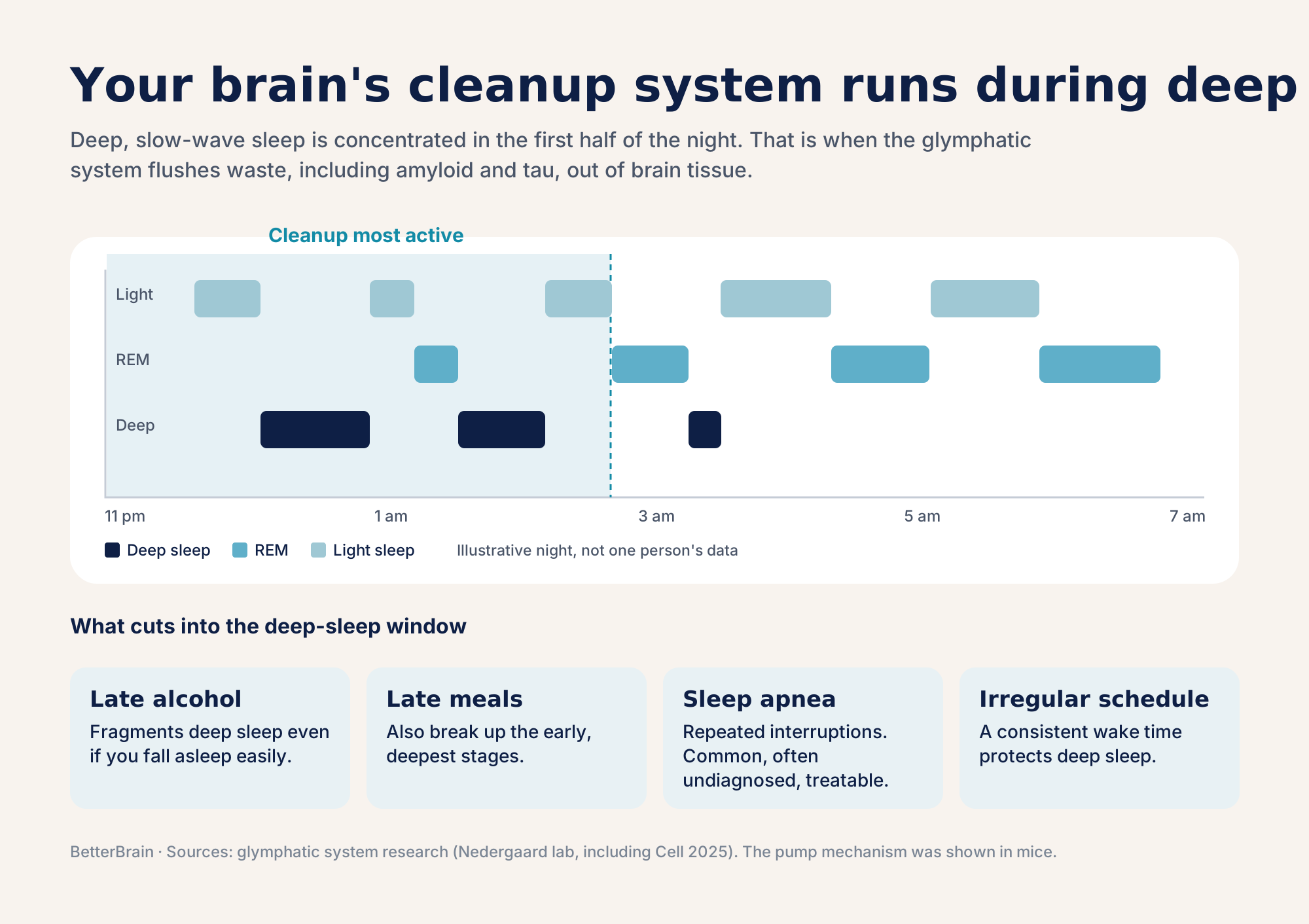
During deep sleep, the brain's glymphatic system flushes out waste, including amyloid and tau, the two proteins that build up in Alzheimer's disease. Deep sleep is concentrated in the first half of the night, and the most common things that cut into it (late alcohol, late meals, irregular schedules and untreated sleep apnea) are all things you can change. Chronic sleep disruption is associated with more amyloid buildup and is one of the first things a BetterBrain Coach will address.
$0 with insurance for eligible clients.
The verdict
Every other tissue in your body has lymphatic vessels to carry away waste. For a long time the brain was thought to be the exception. In 2013, researchers described what is now called the glymphatic system: a network that uses the fluid around the brain to flush waste out of brain tissue, including amyloid-beta and tau.
The finding that changed how we think about sleep came with it. Glymphatic clearance is not constant. It ramps up during deep, slow-wave sleep, when the spaces between brain cells widen and fluid moves through more freely. That is one of the clearest biological reasons sleep is not optional. It is when this cleanup actually runs.
Why poor sleep matters for dementia risk
Good sleep, especially deep sleep, is how the brain removes waste, consolidates memories and regulates mood. Studies link chronic sleep deprivation to the buildup of beta-amyloid, the hallmark of Alzheimer's disease. Sleep scientist Matthew Walker, author of Why We Sleep, puts numbers on it: glymphatic activity increases by 60% during deep sleep, and a single night of poor sleep can increase amyloid accumulation by 25%. Disrupted sleep and body-clock rhythms also affect hormones like cortisol, which adds stress on the brain over time.
Newer research is filling in how the cleanup works. A 2025 study from one of the labs behind the original glymphatic work found that during deep sleep, a small brainstem region releases norepinephrine in slow waves, about one every 50 seconds. Each wave gently tightens and relaxes the blood vessels, which appears to act like a pump that pushes fluid through the brain. This was shown in mice, so it explains how the system likely works rather than proving anything about a specific person. The same study found that zolpidem, the active ingredient in Ambien, dampened these waves in mice and reduced fluid flow. That is not a reason to stop a prescription. It is a reason to make sleep quality a real conversation with your doctor.
How long and how deep both matter
Sleep quality is more than the number of hours in bed. It is also the depth and consistency of your sleep cycles. Deep sleep is concentrated in the first half of the night, so anything that fragments those early hours costs you the part of the night that matters most for cleanup, even if you fall asleep easily and sleep a full eight hours.
Three questions to ask yourself:
- Do you wake up rested, or are you tired during the day?
- Do you have trouble falling asleep or staying asleep?
- Do you snore loudly, or has anyone told you that you stop breathing at night?
Most people already know sleep matters. What they lack is a specific plan. A Brain Health Coach treats sleep like any other marker: measure it, pick one or two changes that fit your life, and watch whether they work. Different techniques work for different people, so the plan starts small and adjusts.
"Sleep makes a difference in everything. And good or bad sleep will show up on your labwork as well."
Bobbi H., Brain Health Coach at BetterBrain
What protects deep sleep
The best place to start is with the fundamentals and slowly build from there towards better sleep quality.
Keep a consistent wake time, weekends included. Add morning light. Both anchor the body clock that protects deep sleep.
Keep the room cool and dark. 65 to 68°F is a good target. Minimize light and screens before bed.
Stop alcohol 3 to 5 hours before bed, and avoid late meals. Both fragment the early deep-sleep stages.
Clear your head. Writing down worries or tomorrow’s tasks before bed helps some people settle.
Take snoring and daytime exhaustion seriously. They can signal sleep apnea, which repeatedly interrupts deep sleep. It is common, often undiagnosed and treatable. Raise it with a clinician.
If sleep is very poor, a sleep specialist or a structured CBT-I (cognitive behavioral therapy for insomnia) program is the next step. If you take a sleep medication, keep any changes in your prescriber's hands.
Common questions
Does poor sleep cause dementia?
Poor sleep is associated with higher dementia risk and with more amyloid buildup, but the studies show a link rather than proof that poor sleep alone causes dementia. Sleep is one of several risk factors you can change.
How does sleep clear amyloid from the brain?
During deep sleep, the glymphatic system uses the fluid around the brain to flush waste, including amyloid and tau, out of brain tissue. Clearance is much more active during deep sleep than while you are awake.
Is sleep apnea linked to dementia?
Sleep apnea repeatedly interrupts the deep sleep the brain's cleanup system depends on. It is common, often undiagnosed and treatable, so it is worth raising with a clinician if you snore loudly or wake up exhausted.
How much deep sleep do I need?
There is no single number that fits everyone. The practical goal is protecting the first half of the night, when most deep sleep happens, with a consistent schedule and no late alcohol or late meals.
- Hauglund NL, Andersen M, Tokarska K, et al. Norepinephrine-mediated slow vasomotion drives glymphatic clearance during sleep. Cell. 2025. doi:10.1016/j.cell.2024.11.027. https://www.cell.com/cell/fulltext/S0092-8674(24)01343-6
- Consistent sleep schedule. https://pubmed.ncbi.nlm.nih.gov/28607474/
- Bedroom temperature and sleep. https://www.sciencedirect.com/science/article/abs/pii/S0360132318300325
- Alcohol and sleep. https://pmc.ncbi.nlm.nih.gov/articles/PMC3669060/
- Light exposure and sleep. https://pubmed.ncbi.nlm.nih.gov/30311830/
- Writing before bed and sleep onset. https://pmc.ncbi.nlm.nih.gov/articles/PMC6305886/
- Walker M. Why We Sleep. https://www.amazon.com/Why-We-Sleep-Unlocking-Dreams/dp/1501144316
Keep reading
Sleep is when your brain does its maintenance. Protect the window.
You do not need perfect sleep. You need to know what is breaking yours up and a plan to fix the one or two things that matter most.