Environment · Brain health technique
Control indoor humidity
Evidence grade: Context Dependent
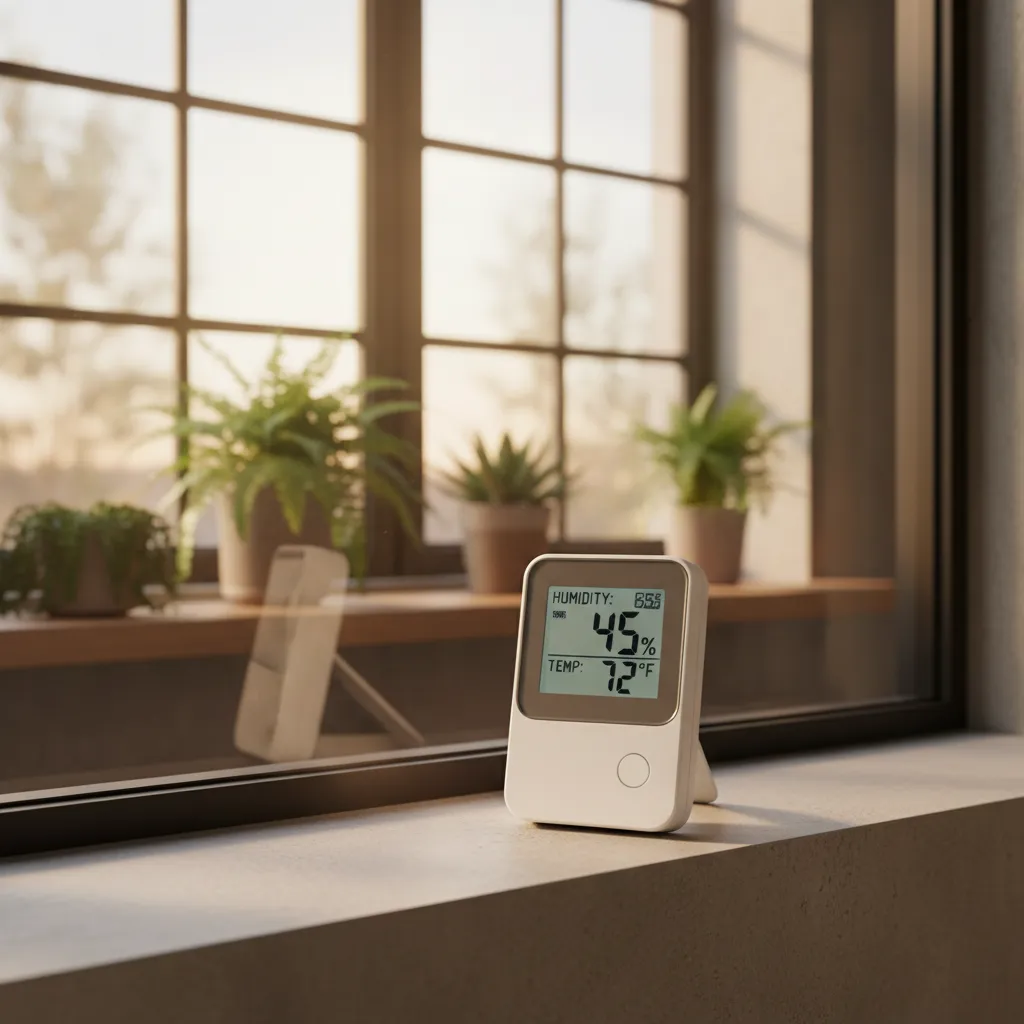
Maintaining moderate relative humidity via humidifiers or dehumidifiers to reduce dust mites, mold, and pathogen persistence. High humidity > 60 % encourages mold; low < 30 % dries airways and promotes viral spread.
- Practice
- Environment
- Principle
- Protection
- Tactic
- Air Quality Optimization
- Evidence grade
- Context Dependent
- Strength of evidence
- Medium
- Cost
- High
- Effort
- High
- Time commitment
- High
How to practice Control indoor humidity
Track humidity with an inexpensive digital hygrometer. Use a humidifier in winter if < 30 %, a dehumidifier in damp months if > 60 %. Clean water reservoirs weekly to prevent bacterial growth. Target 40–60 % year-round for optimal comfort and lung health.
The evidence behind Control indoor humidity
Studies in schools, offices, and hospitals show mid-range humidity improves respiratory mucosal defense and comfort. Mold exposure contributes to inflammation, fatigue, and allergic reactions that can indirectly affect cognition and sleep. Too-dry air increases particle resuspension and airway irritation.
More Environment techniques
Take control of your brain health
BetterBrain gives you a personalized protocol of techniques like these, backed by science and tailored to you.