Environment · Brain health technique
Essential-oil diffusers marketed as air purifiers
Evidence grade: Weak
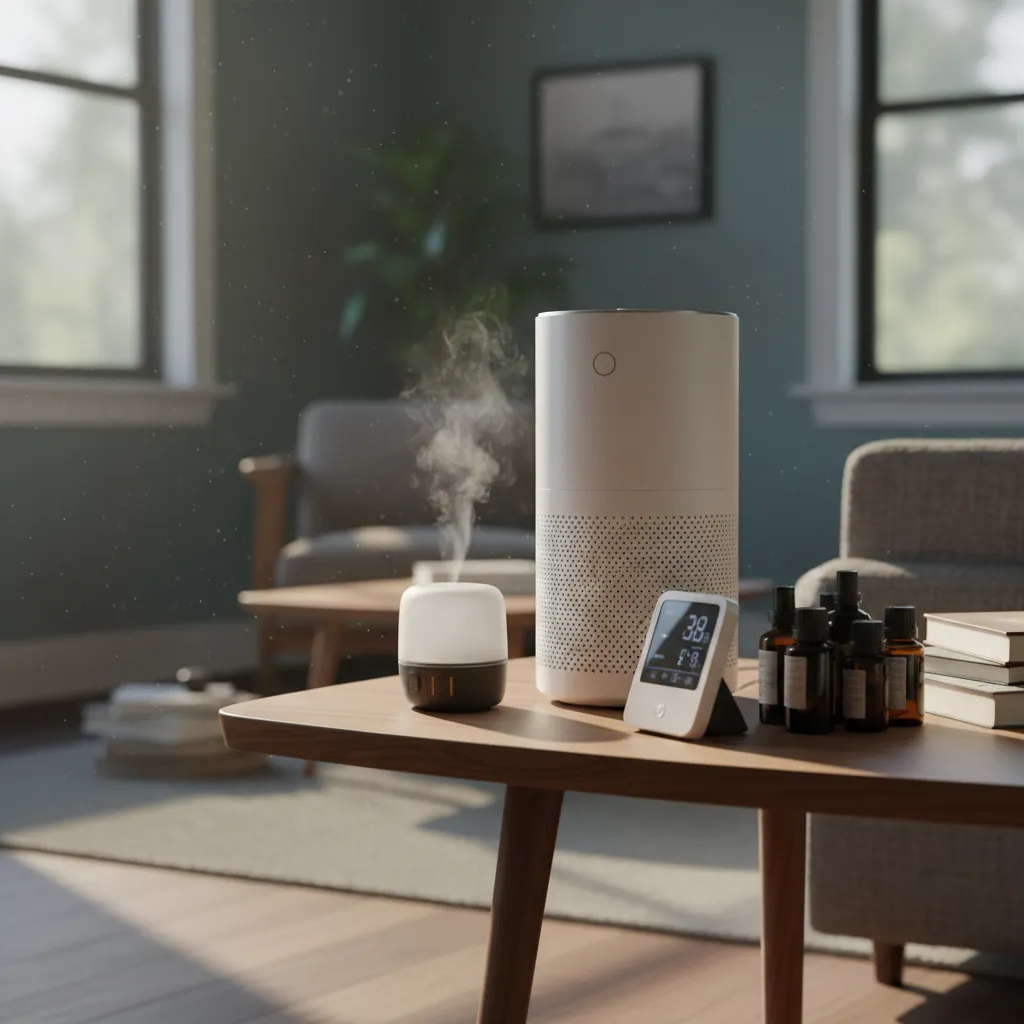
Ultrasonic or heat diffusers that aerosolize volatile plant oils (e.g., lavender, eucalyptus, tea tree). Promoted for “natural disinfection” or “air cleansing.”
- Practice
- Environment
- Principle
- Protection
- Tactic
- Air Quality Optimization
- Evidence grade
- Weak
- Strength of evidence
- Low
How to practice Essential-oil diffusers marketed as air purifiers
Use occasionally for scent or relaxation if tolerated, but avoid daily or continuous use, especially around children, pets, or people with asthma. If you enjoy aromatherapy, limit sessions to short durations with windows open.
The evidence behind Essential-oil diffusers marketed as air purifiers
While some essential oils show antimicrobial effects in petri dishes, diffusers release VOCs, terpenes, and fine droplets that irritate lungs and can worsen indoor air chemistry. Studies show increased formaldehyde and secondary organic aerosols after use. There’s no evidence of improved air quality or brain benefit.
More Environment techniques
Take control of your brain health
BetterBrain gives you a personalized protocol of techniques like these, backed by science and tailored to you.