Move · Brain health technique
Exercise snacks
Evidence grade: Context Dependent
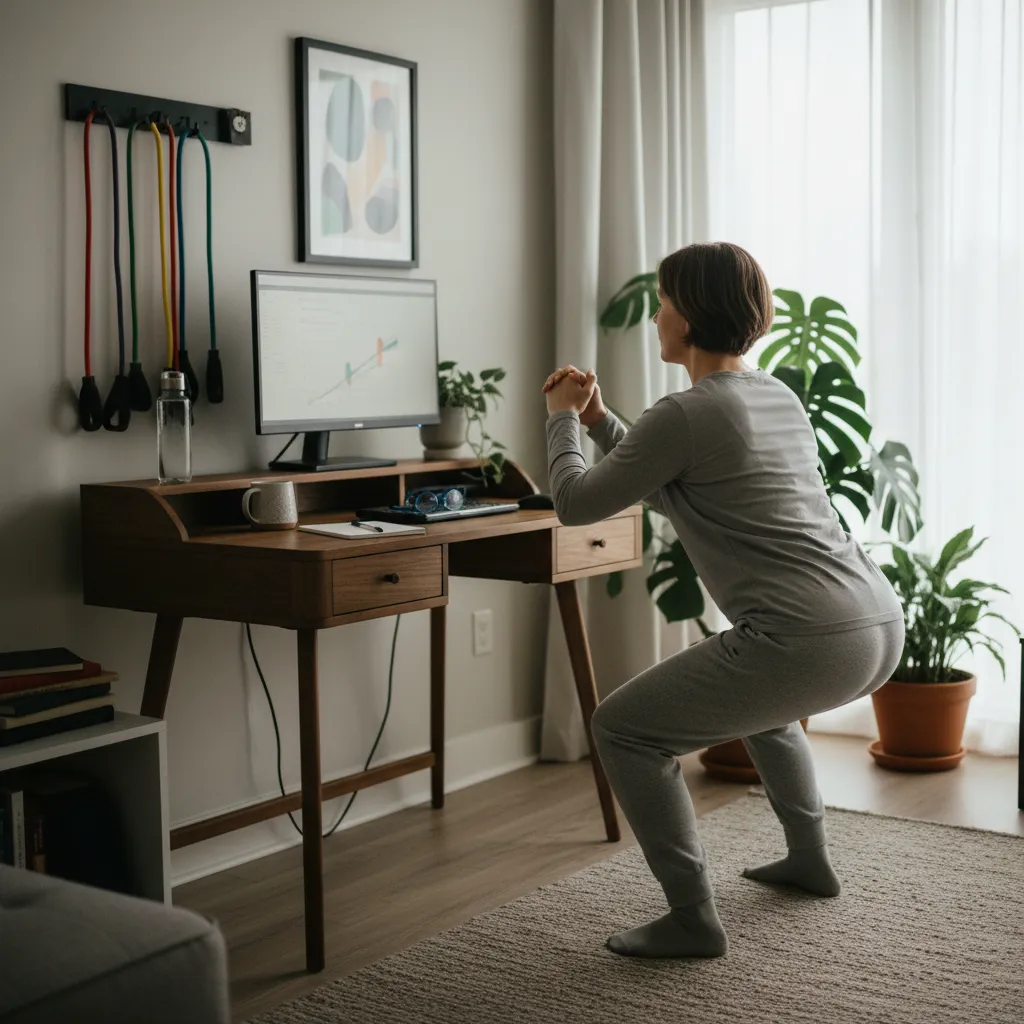
Short bouts of physical activity (e.g., 1–5 minutes each) performed several times per day—such as brisk stair climbs, squats, or pushups—to improve circulation and metabolism without structured workouts.
- Practice
- Move
- Principle
- Engagement
- Tactic
- Everyday Movement
- Health domains
- inflammation, metabolic, vascular
- Evidence grade
- Context Dependent
- Strength of evidence
- Medium
- Cost
- Medium
- Effort
- Low
- Time commitment
- Low
How to practice Exercise snacks
Integrate 3–5 mini-sessions daily: brisk walks, a few flights of stairs, jumping jacks, or 10–20 bodyweight squats. Space them every 2–3 hours, especially between sedentary work blocks. Keep intensity moderate to vigorous for 1–5 minutes. Pair with stretching to offset desk posture. The goal is consistency, not exhaustion.
The evidence behind Exercise snacks
These microbursts trigger sharp increases in heart rate and glucose uptake, improving metabolic health and alertness. Studies show that “exercise snacks” enhance insulin sensitivity and cardiovascular fitness comparable to longer sessions when accumulated through the day. They also reoxygenate the brain after prolonged sitting. Feasible for people short on time. Not a replacement for longer bouts of exercise.
More Move techniques
Take control of your brain health
BetterBrain gives you a personalized protocol of techniques like these, backed by science and tailored to you.