De-stress · Brain health technique
Acceptance and Commitment Therapy (ACT)
Evidence grade: Context Dependent
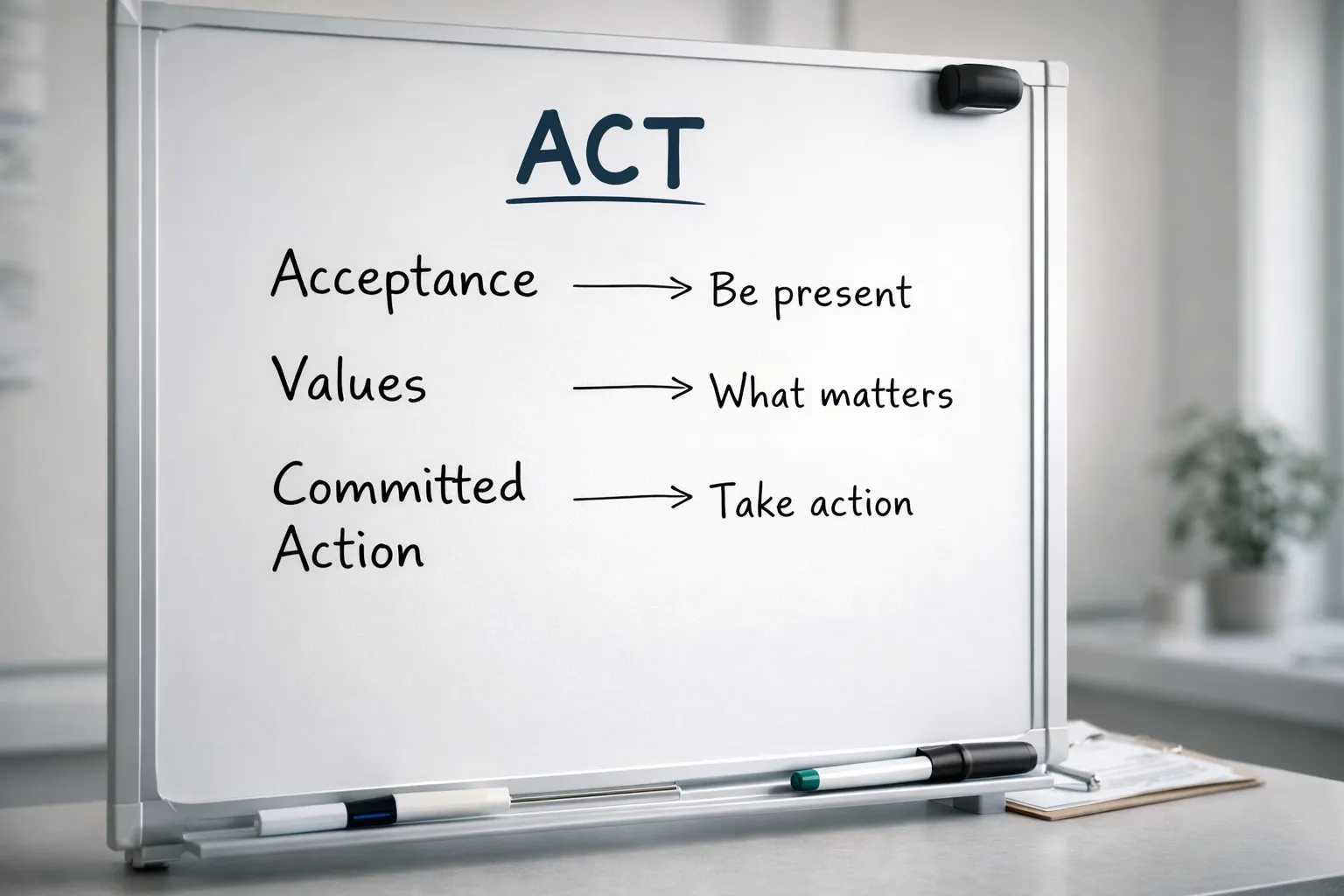
A psychological approach that promotes acceptance of internal experiences and commitment to actions aligned with personal values, using mindfulness and cognitive defusion techniques.
- Practice
- De-stress
- Principle
- Restoration
- Tactic
- Clinical Therapy
- Evidence grade
- Context Dependent
- Strength of evidence
- Medium
How to practice Acceptance and Commitment Therapy (ACT)
Work with an ACT-trained therapist or self-guided workbook. Practice identifying values, noticing unhelpful thoughts without judgment, and taking value-driven action. Use brief daily check-ins (“Am I acting on what matters?”). Best for those prone to perfectionism, anxiety, or chronic stress cycles.
The evidence behind Acceptance and Commitment Therapy (ACT)
ACT improves psychological flexibility, a strong predictor of resilience and reduced stress-related pathology. Meta-analyses show moderate benefits for anxiety, depression, and chronic pain; mechanistically, it rebalances limbic-prefrontal activity and reduces experiential avoidance. Evidence robust for mental health improvement, indirect for long-term brain outcomes.
More De-stress techniques
Take control of your brain health
BetterBrain gives you a personalized protocol of techniques like these, backed by science and tailored to you.