Eat · Brain health technique
Antioxidant-rich foods
Evidence grade: Essential
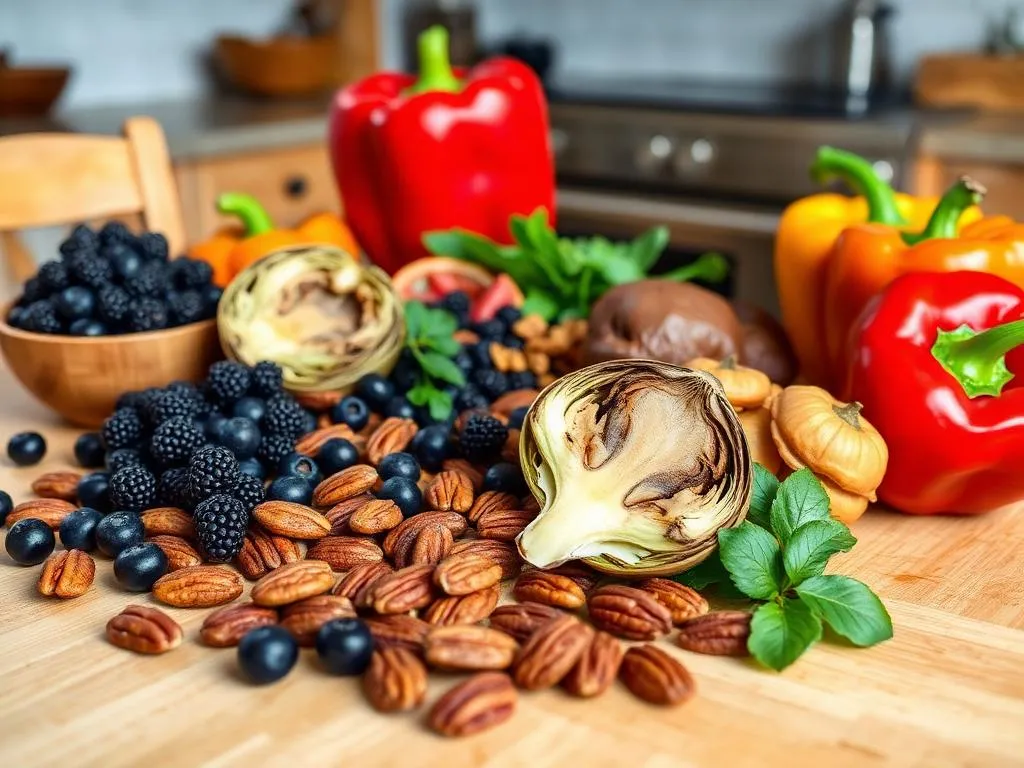
Refers to foods dense in compounds that neutralize reactive oxygen species, vitamins C and E, carotenoids, selenium, and polyphenols, found in colorful produce, nuts, seeds, whole grains, and spices. These nutrients reduce oxidative damage that accumulates with aging and stress.
- Practice
- Eat
- Principle
- Nourishment
- Tactic
- Brain Healthy Foods
- Evidence grade
- Essential
- Strength of evidence
- High
- Cost
- High
- Effort
- Low
- Time commitment
- Low
How to practice Antioxidant-rich foods
Focus on whole foods: a “rainbow” of vegetables, fruits, and nuts daily. Include spinach, kale, berries, oranges, carrots, and almonds regularly. Use herbs and spices (turmeric, cinnamon, oregano) liberally. Avoid reliance on high-dose vitamin E or beta-carotene pills unless medically indicated. Cooking methods matter, steaming or roasting preserves most antioxidants. Benefits accrue from consistency, not megadoses.
The evidence behind Antioxidant-rich foods
Oxidative stress damages neuronal membranes and DNA, promoting inflammation and cognitive decline. Large cohorts link high total antioxidant capacity diets to better memory and lower dementia incidence. RCTs of single antioxidant supplements show mixed results, implying synergy from food-based combinations. Mechanistic plausibility is strong, particularly for diets emphasizing fruits, vegetables, and nuts. Tradeoff: isolated supplements may disrupt redox balance or add expense without added benefit.
More Eat techniques
Take control of your brain health
BetterBrain gives you a personalized protocol of techniques like these, backed by science and tailored to you.