Move · Brain health technique
Movement outdoors
Evidence grade: Essential
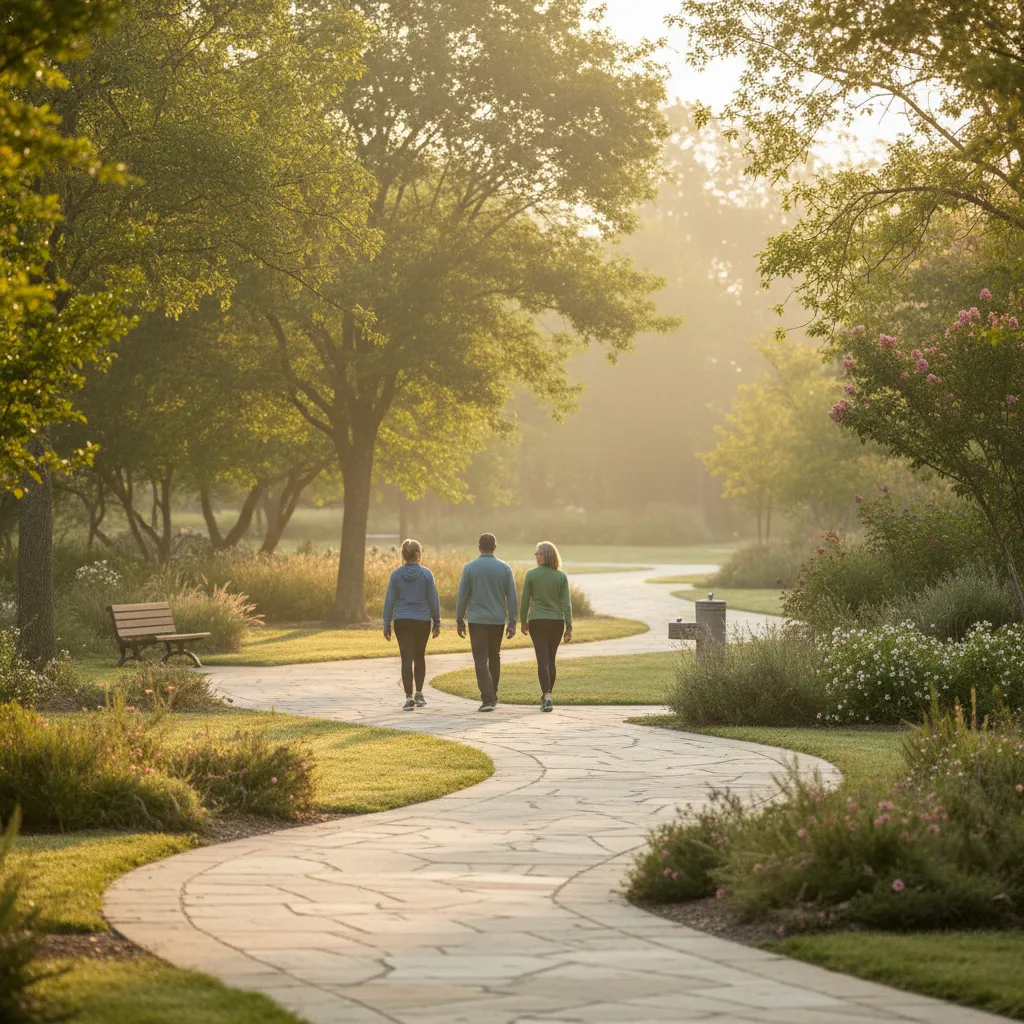
Physical activity performed outside—such as walking, hiking, or gardening—combining exercise with natural light exposure, fresh air, and sensory stimulation.
- Practice
- Move
- Principle
- Engagement
- Tactic
- Everyday Movement
- Health domains
- mental health
- Evidence grade
- Essential
- Strength of evidence
- High
- Cost
- High
- Effort
- Low
- Time commitment
- High
How to practice Movement outdoors
Spend at least 20–30 minutes outdoors daily, ideally during daylight hours. Combine walking, light exercise, or yard work with sunlight exposure. Morning or midday light helps anchor circadian rhythm. Layer appropriately for weather and avoid heavy pollution days. Even short outdoor breaks between meetings improve focus and sleep quality.
The evidence behind Movement outdoors
Outdoor movement adds benefits beyond physical exertion: natural light helps regulate circadian rhythm and vitamin D synthesis, while exposure to nature reduces cortisol and improves mood. RCTs show outdoor exercise yields greater improvements in mood, vitality, and attention than equivalent indoor exercise. The combination of light, scenery, and mild environmental stressors enhances brain plasticity and well-being.
More Move techniques
Take control of your brain health
BetterBrain gives you a personalized protocol of techniques like these, backed by science and tailored to you.