Environment · Brain health technique
Natural ventilation
Evidence grade: Context Dependent
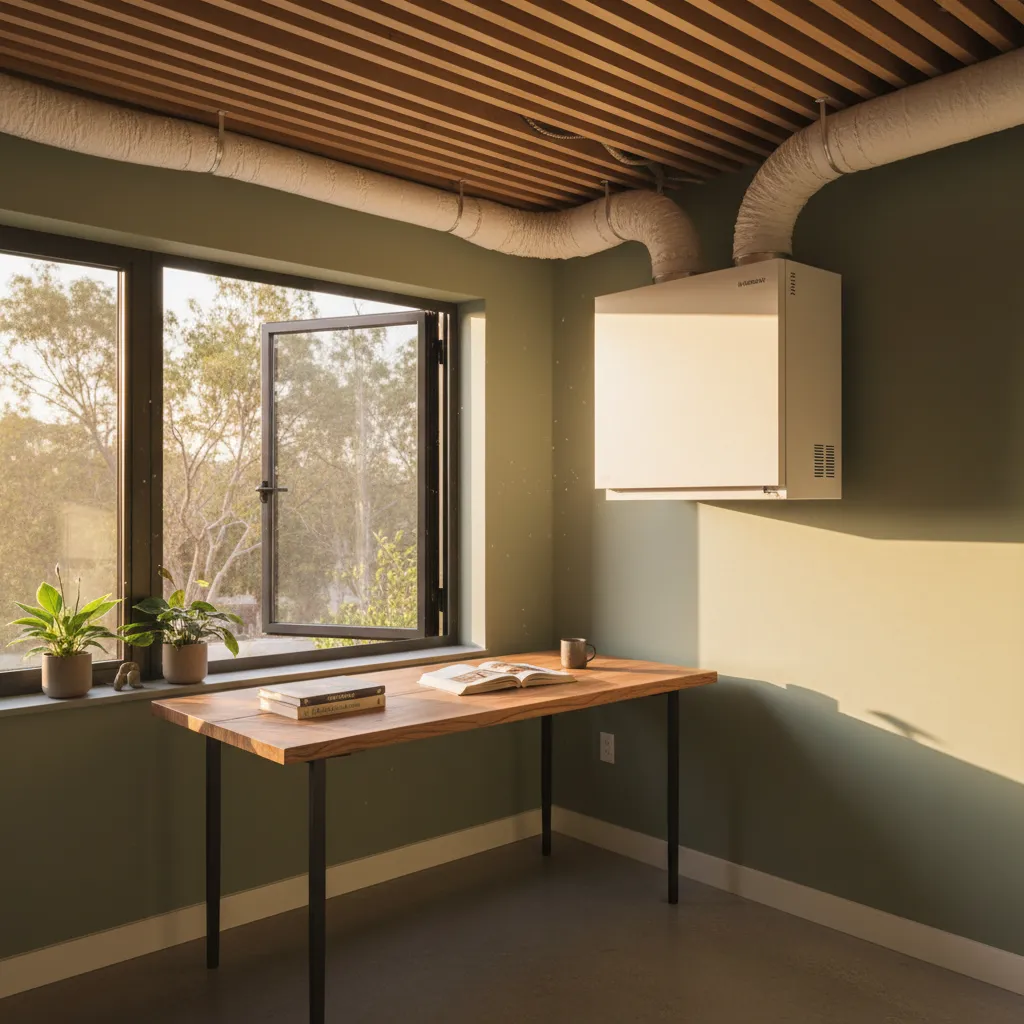
Regularly replacing indoor air with outdoor air through windows, vents, or exhaust fans to lower carbon dioxide (CO₂), volatile organic compounds (VOCs), and indoor humidity. Especially important in sealed or energy-efficient buildings where air recirculates.
- Practice
- Environment
- Principle
- Protection
- Tactic
- Air Quality Optimization
- Evidence grade
- Context Dependent
- Strength of evidence
- Medium
How to practice Natural ventilation
Ventilate 10–20 minutes a day when outdoor AQI < 75. Create a cross-breeze with two windows or use bathroom/kitchen fans. During smoke or smog events, seal windows and rely on filtration instead. Monitor CO₂; aim to keep < 800 ppm in main living areas.
The evidence behind Natural ventilation
Indoor CO₂ often exceeds 1,000 ppm in occupied rooms, which correlates with slower decision-making and cognitive fatigue. Opening windows or using fans restores oxygen levels and dilutes VOCs, odors, and moisture. Effectiveness depends on outdoor air quality , ventilation helps when outdoor AQI is good but can worsen exposure during wildfire smoke or heavy traffic pollution.
More Environment techniques
Take control of your brain health
BetterBrain gives you a personalized protocol of techniques like these, backed by science and tailored to you.