Eat · Brain health technique
Resistant starches
Evidence grade: Context Dependent
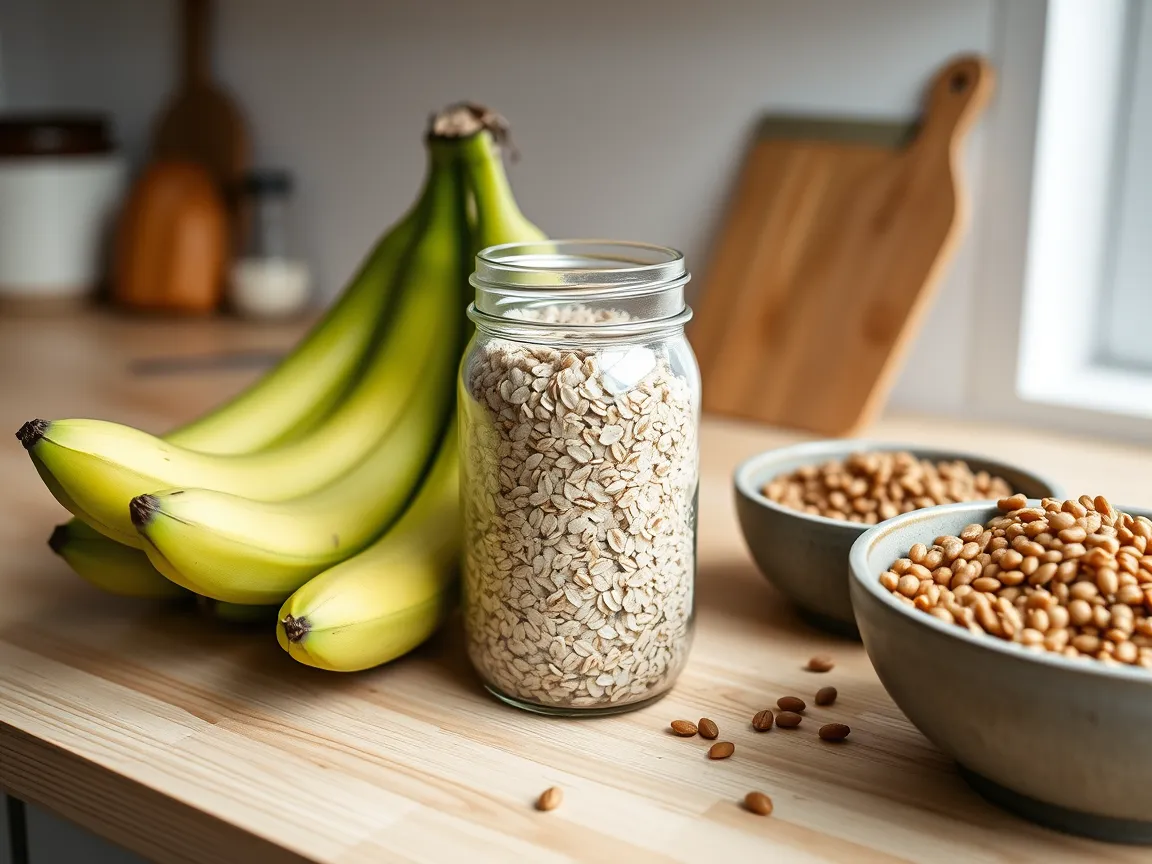
Starches found in green bananas, cooked-and-cooled potatoes, rice, and legumes that pass through the small intestine undigested. In the colon, gut bacteria turn them into butyrate, a fatty acid that supports brain health.
- Practice
- Eat
- Principle
- Nourishment
- Tactic
- Other Nutritional Strategies
- Evidence grade
- Context Dependent
How to practice Resistant starches
Cook rice or potatoes and then cool them before eating. Cooling changes the starch structure so your body can't digest it, and it becomes food for good gut bacteria instead. Green bananas, overnight oats, and lentils are other easy sources. Start at 5 to 10 g daily and build up to 15 to 30 g to avoid bloating. Raw potato starch (1 to 2 tbsp in a cold drink) works as a concentrated option.
The evidence behind Resistant starches
Resistant starch preferentially feeds butyrate-producing bacteria like Faecalibacterium and Roseburia. Butyrate strengthens the gut lining, crosses into the brain, and supports the formation of new neural connections. A 2024 mouse study found lentil-derived resistant starch improved brain function through the gut-brain axis. Human evidence is still indirect, but the biological pathway is well understood.
More Eat techniques
Take control of your brain health
BetterBrain gives you a personalized protocol of techniques like these, backed by science and tailored to you.