.png)

Key takeaways:
What does a brain health coach do for her own health? We asked Emily Timm, a dietitian and Brain Health Coach at BetterBrain, to walk us through the research she’s reading, the food habit she never skips and the smoothie she makes before yoga.
The short answer
Emily’s daily brain health routine rests on three habits: two tablespoons of hemp seeds a day, hot yoga, which she has practiced for 18 years, and the Brainy Beet Smoothie she drinks before class, made with steamed beet, blueberries, cherries, tofu, soy milk and hemp seeds. Below, she explains why each one made the cut, what the research says about it, and how to make the smoothie yourself.
Who is Emily Timm?

Emily’s background is in endocrine health, supporting people with conditions including PCOS and diabetes. At BetterBrain, she’s digging deeper into the connections between nutrition, hormones and the brain.
Asked about her favorite part of coaching, she said:
“I love working with the clients that come to BetterBrain because we get to be pioneers, together, in paving the future of precision preventative medicine. Prioritizing health in the modern world is an act of radical rebellion! It requires grit and a willingness to go against the predestined path. When you come to BetterBrain, you’re claiming a higher standard for yourself and we’re honored to meet you there and support you in designing a lifestyle that is authentic to you.”
What is a brain health coach reading right now?
Emily’s reading sits where nutrition, genes and brain signaling meet. Three areas have her attention right now:
- Nutritional cognitive neuroscience: how diet and nutrients relate to brain health, memory and thinking.
- Nutrigenomics: how nutrition influences gene expression, with implications for health and aging.
- The endocannabinoid system: the body’s own cell-signaling network that helps regulate internal balance.
The thread running through all three is a question that shapes her coaching: how can a better understanding of the body help people make more informed everyday choices?
Are hemp seeds good for your brain?
Hemp seeds are Emily’s favorite brain health hack, and she eats two tablespoons a day. Here’s why, in her words:
“Hemp seeds are an incredible food as they are considered nutritionally complete, meaning they provide all nine essential amino acids, healthy fats and key minerals in a single plant source. They also contain a beautiful fatty acid profile, including omega-3 and omega-6 fats. That matters for our Endocannabinoid system (ECS), because the messengers this system uses, called endocannabinoids, are made from fatty acids. The ECS acts as a master regulator in the brain, using those messengers, their receptors and the enzymes that make and break them down to control how active other neurotransmitters are and maintain inner balance. Research on how much diet can shape this system in people is still early, but the animal studies are exciting.”
A few things worth knowing if you want to try it.
What’s in two tablespoons. Two tablespoons of hulled hemp seeds (about 20 grams) carry roughly 6 grams of protein and about 1.7 grams of alpha-linolenic acid (ALA), the plant form of omega-3, based on USDA food composition data. That covers the NIH’s daily adequate intake for ALA (1.1 grams for women, 1.6 grams for men). They’re also a good source of magnesium, iron and zinc. This overview of hempseed nutrition covers the full profile.
Plant omega-3 and fish omega-3 behave differently. Your body converts only a small share of ALA into EPA and DHA, the long-chain omega-3s most closely tied to brain health. Hemp seeds are a good addition to a diet, but they don’t replace fatty fish or an algae-based supplement if your EPA and DHA intake is low. We cover sources and dosing in Unlocking the power of omega-3s.
The endocannabinoid link is early, and mostly in mice. One of the better-known studies found that mice raised on an omega-3 deficient diet lost normal endocannabinoid signaling in brain regions tied to mood and emotional behavior. It’s a compelling mechanism. Whether eating more hemp seeds meaningfully shifts this system in people hasn’t been tested yet, which is why Emily frames it as exciting rather than settled.
How to use them. Hemp seeds have a mild, nutty taste. Stir them into oatmeal or yogurt, sprinkle them on salads, or blend them into a smoothie like the one below.
Is hot yoga good for brain health?
For Emily, hot yoga brings movement, attention and enjoyment together.
“I’ve been practicing yoga for 18 years and I have never regretted a class! Combining heat with mind/body integration, in addition to being a lot of fun, provides an awesome brain health boost that’s also excellent for our cardiovascular health.”
Yoga has a growing research base. A 2019 systematic review of brain imaging studies found that yoga practice was associated with differences in brain regions involved in memory and attention, including the hippocampus and prefrontal cortex. Most of those studies were small, and many were cross-sectional, so they show a link more than a cause. Research on heated yoga specifically is thinner still. If you want the heat component, our piece on saunas and brain health covers what’s known.
A practical target from our Technique Library: two to four sessions a week, 30 to 60 minutes each. Any style counts. Pick the one you’ll keep showing up for.
The Brainy Beet Smoothie recipe
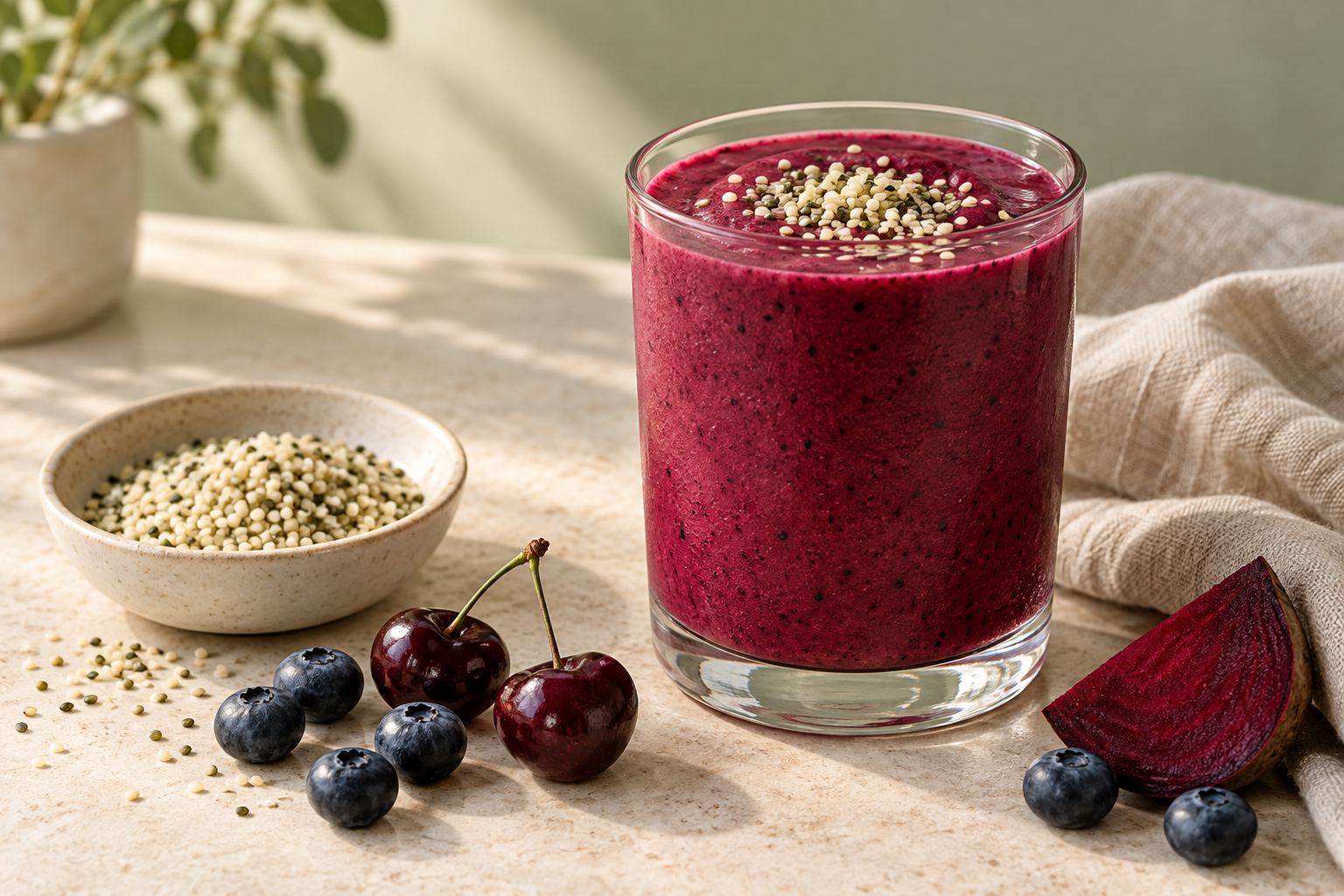
Emily usually has a smoothie before yoga. This was her go-to summer recipe, and a favorite with her clients too.
Ingredients
- 1 large beet, steamed
- 1 cup frozen blueberries
- 1/2 cup frozen cherries
- 3 oz tofu
- 1 cup soy milk, plus more as needed
- 2 tbsp hemp seeds
- Optional add-ins: 1/2 tbsp beet root powder and/or fresh basil
Instructions
- Steam the beet until tender, then let it cool.
- Add everything to a blender and blend until smooth.
- Add more soy milk to reach the thickness you like.
Why these ingredients?
- Beets are one of the richest food sources of dietary nitrate, which the body converts to nitric oxide, a molecule that helps blood vessels relax. In a study of older adults averaging 75 years old, a high-nitrate diet did not change overall brain blood flow but increased blood flow to frontal lobe white matter, in areas involved in executive function.
- Blueberries and cherries are rich in anthocyanins, the plant pigments behind their deep color, which are being studied for their role in inflammation and vascular health.
- Tofu and soy milk add protein and soy isoflavones, and make the smoothie filling enough to carry you through a class.
- Hemp seeds add protein, fat and plant omega-3s, and keep Emily’s two-tablespoon habit on track.
How can a coach help you build your own routine?
Emily’s routine works because it fits her life: a food she likes, a practice she’s kept for nearly two decades, and a recipe that makes both easier. Your version will look different, and it should.
That’s what BetterBrain is built to do. You share your health history, lifestyle and goals, and your brain-relevant health data if you have it. A brain health coach helps you make sense of it all, narrows it to the few priorities that matter most for you, and builds a personalized plan that adjusts as you go. Whether you’re exploring new foods or building a movement routine, you don’t have to figure it out alone.
There are two ways to start. If you want to start with your data, Blueprint pairs 50+ brain-relevant biomarkers and cognitive testing with a 90-minute consultation with a brain health coach. If you’d rather talk to someone first, the Coaching Program builds your plan from your history, lifestyle and goals, and testing can come later. The only thing you decide is where you start.
Get started on your BetterBrain journey
Already a BetterBrain client? Check in with your BetterBrain coach to talk through what a routine like Emily’s could look like for you.
Want more coach routines? Read how Coach Ana Hernandez approaches brain health.
Frequently asked questions
Are hemp seeds a good source of omega-3?
Hemp seeds contain ALA, the plant form of omega-3, along with omega-6 fats. Two tablespoons provide roughly 1.7 grams of ALA, which meets the daily adequate intake for most adults. The body converts only a small amount of ALA into EPA and DHA, the long-chain omega-3s most linked to brain health, so hemp seeds complement fatty fish or an algae-based supplement rather than replacing them.
Are hemp seeds a complete protein?
Hemp seeds contain all nine essential amino acids, which is why they’re often described as a complete plant protein. Two tablespoons of hulled hemp seeds provide about 6 grams of protein.
Do beets improve blood flow to the brain?
Beets are high in dietary nitrate, which the body converts to nitric oxide, a molecule that helps blood vessels widen. In a small study of older adults, a high-nitrate diet increased blood flow to frontal lobe white matter, a region involved in executive function, though it did not change overall brain blood flow. The research is early and based on short-term studies.
Is yoga good for your brain?
Yoga is associated with differences in brain regions tied to memory and attention, including the hippocampus and prefrontal cortex. Most studies so far are small, so the evidence is promising but not definitive. Yoga also supports stress management, balance and flexibility, which matter for healthy aging.
What does a brain health coach do?
A brain health coach helps you turn health information into a plan you can follow. At BetterBrain, coaches review your health history, lifestyle, goals and, when available, your biomarker and cognitive testing results, help you choose a few priorities, and adjust your plan over time as your data and life change.