
A more hopeful future for Alzheimer’s: what the research means for you
If Alzheimer’s runs in your family, you’ve probably wondered what you can do to protect your own brain health. It’s a question we know well, and one that led us to start BetterBrain.
Progress in Alzheimer’s research is giving us more ways to care for our brains. Lifestyle trials are showing improvements in cognition, blood tests are helping clinicians identify Alzheimer’s-related changes, and newer treatments can slow decline in some people with early disease. Here’s what that progress means for everyday life, and where to start.
If Alzheimer’s runs in your family, you’ve probably wondered what you can do to protect your own brain health. It’s a question we know well, and one that led us to start BetterBrain.
When you’ve watched someone you love go through this disease, research can feel very personal. You want to know what has changed, what might help, and what you can do with that information.
There are reasons to feel hopeful. We’re learning more about how daily habits affect brain health, seeing progress in treatment, and getting better at identifying Alzheimer’s-related changes. There is still a lot to learn, but there is also a lot we can do with what we already know.
What does progress in Alzheimer’s research mean for everyday life?
It means there are more ways to understand your brain health and take practical steps to support it. The progress spans three areas: lifestyle, diagnosis, and treatment.
These areas answer different questions. Lifestyle research helps us understand which habits support thinking and memory. Diagnostic tests help clinicians investigate what may be happening in the brain. Treatments can help some people who already have early Alzheimer’s slow their decline.
For someone thinking about their future, the useful question is where to begin. You don’t need to wait for every scientific question to be answered before paying attention to your health.
What are lifestyle studies showing about brain health?
Studies suggest that mental engagement and physical fitness are associated with better long-term brain health. Randomized lifestyle trials also show that structured programs addressing several areas of health together can improve performance on cognitive tests.
Staying curious
One encouraging finding comes from a study published in Neurology that followed 1,939 older adults for about eight years. People who had been the most mentally engaged throughout their lives had a 38% lower risk of developing Alzheimer’s than those who had been the least engaged. They also tended to develop it later.
That association adds to the evidence supporting something many of us enjoy already: staying curious and giving our brains something new to work on.
Maybe that means picking up an instrument you used to play, learning a language with a friend, or joining a class you’ve been putting off. Choose something you’d like to keep coming back to.
Healthy habits work together
The LatAm-FINGERS trial followed 1,065 older adults at increased dementia risk across 11 Latin American countries. It compared a structured program of exercise, nutrition, cognitive training, cardiovascular care, and social engagement with a less intensive program.
Over two years, the structured group made greater gains on cognitive tests, particularly in memory. These results build on the Finnish FINGER and U.S. POINTER studies, which also support an approach that addresses several areas of health together.
The trial also found a larger benefit from the structured program among women. That deserves further study, especially given how disproportionately women are affected by dementia. It is an encouraging finding, though it does not yet tell us whether these programs can close the gap in dementia rates.
For everyday life, the practical takeaway is that movement, nutrition, learning, social connection, and cardiovascular health all deserve attention. You can build a plan around the areas that matter most for you.
Movement matters
An analysis of the Cooper Center cohort linked lower fitness with higher dementia rates later in life. The association did not suggest that everyone needs to reach an elite level of fitness.
For someone getting started, that matters. A manageable routine is worth building, and short bouts of movement can be one way to begin.
How are Alzheimer’s diagnosis and treatment improving?
Blood tests can help clinicians identify Alzheimer’s-related changes, and newer medicines can slow decline in some people with early Alzheimer’s. Both developments are giving people more options to discuss with their care team.
What pTau-217 can tell you
We recently wrote about pTau-217, the Alzheimer’s blood test making headlines. It measures a form of tau protein associated with Alzheimer’s biology. Changes in the brain can begin years before memory symptoms, and pTau-217 may become abnormal during that period.
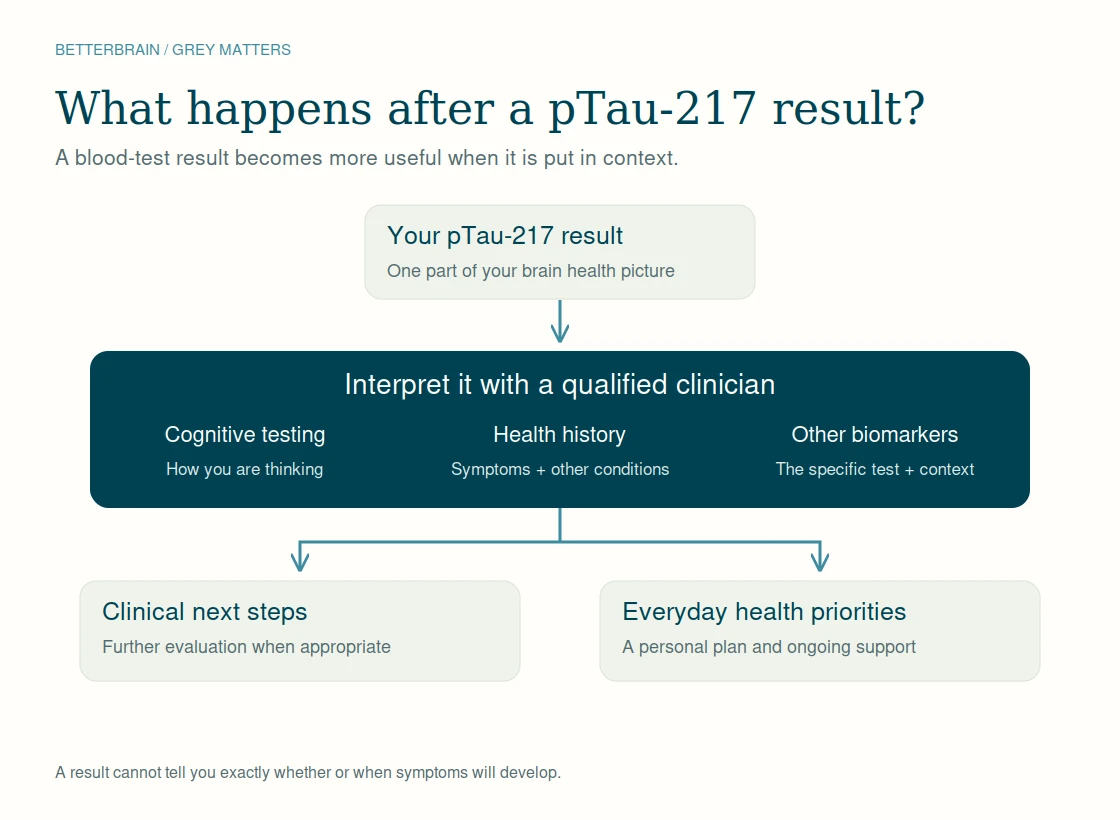
A result needs context. It cannot tell someone exactly whether or when they will develop symptoms. Different tests have different intended uses, and FDA-cleared diagnostic tests are used as part of an evaluation of people with cognitive concerns, rather than as general screening for everyone.
At BetterBrain, we look at pTau-217 alongside other biomarkers, cognitive testing, health history, and everyday habits. We want people to understand what their results mean and have support to work through the next steps.
If you’re considering testing, our pTau-217 guide explains what it can tell you, what it can’t, and how we use it at BetterBrain.
What newer treatments can do
Lecanemab and donanemab can slow decline in some people with early Alzheimer’s. They do not reverse the disease, and they require careful monitoring, including for brain swelling or bleeding. They are nevertheless an important development after years with few treatment options.
If someone you love is experiencing memory changes, a clinical evaluation can help them understand the cause and which options may be appropriate.
Why did we start BetterBrain?
We started BetterBrain to make brain health knowledge and personalized support accessible to everyone. Alzheimer’s has touched our own families, and we know how difficult it can be to search for answers when someone you love is going through this disease.
If you’ve read the story behind BetterBrain, you’ll know this work is personal. Our experiences led us to ask what we could do for our own brain health, and how we could help others do the same.
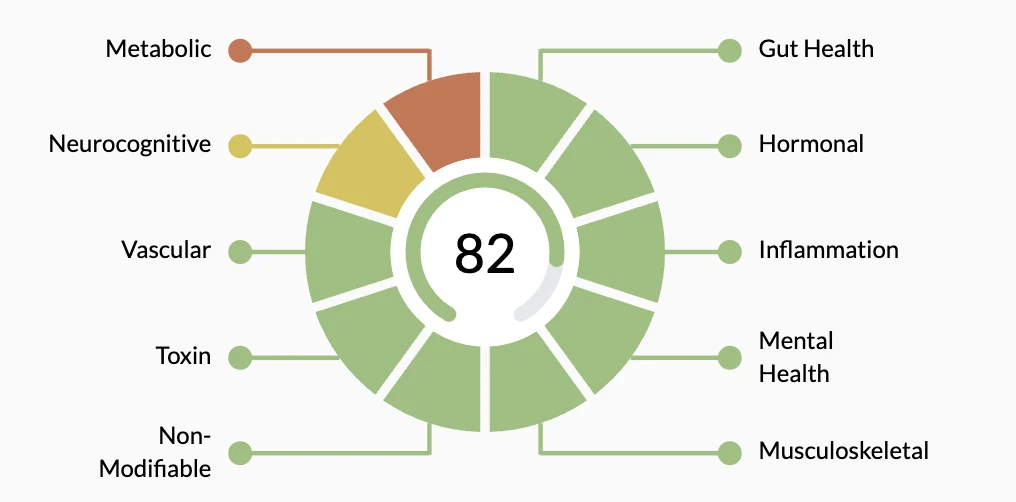
We learned how much brain health connects to the rest of our lives, including metabolic health, sleep, movement, nutrition, blood pressure, and social connection. Understanding which areas need attention is a valuable first step. Having someone help you make those changes, work through setbacks, and keep going matters, too.
Our mission is to empower every person to take charge of their brain health so they can live a full life, their whole life.
That means being there beyond the comprehensive assessment, with guidance that adapts as your needs change and as we learn more about the science of brain health.
What progress are BetterBrain clients seeing?
Our internal tracking shows improvements in brain-relevant biomarkers among clients who retest. Clients also report clearer thinking, better energy and mood, less brain fog, and more confidence about their health.
You can read an example in our client story about changes over 90 days. An individual’s experience is not a prediction of someone else’s results, but it can help show what putting a personalized plan into practice looks like.
We want people to have a clearer understanding of their health and feel supported in making changes, especially when they previously felt unsure where to start.
Hear from Amy, a BetterBrain client
“They had the answer to every crazy question I had and the science to back it up”
Amy, BetterBrain client since 2023
Watch Amy’s testimonial · Originally featured on BetterBrain’s website.
How can you start caring for your brain health today?
Start by identifying two or three priorities that make sense for your health and your life. You don’t need to change everything at once.
- Take stock. Review what you already know about your health and what needs more attention. That might mean discussing blood pressure or cholesterol with your clinician, or addressing a sleep concern.
- Choose a manageable next step. Find movement you enjoy, make time for people who matter to you, or give yourself something new to learn.
- Get support and follow up. Make a realistic plan, decide how you’ll check your progress, and adjust when life gets in the way.
Our guide to personalizing your brain health plan with your own data explains how to choose your priorities. If you’re looking for ideas, these are five recommendations we make often.
Alzheimer’s is complex, and no one can control every part of their risk. But caring for your brain is something you can begin at any time. We are here to support you along the way.
What should you take away from this research?
There are good reasons to be hopeful, and practical ways to act on that hope.
- Lifestyle trials support addressing several areas of health together.
- Cognitive improvements in a trial are different from proof that a program prevents Alzheimer’s.
- Blood tests can provide useful information when interpreted alongside the rest of your health.
- Newer treatments offer options for some people with early Alzheimer’s.
- Your next step can be small, personal, and supported.
References
- Cognitive enrichment and Alzheimer’s risk, Neurology.
- LatAm-FINGERS, The Lancet.
- U.S. POINTER study overview and results, Alzheimer’s Association.
- Cooper Center cohort.
- FDA: first cleared Alzheimer’s blood test, May 16, 2025.
- FDA: traditional approval of lecanemab, July 6, 2023.
- FDA: approval of donanemab.
- BetterBrain: pTau-217 explainer.
- BetterBrain: individual client story, October 20, 2025.
What else should you know about caring for your brain?
Can lifestyle changes prevent Alzheimer’s?
Lifestyle changes can support brain health and address modifiable dementia risk factors, but they cannot guarantee that an individual will avoid Alzheimer’s. Trials showing better cognitive test performance do not automatically demonstrate fewer Alzheimer’s diagnoses.
What is a practical first step if Alzheimer’s runs in my family?
Review your health history and current concerns with a clinician, then choose two or three manageable priorities. Blood pressure, cholesterol, sleep, movement, and opportunities for learning and connection are useful areas to discuss.
Does an elevated pTau-217 result mean I will develop symptoms?
No. An elevated result may indicate Alzheimer’s-related biological changes, but it cannot tell you exactly whether or when symptoms will develop. Interpretation depends on the specific test and the rest of your clinical evaluation.
Can newer Alzheimer’s medicines reverse the disease?
No. Lecanemab and donanemab can slow decline in some people with early Alzheimer’s, but they do not reverse it. Eligibility and the need for monitoring should be discussed with a treating specialist.
Do I need to change everything at once?
No. Start with a small number of priorities that fit your health needs and daily life. A realistic plan, ongoing support, and follow-up can help you keep making progress.
Live a full life, your whole life.
Understand your brain health and get help turning that knowledge into a plan that fits your life.