Brain health is whole-body health
How BetterBrain connects 10 health domains, 12 practices, and hundreds of techniques to help you turn science into action.
- Your brain depends on your whole body. Blood vessels, metabolism, hormones, the immune system and mental health all influence how it works.
- BetterBrain organizes brain health into 10 overlapping domains, so each result sits within a broader picture of your health.
- In the U.S. POINTER trial of 2,111 adults ages 60–79, a structured multidomain program produced a modest additional cognitive benefit over a self-guided one.
- 12 practices turn that picture into action, and hundreds of techniques, graded by strength of evidence, make each practice concrete.
- You do not need to work on everything at once. The goal is a small number of priorities that fit your life.
Most clients pay $0 with employer sponsored insurance.
What does your cholesterol have to do with your memory? Why would a brain-health program ask about your strength, digestion, or sleep?
Because your brain depends on the health of your whole body.
The blood vessels that support your heart also deliver oxygen and nutrients to your brain. Your metabolism helps supply its energy. Your hormones, immune system, and mental health influence how you feel and function.
Many of the things that support a healthier, longer life also support the brain that lets you enjoy it.
This connection is central to BetterBrain. Our approach brings together 10 brain-health domains, 12 practices, and hundreds of specific techniques to help you understand your health and decide what to do next.
A more complete picture of brain health
Brain health includes memory, attention, learning, and the ability to navigate daily life. Understanding it means looking beyond the brain itself.
High blood pressure and diabetes can damage the blood vessels that supply the brain. Poor sleep can affect memory and concentration. A vitamin B12 deficiency can cause neurological symptoms and thinking difficulties. These connections give us meaningful places to investigate and act.
BetterBrain organizes this bigger picture into 10 domains. They help connect information from your health history, assessments, and available biomarkers, so individual results sit within a broader context.
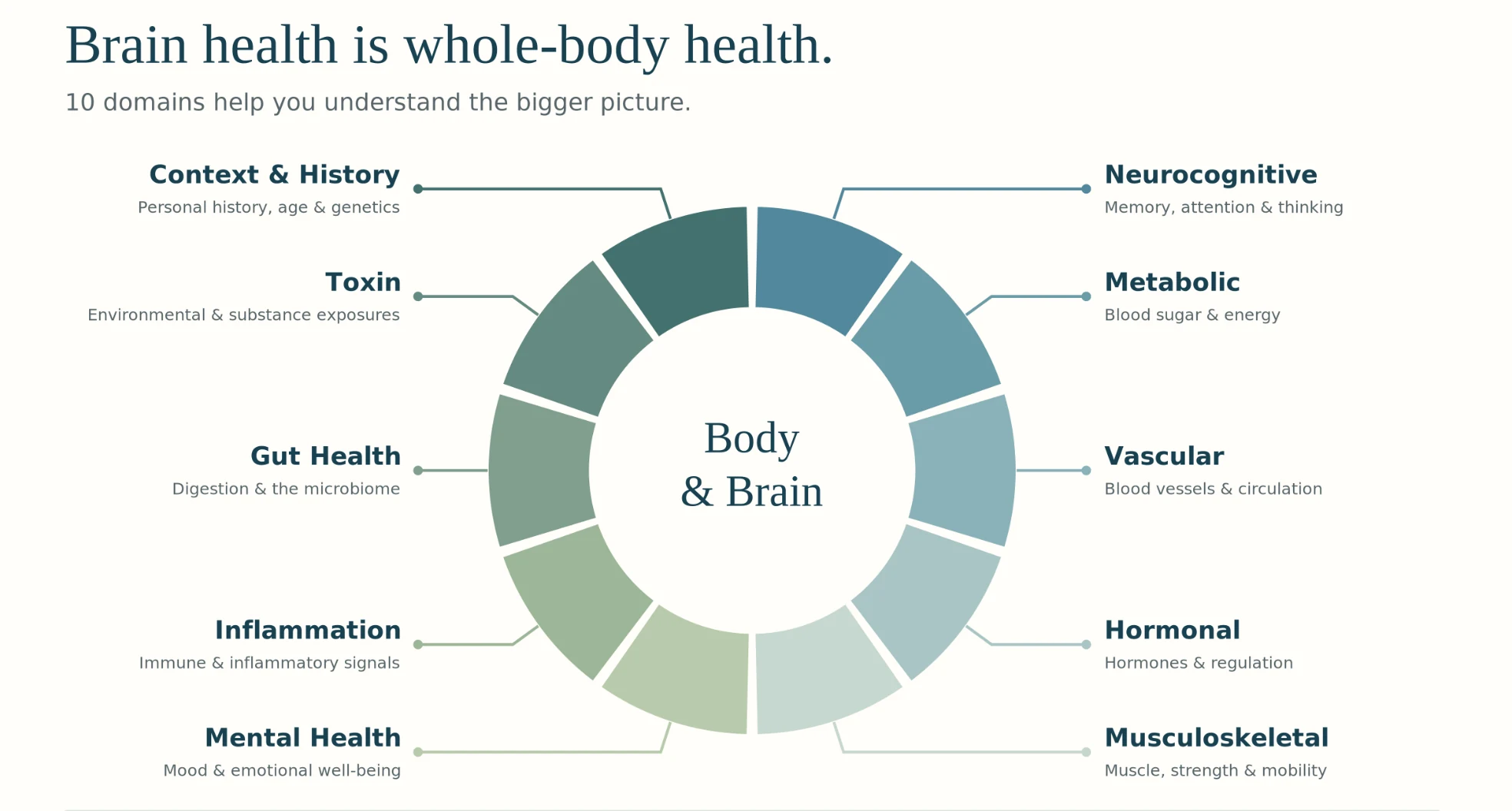
| Brain-health domain | What it helps us understand |
|---|---|
| Neurocognitive | How you’re functioning cognitively, including memory, attention, and processing speed. These abilities help you learn, work, and manage everyday life. |
| Metabolic | How your body regulates and uses energy. Blood sugar and insulin-related measures provide context for metabolic health and its connection to the brain. |
| Vascular | The health of your heart and blood vessels. Blood pressure and cholesterol-related markers help identify risks that can affect circulation throughout the body. |
| Hormonal | Hormonal factors, including thyroid function and relevant life-stage changes, that may influence energy, mood, sleep, and cognition. |
| Musculoskeletal | Your strength, movement, and physical function. These support mobility, metabolic health, and the ability to stay active and independent. |
| Inflammation | Signals of immune activity, interpreted alongside your health and circumstances. Markers such as hs-CRP provide context, but do not identify a cause on their own. |
| Gut Health | Digestive health and the relationship between nutrition, the gut, and the rest of the body. Research into the gut-brain connection is developing, and recommendations need to reflect the strength of the evidence. |
| Mental Health | Mood, anxiety, and psychological well-being, which can affect concentration, sleep, relationships, and daily functioning. |
| Toxin | Relevant exposures, such as smoking, alcohol, and certain environmental contaminants, that may affect brain and whole-body health. |
| Context & History | Your age, genetics, family history, and previous injuries or illnesses. These help shape how other findings are interpreted and which priorities deserve attention. |
These domains overlap. A sleep problem may affect your mood, concentration, and metabolic health. Regular movement can support physical function while also benefiting cardiovascular health.
That overlap is useful: one well-chosen change can support several parts of your health.
What does your bigger picture look like?
The science supports looking at the whole person
Researchers increasingly study approaches that address several contributors to cognitive health together.
The U.S. POINTER trial followed 2,111 adults ages 60–79 who were at increased risk of cognitive decline. Participants received either a structured or self-guided program involving physical activity, nutrition, cognitive and social engagement, and cardiovascular health monitoring.
Both groups improved on cognitive testing over two years. The structured program produced a modest but statistically significant additional benefit. Longer follow-up is needed to establish whether those differences translate into lasting functional benefits or reduced dementia incidence.
This was not a trial of BetterBrain. It supports the broader principle behind our approach: addressing multiple aspects of health together, with structure and support, is a promising way to care for cognition.
From understanding your health to knowing what to do
A domain tells you where to look. A practice gives you a way to act.
BetterBrain organizes action into 12 practices, covering everyday behaviors, your surroundings, and appropriate professional care.
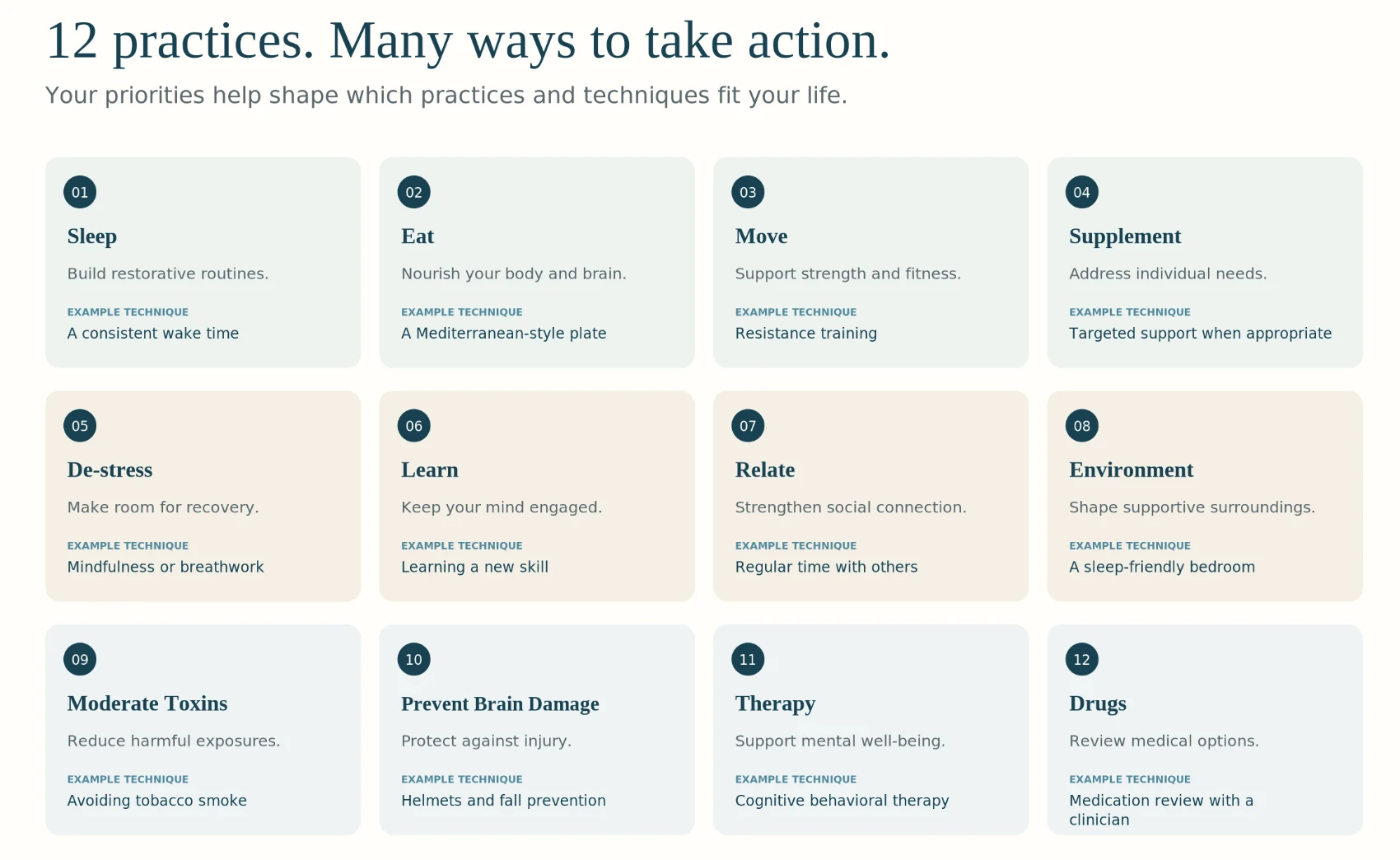
| Practice | What it can look like |
|---|---|
| Sleep | Building a consistent sleep schedule, creating a wind-down routine, and addressing persistent sleep problems. |
| Eat | Developing a sustainable eating pattern that supports your nutritional needs and health priorities. |
| Move | Combining aerobic activity, strength training, balance work, and everyday movement according to your abilities. |
| Supplement | Considering targeted supplementation when your needs and the evidence support it. |
| De-stress | Practicing ways to manage stress, such as mindfulness, breathing exercises, or changes to daily routines. |
| Learn | Making time for challenging activities that involve developing skills and using your mind. |
| Relate | Building and maintaining meaningful relationships and regular social connection. |
| Environment | Shaping your surroundings to support health, including light, noise, air quality, and your sleep environment. |
| Moderate Toxins | Reducing relevant exposures, including tobacco smoke and excessive alcohol. |
| Prevent Brain Damage | Taking practical steps to reduce head injuries and falls, including appropriate protective equipment. |
| Therapy | Exploring appropriate professional therapies, such as cognitive behavioral therapy, when indicated. |
| Drugs | Reviewing medications and discussing appropriate treatment options with a qualified prescribing clinician. |
You do not need to work on all 12 at once. The purpose of this framework is to help you choose priorities, then make them manageable.
Hundreds of techniques. A focused plan for you.
“Improve your sleep” is a direction. “Keep a consistent wake time” is a technique you can put into practice.
“Move more” is broad advice. Planning two strength sessions around your schedule is more concrete.
BetterBrain’s library contains hundreds of techniques organized within the 12 practices. The research behind techniques is graded by strength of evidence, helping distinguish well-established approaches from areas where the science is still emerging.
Examples include:
- Sleep: Establish a consistent wake time or a repeatable wind-down routine.
- Eat: Add fiber-rich foods or plan meals around a Mediterranean-style eating pattern.
- Move: Build an aerobic routine or introduce progressive resistance training.
- Relate: Schedule recurring time with friends or join a group built around a shared interest.
- Prevent Brain Damage: Use an appropriate helmet for activities with head-injury risk.
- Therapy: Discuss cognitive behavioral therapy for persistent insomnia with a qualified professional.
These are examples, rather than a universal prescription. A technique’s relevance depends on your health, goals, preferences, and circumstances.
The value of having hundreds of options is being able to find a small number that fit you.
Find a starting point that fits your life.
How those pieces come together
Consider someone who reports poor sleep, low energy, and difficulty concentrating.
Their experience may involve several domains. Understanding their sleep pattern, mental health, medical history, and relevant test results helps clarify what deserves attention. Their first steps might include a more consistent sleep routine, a coaching conversation about barriers, or medical evaluation for a possible sleep disorder.
Someone else may feel well but have cardiovascular risk factors that need attention. Their priorities could include changes to eating and movement, alongside a discussion with their physician about treatment.
The framework is the same. The plan is personal.
Inside BetterBrain, Body & Brain brings your health information together across the domains. Your Protocol organizes relevant practices and techniques. Your Action Plan focuses that broader guidance into the next steps you’re working on.
A Brain Health Coach helps you interpret the information, set realistic priorities, and adjust when something is difficult to sustain. BeBe, our AI guide, helps you explore your information and recommendations between sessions. Medical diagnosis and prescribing remain with your treating clinicians.
A healthier brain is part of a healthier life
Brain health and longevity share many priorities: maintaining physical function, caring for your cardiovascular health, staying engaged, and addressing problems that affect daily life.
The goal is to preserve the abilities that let you participate fully in it. Remembering a conversation. Learning something new. Traveling with confidence. Staying connected to the people who matter to you.
You can begin by creating a free BetterBrain Self-Directed account, uploading your existing labs and health records, and exploring personalized next steps based on your data. For people who want one-on-one support, coaching is often $0 with insurance, depending on plan and eligibility.
Understand the bigger picture. Choose what matters most. Start putting it into practice.
Create your free BetterBrain account →
REFERENCES
- Baker LD, Espeland MA, Whitmer RA, et al. Structured vs self-guided multidomain lifestyle interventions for global cognitive function: the US POINTER randomized clinical trial. JAMA. 2025. https://doi.org/10.1001/jama.2025.12923
- Alzheimer's Association: U.S. POINTER study results. https://www.alz.org/us-pointer/study-results