
GreyMatters
Educational articles, BetterBrain resources, latest in brain health, and news about us. Written for you, with expertise (and love).

How Chronic Stress Shrinks Your Brain, and How to Reverse It
Chronic stress does more than affect your mood. Sustained cortisol exposure physically shrinks the hippocampus, your brain's primary memory center. The encouraging part: this is reversible. In controlled neuroimaging studies, eight weeks of mindfulness practice increased gray matter in the hippocampus and reduced it in the amygdala, the brain's threat-detection center. Managing stress is one of the most accessible ways to protect your long-term cognitive health.
Stress is easy to file under "quality of life" rather than "brain health." The neuroscience tells a different story, and it's a hopeful one, because the same biology that makes chronic stress harmful also makes it one of the most modifiable risks you can act on.
Below, we cover what chronic stress does to the brain, the landmark study showing mindfulness can reverse it, the techniques that actually work, and how to measure your progress.
What does chronic stress do to your brain?
When your brain perceives a threat, it releases cortisol. In short bursts, this is helpful, it sharpens your response to a genuine challenge. The problem is sustained elevation.
Under chronic stress, prolonged cortisol exposure becomes toxic to neurons, and the hippocampus is especially vulnerable because it is packed with cortisol receptors. Over time, that exposure causes the neural branches that let brain cells communicate to shrink. The downstream effects are measurable: reduced hippocampal volume, fewer new brain cells, and impaired memory.
This matters beyond day-to-day forgetfulness. Hippocampal shrinkage is one of the earliest detectable structural changes in Alzheimer's progression, and chronic psychological stress is now recognized as a modifiable dementia risk factor in its own right. In other words, stress sits on the same biological pathway as accelerated cognitive aging, which is precisely why acting on it has such a high return.
Can mindfulness reverse stress-related brain changes?
Yes, and the evidence comes from before-and-after brain imaging, not self-report.
In 2011, researchers at Harvard-affiliated Massachusetts General Hospital published a landmark neuroimaging study. Using MRI, they measured gray matter density in healthy adults before and after eight weeks of mindfulness practice. Participants showed measurable increases in gray matter in the hippocampus and in regions involved in learning and emotional regulation. At the same time, gray matter in the amygdala, the brain's primary stress and threat-detection center, decreased. A control group who did not practice mindfulness showed none of these changes.
The design is what makes it compelling. This was not a comparison of lifelong meditators against non-meditators, where genetics or lifestyle could explain the difference. It was imaging of the same brains, across just eight weeks of practice. You can read the full study here.
How does stress management protect the brain?
Mindfulness and related practices work through a few overlapping mechanisms. They reduce cortisol output, calm the amygdala's threat response, and lower the chronic, low-grade inflammation associated with sustained stress. These are the same pathways implicated in accelerated cognitive aging, so quieting them protects the brain on more than one front at once.
The practical implication is freeing: you do not need the "perfect" technique. You need to move these levers consistently, and there is more than one way to do that.
What stress management techniques actually work?
Different techniques reach the same biology through different doors, which means you have options. These are the Essential, evidence-based interventions to start with:
- Slow, deep breathing. Controlled breathing activates your parasympathetic nervous system, your body's "rest and digest" mode. Even a few minutes measurably reduces cortisol and heart rate. For many people this is the easiest entry point.
- Mindfulness meditation. The technique behind the brain-imaging study above. Consistent practice, even 8 to 10 minutes daily, produces measurable effects on stress hormones and self-reported stress within a few weeks.
- Nature exposure. Time in natural environments is associated with lower cortisol, lower blood pressure, and improved mood. The effect appears to be dose-dependent, so more time outdoors tends to help more.
- Social support. Strong social connections help buffer the brain against the effects of stress.
How do you start a 10-minute mindfulness practice?
You do not need a cushion, an app, or a quiet mind. Here is the whole practice:
Find a quiet spot and sit comfortably. Bring your attention to the physical sensation of your breath, the air moving in and out. Your mind will wander. That is not failure, that is the exercise. Each time you notice it drifting and bring it back, you are doing the rep that builds the skill. There is no perfect posture and no requirement to empty your mind. Just ten minutes of practicing the return.
A note on getting started: Don't overthink which technique to begin with. If sitting meditation feels like a stretch, start with a few minutes of slow breathing or a walk outside. The research is clear on this point: the technique that protects your brain is the one you will actually do.
How can you track stress and its effects on the brain?
You can't feel your inflammation dropping, but you can measure it. Chronic stress shows up in bloodwork as elevated hs-CRP, one of the same inflammatory markers associated with cognitive decline. When a stress-management practice starts working, that number moves, and lab panels let you watch it happen.
The effects ripple outward from there. Sleep quality typically improves within weeks of consistent practice, and better sleep gives your glymphatic system, your brain's overnight waste-clearance crew, more time to do its job.
This is what makes stress management such a high-leverage intervention. It rarely works alone. Better stress regulation improves your sleep, better sleep amplifies the benefits of exercise, and lower inflammation makes anti-inflammatory nutrition work harder. Pull one lever, and the whole system responds.
The bottom line
Chronic stress physically changes the structure of your brain, and mindfulness and related practices can measurably change it back. You don't need to overhaul your life to benefit. Ten minutes of breathing or meditation, a walk outside, or time with people you care about all move the same biology. Start with whatever feels easiest, stay consistent, and let the results compound.
If you're working with a Brain Health Coach, the De-Stress section of your protocol is a natural starting point.
Ready to build a personalized stress management practice? Check if your insurance covers coaching.
Frequently asked questions
Does stress really shrink your brain?Yes. Sustained cortisol exposure from chronic stress is associated with reduced hippocampal volume, the brain region responsible for memory. It also reduces the formation of new brain cells and impairs memory over time.
Can you reverse brain changes caused by stress?Evidence suggests you can. In a 2011 MRI study, eight weeks of mindfulness practice increased gray matter in the hippocampus and decreased it in the amygdala in the same participants, changes not seen in a non-practicing control group.
How long does it take for mindfulness to change the brain?Structural changes were measurable after eight weeks of practice in controlled imaging studies, and effects on stress hormones and self-reported stress often appear within a few weeks.
What is the best stress management technique for brain health?There is no single best technique. Slow breathing, mindfulness meditation, nature exposure, and strong social connection all work through overlapping pathways. The most effective one is the one you will do consistently.
Is chronic stress a risk factor for dementia?Chronic psychological stress is now recognized as a modifiable dementia risk factor. Hippocampal shrinkage, which stress contributes to, is one of the earliest structural changes seen in Alzheimer's progression.

Grey Matters: What happens when brain health coaching actually clicks
The idea that changed everything
Exercise snacks. Short, two-minute movement breaks sprinkled throughout the day, designed to keep your body active and your brain engaged without requiring a gym, a plan, or even a change of clothes.
For Kate, who has ADHD and had always found traditional exercise routines overwhelming, this landed differently than most wellness advice. As she puts it, going to the gym always felt like too many steps, and even home workouts were hard to start. But the idea of standing up once an hour, moving for two minutes, and sitting back down? That felt doable. She built the habit into her coaching Action Plan, and those small bursts of movement started adding up across the day.
Then she started thinking bigger. What if someone is on an airplane and can't do floor exercises? What about people in wheelchairs, or people who are bed-bound and need gentle ways to stay active? What about someone in a professional setting who wants something more meditative, like tai chi? She kept imagining more situations, more people who could benefit, and eventually she thought: wouldn't it be great if there were an app built entirely around this?
So she built one herself
Kate had never written a line of code. She's comfortable with email, Google products, and Zoom, and that's about it. But she started watching YouTube tutorials on using AI to build apps, taught herself how to use a computer terminal along the way, and over the course of about a month designed, built, and shipped a fully functional app to the App Store.
The app is calledExercise Snacks for Health & Wellbeing, and it's free. It sends hourly movement reminders, offers exercises for different settings and mobility levels, and tracks your activity so you can watch those two-minute sessions add up across the day. She uses it herself every day, and she also published a companion book (free with Kindle unlimited).
Cognitive Engagement
Here's something worth noting: the process of learning to build the app may have been just as good for Kate's brain as the exercise snacks themselves. Research consistently shows that picking up unfamiliar, challenging skills is one of the most powerful ways to build cognitive reserve and support long-term brain health. It's why Learn is one of BetterBrain's 12 core brain health practices. Working through frustration, solving new problems, and learning something completely outside your comfort zone is exactly the kind of stimulation your brain thrives on. Kate came to BetterBrain looking for answers about movement and ended up giving her brain a workout in two completely different ways.
Why we wanted to share this
Because the science only matters when someone picks it up and does something with it. Kate worked with a coach, understood what her body and brain needed, and took one piece of her plan and turned it into something that could help thousands of other people move more throughout their day. That's exactly what this whole approach is designed to make possible.
Huge kudos to Kate. And hopefully her story inspires you to try something new, whether that's exercise snacks, a skill you've been putting off, or finally booking that first coaching session.
Know someone who might benefit from BetterBrain?
Share this referral link and they'll get Essentials labs (50+ biomarkers) for just $39 (normally $89), plus access to $0 coaching with insurance.

Grey Matters: A one-time injection that could lower LDL cholesterol for life
The Science: Editing One Gene to Lower Cholesterol
The therapy, called VERVE-102, targets a gene called PCSK9.
PCSK9 is a protein that reduces your liver’s ability to clear LDL cholesterol from your blood. The more PCSK9 activity you have, the fewer LDL "receptors" your liver keeps available to pull LDL particles out of circulation. Some people are born with naturally low-functioning PCSK9 genes, and they tend to have markedly lower LDL across their entire lives and substantially lower rates of heart disease, with no apparent downside. In other words, turning down PCSK9 is a known protective pattern scientists have studied for two decades. We already have approved PCSK9-lowering drugs, but they require ongoing injections.
What’s new is the delivery. VERVE-102 uses base editing, a precise form of gene editing, to make a single change to the PCSK9 gene in liver cells after one infusion. The goal is to do once, durably, what current drugs do repeatedly.
In the Heart-2 trial, the early results were striking. A single dose lowered LDL cholesterol by an average of around 50%, and by as much as roughly 69% at the higher doses, with reductions holding for up to 18 months. The therapy was well tolerated, with no treatment-related serious adverse events reported.
The Bottom Line: A one-time gene editing infusion produced large, durable reductions in LDL cholesterol in an early trial, by mimicking a protective genetic pattern that already exists in nature.
The honest caveats:
The headline is easy to over-read, so here’s the careful version.
It’s a phase 1b trial. That’s an early stage focused mainly on safety and initial signals, in a small number of participants. It has not yet been shown to prevent heart attacks, strokes, or cognitive decline.
It’s a specific patient group. The trial enrolled people with an inherited form of very high cholesterol or early coronary artery disease, who need aggressive LDL lowering. These are not general-population results.
Gene editing is genuinely new. The PCSK9 mechanism is exceptionally well understood, which is reassuring. But making a permanent edit to a gene is a young field, and the long-term safety story takes years to write. As a result, this drug is likely to be approved initially for very high-risk individuals such as those with familial hypercholesterolemia. It could be prescribed off-label, but it is likely to be very expensive.
It’s years away. The next step is a larger phase 2 trial. Broad availability is well down the road.
Why this is a brain-health story, not just a heart story
At BetterBrain, we look at the whole body, because your brain doesn’t exist in isolation from it. And few things connect the two as directly as lipids.
Start with ApoB. You’ve probably heard of LDL cholesterol. ApoB is the more precise number underneath it. Every LDL particle carries exactly one ApoB protein, so LDL-C tells you the amount of cholesterol in LDL particles, while ApoB tells you the number of particles actually driving damage in your artery walls. When the two disagree, ApoB is the better predictor of risk. Lowering PCSK9, whether through these new therapies or the drugs we already have, lowers both.
Now connect it to the brain. The blood vessels that feed your brain are subject to the same lipid-driven damage as the ones feeding your heart, and that vascular damage is one of the major pathways of cognitive decline. Protecting your lipids over a lifetime is protecting your brain. This is especially true for people who tend to run higher LDL, including APOE4 carriers, which is one reason lipid management is a core part of what we do at BetterBrain.
And here’s the bigger picture.Between therapies like this one and the medications we already have, the tools for managing cardiovascular disease are getting remarkably good, and they’re only going to get better. But adding years to your life is only valuable if your brain is still working well for those years. That’s the conversation most people aren’t having yet, and it’s the one that matters most to us at BetterBrain.
What this means for you, right now
You don’t have to wait for a therapy that’s years away. The target itself, your lipid health, is something you can measure and move today.
Get your ApoB tested, not just standard cholesterol. ApoB counts the particles actually driving damage, and it’s one of the most informative markers for both heart and brain health.
Think of lipids as a lifelong number. The PCSK9 story shows that it’s the decades of cumulative exposure that drive risk, which means small, steady improvements compound in your favor. Starting earlier is always worth more than starting perfectly.
Use the levers you already have. Diet, regular movement, and, where your physician recommends them, proven medications all lower lipids today.
Your BetterBrain coach can pull your ApoB and your full lipid picture into one clear plan, so that whatever arrives in five or ten years, you’ve protected the decades in between.
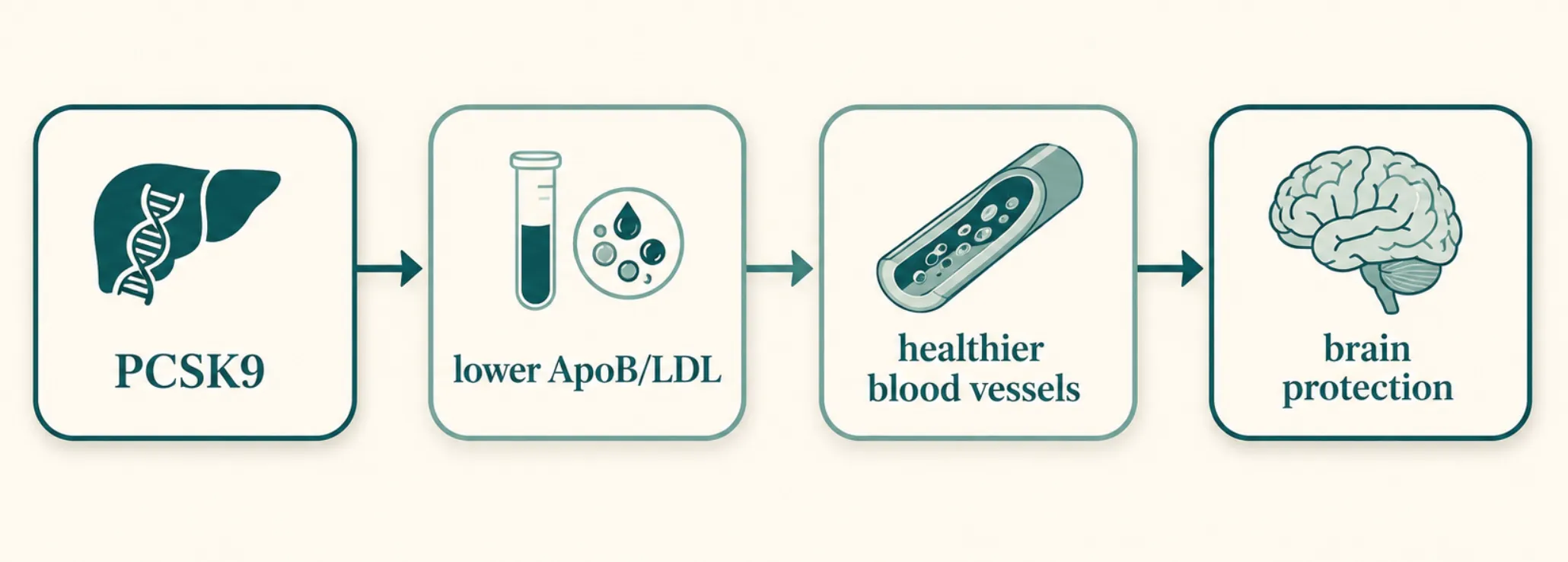
VERVE-102: A One-Time Gene Edit for Cholesterol, and Why It's a Brain Story | BetterBrain
Every so often a piece of research comes along that makes you stop and appreciate how far medicine has come. This is one of those.
Researchers just reported early results for a one-time treatment that durably lowers LDL cholesterol by editing a single gene. One infusion, with effects that have held for up to a year and a half so far, and likely to last a lifetime. It's very early research in a small, specific group of patients, and it's years from a doctor's office. But the underlying biology is some of the most well-studied in all of cardiovascular medicine, and it connects directly to your brain.
Editing one gene to lower cholesterol
The therapy, called VERVE-102, targets a gene called PCSK9. PCSK9 is a protein that reduces your liver's ability to clear LDL cholesterol from your blood. The more PCSK9 activity you have, the fewer LDL "receptors" your liver keeps available to pull LDL particles out of circulation.
Here's the reassuring part: some people are born with naturally low-functioning PCSK9 genes, and they tend to have markedly lower LDL across their entire lives, substantially lower rates of heart disease, and no apparent downside. Turning down PCSK9 is a protective pattern scientists have studied for two decades. We already have approved PCSK9-lowering drugs; they just require ongoing injections.
What's new is the delivery. VERVE-102 uses base editing, a precise form of gene editing, to make a single change to the PCSK9 gene in liver cells after one infusion, doing once, durably, what current drugs do repeatedly. In the Heart-2 trial, a single dose lowered LDL by an average of around 50%, and by as much as roughly 69% at the higher doses, with reductions holding for up to 18 months and no treatment-related serious adverse events reported.
The honest caveats
The headline is easy to over-read, so here's the careful version. It's a phase 1b trial, an early stage focused on safety and initial signals in a small number of participants, and it has not been shown to prevent heart attacks, strokes, or cognitive decline. It enrolled a specific, high-risk group (inherited very high cholesterol or early coronary artery disease), so these are not general-population results. And gene editing is genuinely new: the PCSK9 mechanism is exceptionally well understood, but a permanent edit to a gene is a young field whose long-term safety story takes years to write. The likely path is approval first for very high-risk individuals, at significant cost, after a larger phase 2 trial.
Why this is a brain-health story
At BetterBrain, we look at the whole body, because your brain doesn't exist in isolation from it, and few things connect the two as directly as lipids.
Start with ApoB. You've probably heard of LDL cholesterol; ApoB is the more precise number underneath it. Every LDL particle carries exactly one ApoB protein, so LDL-C tells you the amount of cholesterol in LDL particles, while ApoB tells you the number of particles actually driving damage in your artery walls. When the two disagree, ApoB is the better predictor of risk. Lowering PCSK9, through these new therapies or the drugs we already have, lowers both.
Now connect it to the brain. The blood vessels that feed your brain face the same lipid-driven damage as the ones feeding your heart, and that vascular damage is one of the major pathways of cognitive decline. Protecting your lipids over a lifetime is protecting your brain, especially for people who tend to run higher LDL, including APOE4 carriers. That's one reason lipid management is a core part of what we do.
What this means for you, right now
You don't have to wait for a therapy that's years away. The target itself, your lipid health, is something you can measure and move today.
Get your ApoB tested, not just standard cholesterol, because it counts the particles actually driving damage. Think of lipids as a lifelong number: it's the decades of cumulative exposure that drive risk, so small, steady improvements compound in your favor, and starting earlier beats starting perfectly. Use the levers you already have, including diet, regular movement, and, where your physician recommends them, proven medications.
If you'd like to see where you stand, BetterBrain Blueprint covers ApoB and 50+ other markers and starts at $89 with insurance, and a BetterBrain coach can pull your full lipid picture into one clear plan, so that whatever arrives in five or ten years, you've protected the decades in between.

Grey Matters: What actually drives your brain's overnight cleanup
Featured System: How Your Brain Takes Out the Trash
Every other tissue in your body has lymphatic vessels to carry away metabolic waste. For a long time the brain was thought to be the exception, with no obvious plumbing for the job. That changed in 2013, when researchers described what’s now called the glymphatic system: a network that uses cerebrospinal fluid to flush waste out of brain tissue, including amyloid-beta and tau, the proteins that accumulate in Alzheimer’s disease.
The finding that reshaped how we think about sleep came alongside it. Glymphatic clearance is not constant. It ramps up dramatically during deep, slow-wave sleep, when the spaces between brain cells expand and fluid can move through more freely. This is one of the clearest biological reasons that sleep is not optional maintenance. It is when a specific, measurable cleanup process actually runs.
So the existence of the system is well established. The question researchers have kept working on is mechanical: what physically moves the fluid?
What the newer research adds
A 2025 study in Cell from Maiken Nedergaard’s group (one of the labs behind the original glymphatic work) helps answer that question. In mice, the team showed that during deep sleep a small brainstem region called the locus coeruleus releases norepinephrine in slow, rhythmic waves, roughly one every fifty seconds. Each wave gently tightens and relaxes the blood vessels, and that slow oscillation appears to act like a pump, driving cerebrospinal fluid through the brain to move waste along.
It’s an elegant result because it connects three things we already knew were related (deep sleep, blood-vessel tone, and fluid clearance) into a single mechanism. It reframes deep sleep not as the brain idling, but as the brain running a coordinated pump.
Two points of rigor worth keeping straight, because they change how much weight any single study can carry:
- This is animal research. The norepinephrine-wave mechanism has been demonstrated in mice, whose sleep biology is a strong but imperfect model for ours. It tells us how the system likely works; it is not a human clinical trial.
- And the same study raised a careful question about sleep medication. The researchers found that zolpidem (the active ingredient in Ambien) suppressed these norepinephrine waves in mice and reduced fluid flow. That is a genuinely interesting signal, but it is a finding in animals about a mechanism, not evidence that a prescription harms people. If you take a sleep aid, this is not a reason to stop. It is a reason to make the underlying sleep quality a real conversation with your doctor.
Bottom Line: The glymphatic system and its dependence on deep sleep are well established. The newer work gives us a plausible engine for it, the slow norepinephrine rhythm of deep sleep, and a reminder that how you sleep, not just how long, is what lets the system do its job.
What this means for you
None of this requires a new gadget or supplement. It reinforces the fundamentals, and gives you a sharper reason to take them seriously.
Protect the deep-sleep window. Slow-wave sleep is concentrated in the first half of the night. A consistent wake time, morning light exposure, and a cool, dark room are the most reliable ways to protect it.
Be honest about alcohol and late meals. Both fragment the deep-sleep stages where clearance is most active. You may fall asleep fine and still lose the part of the night that matters most here.
Treat sleep as something you can measure. The same way we track a biomarker, sleep consistency and quality are worth paying attention to over time rather than guessing at.
Take loud snoring or daytime exhaustion seriously. These can signal sleep apnea, which repeatedly interrupts the deep sleep this system depends on, and it is both common and treatable. It’s worth flagging to a clinician.
Keep prescriptions in your doctor’s hands. If you use a sleep medication, bring the goal of better sleep quality to your prescriber rather than changing anything on your own.
Your BetterBrain coach can help you turn any of this into a specific, trackable Sleep Practice rather than a vague intention to "sleep better."

The Glymphatic System: Why Deep Sleep Is Your Brain's Best Cleanup Tool
What if the most important thing you could do for your brain tonight was also the most straightforward? Not a new supplement or a complicated protocol. Just better sleep, specifically the deep stages most people shortchange without knowing it.
Here is the biology that makes that matter more than most people appreciate.
Your brain has its own plumbing. It only fully runs at night.
Every other tissue in your body has a lymphatic system to carry away metabolic waste. For a long time, the brain was thought to be the exception, with no obvious mechanism for the job. That changed in 2013 when researchers described the glymphatic system: a network that uses cerebrospinal fluid to flush waste out of brain tissue, including amyloid-beta and tau, the proteins that accumulate in Alzheimer's disease.
The connection to sleep came alongside it. Glymphatic clearance is not constant. It ramps up dramatically during deep, slow-wave sleep, when the spaces between brain cells expand and fluid can move through more freely. This is one of the clearest biological explanations for why sleep is not optional maintenance. It is when a specific, measurable cleanup process actually runs, protecting your brain now and building resilience for decades to come.
What the newer research tells us about the engine
The system's existence has been well established for over a decade. What researchers kept working on was the mechanics: what physically moves the fluid?
A 2025 study published in Cell from Maiken Nedergaard's lab (one of the teams behind the original glymphatic work) helps answer that. In mice, the team found that during deep sleep a small brainstem region called the locus coeruleus releases norepinephrine in slow, rhythmic waves, roughly one every fifty seconds. Each wave gently tightens and relaxes the blood vessels, and that slow oscillation appears to drive cerebrospinal fluid through the brain, moving waste along.
The result connects three things already known to be related (deep sleep, blood-vessel tone, and fluid clearance) into a single mechanism. Deep sleep is not the brain idling. It is the brain running a coordinated pump.
Two points of context worth holding on to. First, this is animal research. The mechanism has been demonstrated in mice, whose sleep biology is a strong but imperfect model for humans. It tells us how the system likely works, not the conclusion of a human clinical trial.
Second, the same study found that zolpidem (the active ingredient in Ambien) suppressed these norepinephrine waves in mice and reduced fluid flow. That is a genuinely interesting signal, but it is a finding in animals about a mechanism, not evidence that a prescription harms people. If you take a sleep aid, this is not a reason to stop. It is a reason to make sleep quality a real conversation with your prescriber.
What this means in practice
None of this requires a new gadget. It gives you a sharper reason to take the fundamentals seriously.
Protect the deep-sleep window. Slow-wave sleep is concentrated in the first half of the night. A consistent wake time, morning light exposure within thirty minutes of getting up, and a cool, dark room are the most reliable ways to support it. These are habits that compound over years.
Be honest about alcohol and late meals. Both fragment the deep-sleep stages where clearance is most active. You may fall asleep quickly and still miss the part of the night that matters most for this system.
Treat sleep as something measurable. The same way we use biomarkers to track what is working, sleep consistency and quality are worth paying attention to over time rather than estimating from how you feel in the morning.
Take loud snoring or daytime exhaustion seriously. Both can signal sleep apnea, which repeatedly disrupts the deep sleep this system depends on. It is common, often undiagnosed, and very treatable.
If you use a sleep medication, bring the goal of better sleep quality to your prescriber rather than changing anything on your own.
BetterBrain's brain health coaches work with clients to turn sleep from a vague intention into a specific, trackable practice built around your schedule, your biology, and your data. Think sharper now, and protect your brain for decades.
Get immediate insights with a 3 minute assessment
Start now.webp)
GreyMatters
Grey Matters: Is 10g of creatine daily optimal for brain health?
Content Corner
Peter Attia & Rhonda Patrick on Creatine Dosing
Bottom Line: While 5g of creatine monohydrate is the standard recommendation for athletic performance, emerging evidence suggests 10g daily may be necessary for optimal brain health benefits. The issue? Skeletal muscle absorbs most of a 5g dose, leaving minimal creatine available to cross the blood-brain barrier.
The episode: In episode #369 of The Peter Attia Drive, Dr. Rhonda Patrick joined Peter to discuss creatine's well-established effects on strength and endurance, but pivoted to its more overlooked benefits for cognition and brain health under stress conditions.
The dosing revelation: Rhonda explains that 5g daily saturates muscle creatine stores within about three weeks, which is why that dose became standard for athletic performance. However, muscles are voracious consumers of circulating creatine. By the time creatine reaches the blood-brain barrier, much of that 5g dose has already been absorbed by skeletal muscle tissue.
Why this matters for your brain: Your brain uses approximately 20% of your body's total energy despite representing only 2% of body weight. Unlike muscles, the brain can't store large amounts of energy reserves, making it heavily dependent on rapid energy regeneration during cognitively demanding tasks. (We'll dive deeper into the chemistry and mechanisms below.)
The case for 10g: Higher doses (10-20g) may be necessary to ensure adequate creatine reaches the brain after muscles take their share. This is particularly impactful during periods of high cognitive demand, sleep deprivation, or mental fatigue, which is exactly when your brain needs the most energy support.
Practical considerations: Peter and Rhonda discuss implementation strategies, including splitting doses to prevent GI upset and selecting third-party tested products with NSF certification to avoid heavy metal contamination common in lower-quality supplements.
Key timestamps:
- [1:09:00] How Rhonda became fascinated with creatine
- [1:16:30] Creatine for the brain: how higher doses may enhance cognition under stress and support resilience against aging
- [1:25:45] Optimal dosing for adults and teens, safe product selection, debunking kidney myths
BetterBrain takeaway: At BetterBrain, we currently recommend 5g daily of creatine monohydrate for cognitive and athletic performance. Based on this conversation and the emerging evidence, we're evaluating updating our recommendation to 10g daily split into two doses for those specifically targeting brain health benefits. The science is compelling that higher doses may be necessary to ensure adequate brain supply after muscle uptake.
Technique Spotlight
Creatine for Brain Health
The energy problem: Brain cells constantly perform energy-demanding tasks, such as neurotransmitter release, maintaining electrical signals, forming memories. Memory formation and retrieval are particularly energy-intensive. When your brain runs low on energy, cognitive performance suffers.
Creatine's role: After you take creatine monohydrate, it gets converted to phosphocreatine inside cells. Think of phosphocreatine as a battery backup system that rapidly regenerates ATP (your cells' energy currency) in milliseconds, far faster than your mitochondria can produce it through normal metabolism.
Why your brain needs more than your muscles get: Here's the critical issue: skeletal muscle contains about 95% of your body's total creatine stores. When you take 5g of creatine, your muscles absorb most of it. What remains must cross the blood-brain barrier, where transport is more limited. Higher doses increase the odds that enough creatine reaches your brain to make a difference.
How creatine enhances cognition beyond just energy:
Research suggests creatine works through multiple pathways:
- Increases neurotransmitter synthesis (like acetylcholine for learning and memory)
- Enhances communication between brain cells at synapses
- Provides antioxidant protection against cellular damage
- Supports mitochondrial function in memory-critical brain regions like the hippocampus
- Upregulates proteins involved in memory consolidation and learning
When it works best: Multiple studies show creatine's benefits are most pronounced under metabolic stress: sleep deprivation, mental fatigue, sustained cognitive demand, and aging. This makes sense because creatine helps most when your brain's energy system is challenged.
Implementation:
- Start with 5g daily for 1-2 weeks to assess tolerance
- If no GI issues, increase to 10g split into two doses
- Take with meals to reduce stomach upset
- No loading phase necessary, steady intake works fine
- Expect noticeable effects within 2-4 weeks
Product quality matters:
Use creatine monohydrate (the form with the most research). Look for:
- Creapure certification (>99.99% pure)
- NSF Certified for Sport designation
- Third-party testing documentation
Lower-quality products contain contaminants that cause the GI distress people associate with creatine. High-purity products largely eliminate these issues.
Safety: Creatine has an excellent safety profile backed by decades of research. The kidney damage myth originated from a single 1998 case report and has been thoroughly debunked. However, people with pre-existing kidney disease should consult their physician.
Grey Matters: The 8-week practice that physically changes your brain
This week, we're exploring stress and brain health: what chronic stress does to your hippocampus (your brain's memory center), how mindfulness and other stress management techniques reverse that damage with measurable structural changes, and what an effective practice actually looks like.
From mechanisms to practical starting points, here's why managing stress isn't just about quality of life, it's about protecting your cognitive future.
Bottom line: Chronic stress doesn't just feel bad, it physically shrinks your hippocampus, the brain's primary memory center. Mindfulness meditation reverses this process, with structural brain changes visible on MRI after just 8 weeks.
Stress is easy to dismiss as a quality-of-life issue rather than a brain health issue. But the neuroscience tells a different story.
The problem: When your brain perceives a threat, it releases cortisol. In short bursts, this is adaptive, it helps you respond to challenges. Under chronic stress, sustained cortisol elevation becomes toxic to your neurons, particularly in the hippocampus. Your hippocampus is packed with cortisol receptors. Over time, chronic cortisol exposure causes the neural branches that allow brain cells to communicate to shrink. This leads to measurable hippocampal volume loss, reduced formation of new brain cells, and impaired memory. This process overlaps directly with early Alzheimer's pathology. Hippocampal shrinkage is one of the earliest detectable structural changes in Alzheimer's progression, and chronic psychological stress is now recognized as a modifiable dementia risk factor in its own right.
What mindfulness does instead: In 2011, researchers at Harvard-affiliated Massachusetts General Hospital published a landmark neuroimaging study. Using MRI, they measured brain gray matter density before and after 8 weeks of mindfulness practice in healthy adults. Participants showed measurable increases in gray matter in the hippocampus and the brain regions involved in learning and emotional regulation. At the same time, gray matter in the amygdala (the brain's primary stress and threat-detection center) decreased. A control group who didn't practice mindfulness showed none of these changes. This wasn't comparing long-term meditators to non-meditators. It was before-and-after imaging of the same brains, across 8 weeks of practice.
The mechanism: Mindfulness practice reduces cortisol output, calms the amygdala's threat response, and reduces chronic low-grade inflammation associated with sustained stress. These are the same pathways implicated in accelerated cognitive aging.
Technique Spotlight
What this looks like in practice
The science: Stress management works through overlapping biological pathways: reducing cortisol output, calming your nervous system's threat response, and lowering systemic inflammation. Different techniques access these pathways in different ways, which means you have options.
Getting started with the Essential interventions:
- Slow and deep breathing (Essential): Controlled breathing activates your parasympathetic nervous system, your body's "rest and digest" mode. Even a few minutes measurably reduces cortisol and heart rate. Often the easiest entry point.
- Mindfulness meditation (Essential): The technique behind the brain imaging study above. Consistent practice, even 8 to 10 minutes daily, produces measurable effects on stress hormones and self-reported stress within a few weeks.
- Nature exposure (Essential): Time in natural environments reduces cortisol, lowers blood pressure, and improves mood. The effect is dose-dependent.
- Social support (Essential): Strong social connections buffer against stress-related brain damage.
What 10 minutes of mindfulness looks like: Find a quiet spot and sit comfortably. Bring your attention to the physical sensation of your breath, the air moving in and out. Your mind will wander, that's not failure, that's the exercise. Each time you notice it drifting and bring it back, you're doing the rep that builds the skill. There's no perfect posture and no requirement to empty your mind. Just ten minutes of practicing the return.
BetterBrain Tip: Don't overthink which technique to start with. If sitting meditation feels like a stretch, start with a few minutes of slow breathing or a walk outside. The research is clear on this point: the technique that protects your brain is the one you'll actually do.
Featured Biomarker
Tracking stress and its effects
You can't feel your inflammation dropping, but you can measure it. Chronic stress shows up in your bloodwork as elevated hs-CRP, one of the same inflammatory markers associated with cognitive decline. When your stress management practice starts working, that number moves, and BetterBrain's lab panels let you watch it happen.
The effects ripple outward from there. Sleep quality typically improves within weeks of consistent practice, and better sleep gives your glymphatic system (your brain's overnight waste-clearance crew) more time to do its job.
This is what makes stress management such a high-leverage intervention. It never works alone: better stress regulation improves your sleep, better sleep amplifies the benefits of exercise, and lower inflammation makes anti-inflammatory nutrition work harder. Pull one lever and the whole system responds.
BetterBrain Tip: If you're working with a Brain Health Coach, the De-Stress section of your protocol is a natural starting point.
Ready to build a personalized stress management practice? Check if your insurance covers coaching.
Know someone who might benefit from BetterBrain?
Share this referral link and they'll get Essentials labs (50+ biomarkers) for just $39 (normally $89), plus access to $0 coaching with insurance.
Grey Matters: A one-time injection that could lower LDL cholesterol for life
The Science: Editing One Gene to Lower Cholesterol
The therapy, called VERVE-102, targets a gene called PCSK9.
PCSK9 is a protein that reduces your liver’s ability to clear LDL cholesterol from your blood. The more PCSK9 activity you have, the fewer LDL "receptors" your liver keeps available to pull LDL particles out of circulation. Some people are born with naturally low-functioning PCSK9 genes, and they tend to have markedly lower LDL across their entire lives and substantially lower rates of heart disease, with no apparent downside. In other words, turning down PCSK9 is a known protective pattern scientists have studied for two decades. We already have approved PCSK9-lowering drugs, but they require ongoing injections.
What’s new is the delivery. VERVE-102 uses base editing, a precise form of gene editing, to make a single change to the PCSK9 gene in liver cells after one infusion. The goal is to do once, durably, what current drugs do repeatedly.
In the Heart-2 trial, the early results were striking. A single dose lowered LDL cholesterol by an average of around 50%, and by as much as roughly 69% at the higher doses, with reductions holding for up to 18 months. The therapy was well tolerated, with no treatment-related serious adverse events reported.
The Bottom Line: A one-time gene editing infusion produced large, durable reductions in LDL cholesterol in an early trial, by mimicking a protective genetic pattern that already exists in nature.
The honest caveats:
The headline is easy to over-read, so here’s the careful version.
It’s a phase 1b trial. That’s an early stage focused mainly on safety and initial signals, in a small number of participants. It has not yet been shown to prevent heart attacks, strokes, or cognitive decline.
It’s a specific patient group. The trial enrolled people with an inherited form of very high cholesterol or early coronary artery disease, who need aggressive LDL lowering. These are not general-population results.
Gene editing is genuinely new. The PCSK9 mechanism is exceptionally well understood, which is reassuring. But making a permanent edit to a gene is a young field, and the long-term safety story takes years to write. As a result, this drug is likely to be approved initially for very high-risk individuals such as those with familial hypercholesterolemia. It could be prescribed off-label, but it is likely to be very expensive.
It’s years away. The next step is a larger phase 2 trial. Broad availability is well down the road.
Why this is a brain-health story, not just a heart story
At BetterBrain, we look at the whole body, because your brain doesn’t exist in isolation from it. And few things connect the two as directly as lipids.
Start with ApoB. You’ve probably heard of LDL cholesterol. ApoB is the more precise number underneath it. Every LDL particle carries exactly one ApoB protein, so LDL-C tells you the amount of cholesterol in LDL particles, while ApoB tells you the number of particles actually driving damage in your artery walls. When the two disagree, ApoB is the better predictor of risk. Lowering PCSK9, whether through these new therapies or the drugs we already have, lowers both.
Now connect it to the brain. The blood vessels that feed your brain are subject to the same lipid-driven damage as the ones feeding your heart, and that vascular damage is one of the major pathways of cognitive decline. Protecting your lipids over a lifetime is protecting your brain. This is especially true for people who tend to run higher LDL, including APOE4 carriers, which is one reason lipid management is a core part of what we do at BetterBrain.
And here’s the bigger picture.Between therapies like this one and the medications we already have, the tools for managing cardiovascular disease are getting remarkably good, and they’re only going to get better. But adding years to your life is only valuable if your brain is still working well for those years. That’s the conversation most people aren’t having yet, and it’s the one that matters most to us at BetterBrain.
What this means for you, right now
You don’t have to wait for a therapy that’s years away. The target itself, your lipid health, is something you can measure and move today.
Get your ApoB tested, not just standard cholesterol. ApoB counts the particles actually driving damage, and it’s one of the most informative markers for both heart and brain health.
Think of lipids as a lifelong number. The PCSK9 story shows that it’s the decades of cumulative exposure that drive risk, which means small, steady improvements compound in your favor. Starting earlier is always worth more than starting perfectly.
Use the levers you already have. Diet, regular movement, and, where your physician recommends them, proven medications all lower lipids today.
Your BetterBrain coach can pull your ApoB and your full lipid picture into one clear plan, so that whatever arrives in five or ten years, you’ve protected the decades in between.
Grey Matters: our CSO Tommy Wood on Huberman, and how to stay sharp
Our Chief Science Officer, Dr. Tommy Wood, joined Andrew Huberman on the Huberman Lab podcast to talk about how to keep learning and stay sharp at any age.
The episode, titled Accelerate Learning & Increase Cognitive Capacity, is incredibly informative, and we're excited to share our main takeaways. If you only take one thing away, make it this: your brain keeps adapting to whatever you ask of it, at 40 and at 75, and everything below is a way of asking a little more.
Plus two big updates from BetterBrain below!
Content Corner
Aging itself is not the driver of decline. Your brain keeps what you use and prunes what you stop using, so much of what we call decline comes from no longer giving the brain new, challenging inputs. Encouragingly, mental processing speed tends to hold steady until around 60.
Do things that are new, hard, and ideally social. Crosswords and sudoku are more relaxing than challenging. To actually build capacity, pick something that stretches you and mixes movement, thinking, and other people. Dancing has the best evidence, ballroom and square dancing especially, followed by ball sports, martial arts, and learning a language. Part of the trick is getting comfortable being a beginner, because the discomfort of making mistakes is what drives the learning.
You do not need to be in flow. Real learning, and even peak performance, often happens in what athletes call a clutch state, where it still feels like hard work. Do it in focused blocks, since hard mental work is really only sustainable in 20 to 30 minute chunks, and protect them from distraction. Even a phone in the room carries a cost.
Exercise is two brain tools in one. A short 20 to 30 minute jog or strength session right before mental work sharpens learning in the moment. Over time, harder aerobic work like intervals builds the hippocampus and memory, while resistance training builds the brain's white matter and decision-making. Do both.
Feed the brain, then test rather than guess. Whole-food patterns like the Mediterranean and MIND diets have the best evidence, and it is overall quality, not any single food, that matters. For supplements, Tommy's advice is to test your levels rather than guess, because the standard normal range is not the same as the optimal one. His clearest example: omega-3 and B vitamins only work when you have both, which is exactly why we measure homocysteine and other brain-specific biomarkers in Blueprint rather than blanket-recommend. Creatine and a basic omega-3 and B-vitamin stack have modest, real support, and our picks like Advanced DHA, Thorne Creatine, and MethylAssist are all in the Picks library.
Some of the biggest protections are indirect. Blood pressure, cholesterol, hearing, and metabolic health all shape long-term brain health, and avoiding serious illness matters because cognition tends to step down after a big sickness. One finding worth watching: the shingles vaccine has been linked to lower dementia risk across several large studies.
If you want to go deeper
Tommy also just published a book: The Stimulated Mind: Future-Proof Your Brain from Dementia and Stay Sharp at Any Age. It covers the same ground as the episode in more depth, built around his 3-S model of challenging the brain, feeding it, and letting it recover.
What's New at BetterBrain
HSA/FSA savings and Referral code benefits
Two exciting updates this week!
We've just launched a new referral system that benefits both you and whoever you're referring, which makes improving brain health even more accessible for you and your loved ones. Now, when you refer a friend or loved one, they will get Blueprint Essential Labs, 50+ biomarkers, for just $39, and once they sign up you will get a $50 credit toward your next Picks order.
As a reminder, Picks is our curated marketplace for all your brain health needs including science-backed supplements, tools, and services. Your personal referral link lives in your BetterBrain dashboard, with more details on how to share your code.
We're also happy to announce thatBetterBrain Picks is now HSA/FSA eligible. We partnered with TrueMed to handle the medical-necessity review, which means you can finally put pre-tax dollars toward the supplements on your plan. That is roughly 30% or more in effective savings, your 15% subscription discount still applies on top, and one approval covers a full year of purchases. Very few supplement companies can offer this. Details are on the HSA/FSA page.
Grey Matters: What happens when brain health coaching actually clicks
The idea that changed everything
Exercise snacks. Short, two-minute movement breaks sprinkled throughout the day, designed to keep your body active and your brain engaged without requiring a gym, a plan, or even a change of clothes.
For Kate, who has ADHD and had always found traditional exercise routines overwhelming, this landed differently than most wellness advice. As she puts it, going to the gym always felt like too many steps, and even home workouts were hard to start. But the idea of standing up once an hour, moving for two minutes, and sitting back down? That felt doable. She built the habit into her coaching Action Plan, and those small bursts of movement started adding up across the day.
Then she started thinking bigger. What if someone is on an airplane and can't do floor exercises? What about people in wheelchairs, or people who are bed-bound and need gentle ways to stay active? What about someone in a professional setting who wants something more meditative, like tai chi? She kept imagining more situations, more people who could benefit, and eventually she thought: wouldn't it be great if there were an app built entirely around this?
So she built one herself
Kate had never written a line of code. She's comfortable with email, Google products, and Zoom, and that's about it. But she started watching YouTube tutorials on using AI to build apps, taught herself how to use a computer terminal along the way, and over the course of about a month designed, built, and shipped a fully functional app to the App Store.
The app is calledExercise Snacks for Health & Wellbeing, and it's free. It sends hourly movement reminders, offers exercises for different settings and mobility levels, and tracks your activity so you can watch those two-minute sessions add up across the day. She uses it herself every day, and she also published a companion book (free with Kindle unlimited).
Cognitive Engagement
Here's something worth noting: the process of learning to build the app may have been just as good for Kate's brain as the exercise snacks themselves. Research consistently shows that picking up unfamiliar, challenging skills is one of the most powerful ways to build cognitive reserve and support long-term brain health. It's why Learn is one of BetterBrain's 12 core brain health practices. Working through frustration, solving new problems, and learning something completely outside your comfort zone is exactly the kind of stimulation your brain thrives on. Kate came to BetterBrain looking for answers about movement and ended up giving her brain a workout in two completely different ways.
Why we wanted to share this
Because the science only matters when someone picks it up and does something with it. Kate worked with a coach, understood what her body and brain needed, and took one piece of her plan and turned it into something that could help thousands of other people move more throughout their day. That's exactly what this whole approach is designed to make possible.
Huge kudos to Kate. And hopefully her story inspires you to try something new, whether that's exercise snacks, a skill you've been putting off, or finally booking that first coaching session.
Know someone who might benefit from BetterBrain?
Share this referral link and they'll get Essentials labs (50+ biomarkers) for just $39 (normally $89), plus access to $0 coaching with insurance.
Grey Matters: What actually drives your brain's overnight cleanup
Featured System: How Your Brain Takes Out the Trash
Every other tissue in your body has lymphatic vessels to carry away metabolic waste. For a long time the brain was thought to be the exception, with no obvious plumbing for the job. That changed in 2013, when researchers described what’s now called the glymphatic system: a network that uses cerebrospinal fluid to flush waste out of brain tissue, including amyloid-beta and tau, the proteins that accumulate in Alzheimer’s disease.
The finding that reshaped how we think about sleep came alongside it. Glymphatic clearance is not constant. It ramps up dramatically during deep, slow-wave sleep, when the spaces between brain cells expand and fluid can move through more freely. This is one of the clearest biological reasons that sleep is not optional maintenance. It is when a specific, measurable cleanup process actually runs.
So the existence of the system is well established. The question researchers have kept working on is mechanical: what physically moves the fluid?
What the newer research adds
A 2025 study in Cell from Maiken Nedergaard’s group (one of the labs behind the original glymphatic work) helps answer that question. In mice, the team showed that during deep sleep a small brainstem region called the locus coeruleus releases norepinephrine in slow, rhythmic waves, roughly one every fifty seconds. Each wave gently tightens and relaxes the blood vessels, and that slow oscillation appears to act like a pump, driving cerebrospinal fluid through the brain to move waste along.
It’s an elegant result because it connects three things we already knew were related (deep sleep, blood-vessel tone, and fluid clearance) into a single mechanism. It reframes deep sleep not as the brain idling, but as the brain running a coordinated pump.
Two points of rigor worth keeping straight, because they change how much weight any single study can carry:
- This is animal research. The norepinephrine-wave mechanism has been demonstrated in mice, whose sleep biology is a strong but imperfect model for ours. It tells us how the system likely works; it is not a human clinical trial.
- And the same study raised a careful question about sleep medication. The researchers found that zolpidem (the active ingredient in Ambien) suppressed these norepinephrine waves in mice and reduced fluid flow. That is a genuinely interesting signal, but it is a finding in animals about a mechanism, not evidence that a prescription harms people. If you take a sleep aid, this is not a reason to stop. It is a reason to make the underlying sleep quality a real conversation with your doctor.
Bottom Line: The glymphatic system and its dependence on deep sleep are well established. The newer work gives us a plausible engine for it, the slow norepinephrine rhythm of deep sleep, and a reminder that how you sleep, not just how long, is what lets the system do its job.
What this means for you
None of this requires a new gadget or supplement. It reinforces the fundamentals, and gives you a sharper reason to take them seriously.
Protect the deep-sleep window. Slow-wave sleep is concentrated in the first half of the night. A consistent wake time, morning light exposure, and a cool, dark room are the most reliable ways to protect it.
Be honest about alcohol and late meals. Both fragment the deep-sleep stages where clearance is most active. You may fall asleep fine and still lose the part of the night that matters most here.
Treat sleep as something you can measure. The same way we track a biomarker, sleep consistency and quality are worth paying attention to over time rather than guessing at.
Take loud snoring or daytime exhaustion seriously. These can signal sleep apnea, which repeatedly interrupts the deep sleep this system depends on, and it is both common and treatable. It’s worth flagging to a clinician.
Keep prescriptions in your doctor’s hands. If you use a sleep medication, bring the goal of better sleep quality to your prescriber rather than changing anything on your own.
Your BetterBrain coach can help you turn any of this into a specific, trackable Sleep Practice rather than a vague intention to "sleep better."