De-stress · Brain health technique
Dialectical Behavior Therapy (DBT)
Evidence grade: Context Dependent
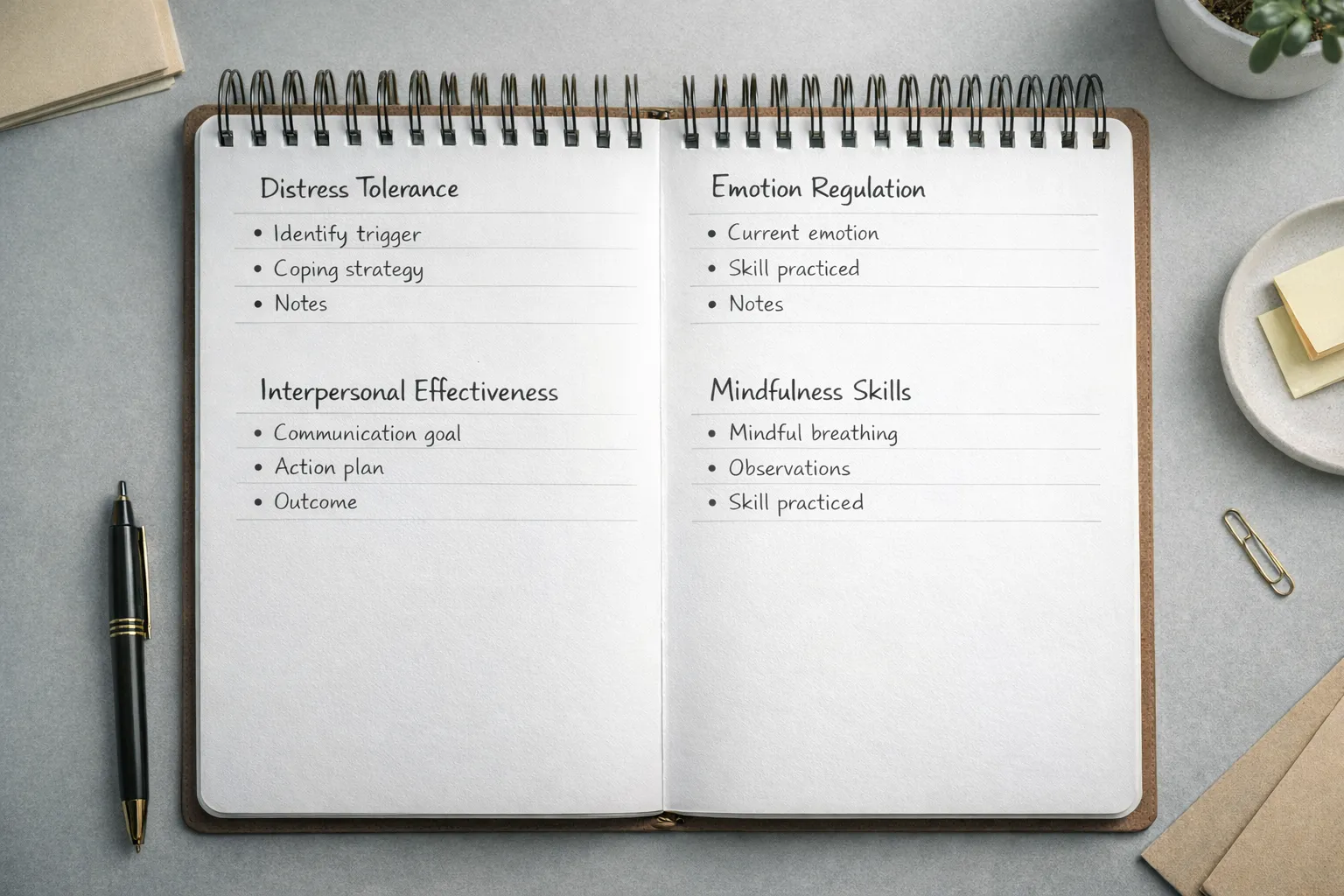
A structured form of cognitive-behavioral therapy combining mindfulness, emotion regulation, distress tolerance, and interpersonal effectiveness skills, originally developed for high emotional reactivity and self-destructive behaviors.
- Practice
- De-stress
- Principle
- Restoration
- Tactic
- Clinical Therapy
- Evidence grade
- Context Dependent
- Strength of evidence
- Medium
How to practice Dialectical Behavior Therapy (DBT)
Engage in DBT through structured group and individual sessions (typically 6–12 months). Learn one skill module at a time, mindfulness, distress tolerance, emotion regulation, and interpersonal skills. Daily practice and diary cards improve outcomes. For general stress resilience, short DBT-informed skills training can be highly effective.
The evidence behind Dialectical Behavior Therapy (DBT)
DBT reduces emotional volatility and impulsive reactions by enhancing prefrontal control over limbic circuits. Strong evidence supports it for borderline personality disorder and self-harm; emerging data show benefits for emotion dysregulation and stress management in broader populations. Mechanism: repeated skills practice improves executive regulation under stress.
More De-stress techniques
Take control of your brain health
BetterBrain gives you a personalized protocol of techniques like these, backed by science and tailored to you.