Years of feeling mentally sluggish, and the three results that explained it
The fog had been there for years. Laura had stopped expecting an explanation. Then she got one.
- Laura, 49, felt mentally sluggish and tired for years while every annual physical came back fine.
- Her BetterBrain Essentials results turned up three subtle findings a standard physical rarely measures: elevated fasting insulin with normal glucose, low ferritin without anemia, and low vitamin D.
- Her coach built the plan around those three. By her 90-day retest, two of the three markers had moved in the right direction, and the fog is lifting.
Most clients pay $0 with employer sponsored insurance.
Laura's story
Laura is 49, and for years she described herself the same way: mentally sluggish. Not actually sick or failing at work. Just slower than she remembered being, and tired in a way that sleep didn't seem to fix. Her annual physical results came back fine every time, which made it harder to take seriously.
Plenty of people live with this feeling and chalk it up to age, or stress, or just what their new normal looks like. Laura discovered BetterBrain from a friend and decided to dig a little deeper.
Her BetterBrain Essentials results didn't turn up one dramatic number. They turned up three subtle ones, each sitting where a standard physical would never flag it, and together they explained a lot.
Three results, one picture
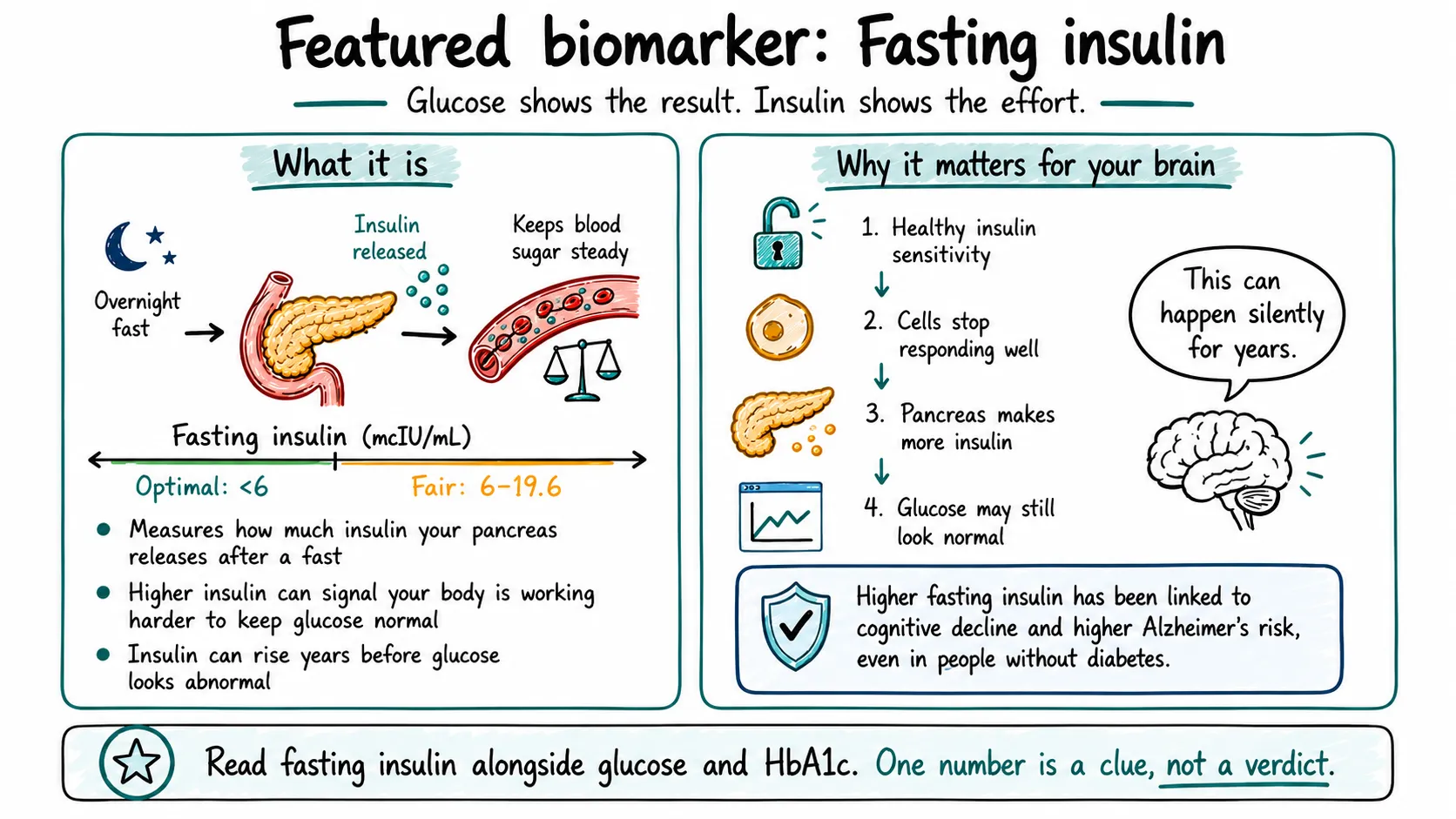
Her fasting glucose was in the normal range, but her fasting insulin was not. That combination means the body is working harder than it should to keep blood sugar steady, and it's one of the most common patterns behind afternoon fog and energy crashes. It rarely shows up on a routine physical, because most routine physicals don't measure insulin at all. We went deep on this in our fasting insulin issue: glucose is the number everyone gets, but insulin is the number that moves first. In a Columbia study of 683 older adults, Alzheimer's risk was roughly doubled in those with high insulin, and the link was strongest in people who did not have diabetes.
Her ferritin, the storage form of iron, was low. Not low enough to be called anemia, but low enough to be associated with fatigue and poor concentration, which is common in women her age and easy to miss when the standard blood count looks fine. In a randomized trial of young women, scores on attention and memory tasks improved as iron stores recovered, including in women who were never anemic.
And her vitamin D was low, which on its own isn't the biggest red flag, but tends to travel with low mood and low energy, and makes the other two biomarkers harder to fix. A large study in Neurology found that older adults with low vitamin D went on to develop dementia at higher rates over the following years.
Together these findings were a map.
Her Brain Health Coach built the plan around what would move the most, first: protein at breakfast and a short walk after her largest meal to take the load off insulin, two strength sessions a week, a coach-assigned supplement plan to bring iron and vitamin D back into range, and a fixed wake time to steady her sleep. Then a retest at 90 days to see what moved.
“The fog is lifting.”
By the time she retested, two of the three markers had moved in the right direction.
“BetterBrain helped me pinpoint the problem and after following their recommendations, that brain fog is finally lifting! I also feel more mental and physical energy, and more motivated to keep improving. It's made such a difference in my work and my mood.”
Normal is not always optimal
Laura's story is one we hear in different forms all the time. Someone feels off for years. Nothing is dramatically wrong, so nothing gets investigated. We've told versions of it before: a 57-year-old who reversed pre-diabetes, and a 42-year-old who moved high-risk biomarkers in 90 days.
Brain fog, low energy and low motivation are not a diagnosis. They are signals, and they often trace back to things the BetterBrain Essentials panel can see: blood sugar regulation, thyroid function, inflammation, B12 and folate status, vitamin D, iron. A result sitting inside the normal range can still be a long way from where you'd feel your best. For the full list of what can contribute to brain fog, read Brain fog is not a diagnosis. It is a clue.