Supplements and medications: what not to mix
Some supplements block a medication from absorbing, some change how it works, and some just need a few hours of space. The common combinations, and how to check your own list.
Most supplements are fine alongside most medications, but a few combinations matter. Magnesium can block some antibiotics, osteoporosis drugs and thyroid medication from absorbing unless you space them apart. Vitamin K2 and high-dose fish oil need a doctor's input if you take a blood thinner. St. John's wort weakens a long list of prescriptions. Bring your full list, supplements included, to your pharmacist or doctor.
Most clients pay $0 with employer sponsored insurance.
Your pharmacist checks a new prescription against the other drugs on file. Supplements you buy on your own usually aren't on that file unless you tell them.
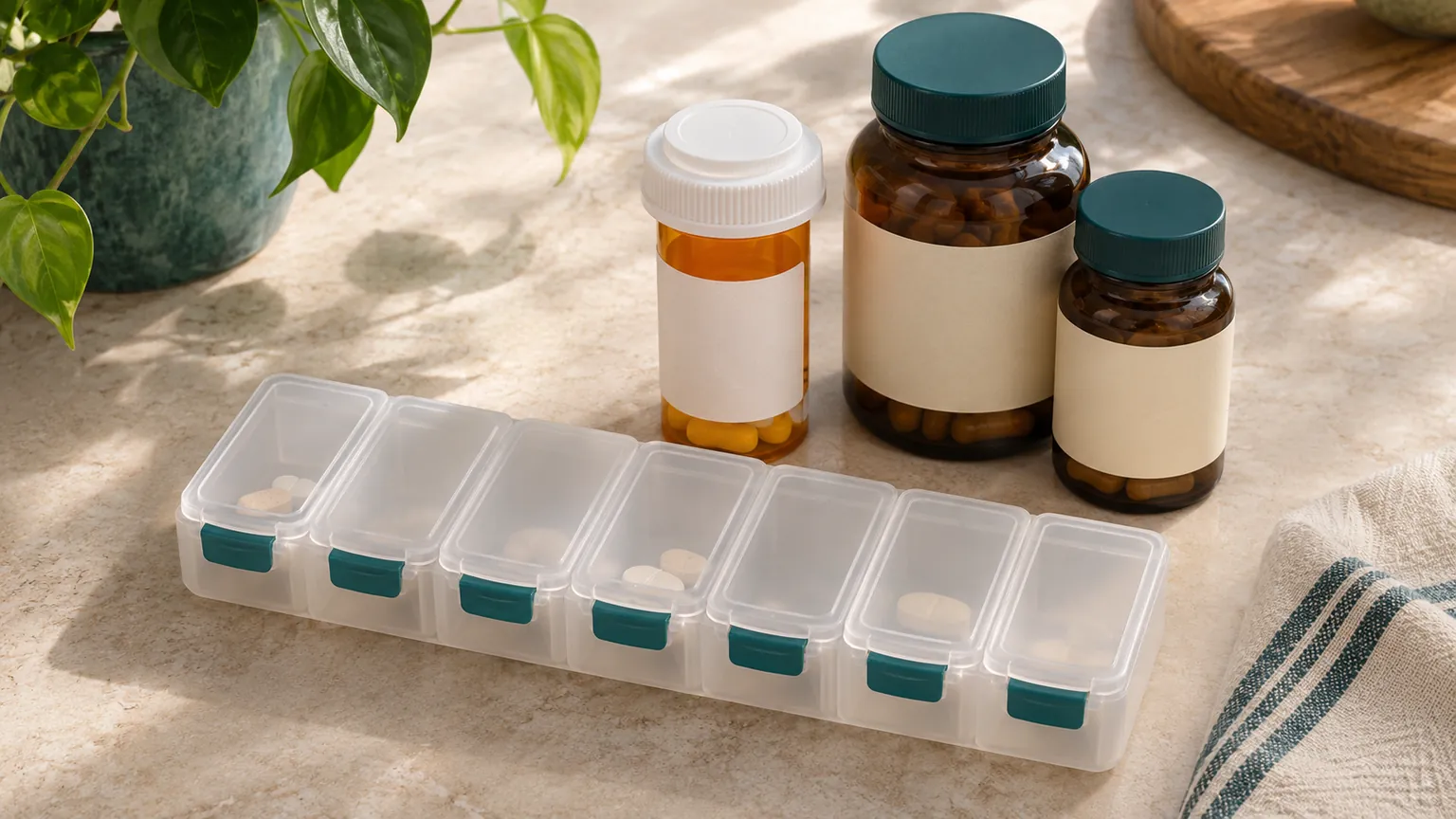
Three ways they interact
- Absorption. Some minerals, magnesium especially, bind to certain drugs in the gut so less of the drug gets in. Spacing the doses a few hours apart usually solves it.
- Effect. Some supplements push a drug's effect up or down. Vitamin K helps blood clot, which is why it matters for people on blood thinners such as warfarin, and high-dose fish oil can add to bleeding risk.
- Levels over time. Some medications lower a nutrient. Metformin and acid reducers can lower how much B12 you absorb.
The combinations that come up most
These follow BetterBrain's clinical rules for the supplements we recommend most often, plus NIH guidance. For doses, see Which magnesium should I take?, How much vitamin D should I take?, How much omega-3 should I take a day? and Can you take too much B12?
Magnesium
- Antibiotics (tetracyclines and quinolones): take the antibiotic at least 2 hours before, or 4 to 6 hours after, magnesium.
- Osteoporosis drugs (bisphosphonates): keep them at least 2 hours apart from magnesium.
- Thyroid medication and levodopa: keep them 2 to 4 hours apart from magnesium.
- Diuretics and long-term acid reducers (proton pump inhibitors) can change how much magnesium you keep. Worth checking your level.
Vitamin D and K2
- Blood thinners: take plain D3, without K2.
- Digoxin, diltiazem, verapamil, thiazide diuretics or prednisone: talk with your doctor before starting vitamin D.
- Orlistat, a weight-loss drug, can reduce how much vitamin D you absorb.
Omega-3 (fish oil)
- Blood thinners: high doses can cause bleeding problems with warfarin and other anticoagulants. Talk with your doctor before starting, especially above 3 grams a day.
B vitamins
- Anticonvulsants or methotrexate: talk with your doctor before starting.
- Metformin, proton pump inhibitors and H2 blockers: these can lower B12, so test it.
CoQ10
- Warfarin: CoQ10 may interact with it, so talk with your doctor first.
- Statins: statins can lower CoQ10 levels, and BetterBrain's technique library lists CoQ10 as useful for adults on statins, at 100 to 200 mg a day of ubiquinol with a meal that has fat. The evidence on statin side effects is not settled: trials suggest a possible benefit for fatigue, and NCCIH says the overall evidence does not show it reduces muscle pain (NCCIH).
St. John's wort
- It can weaken many medications, including some antidepressants, birth control pills, cyclosporine, digoxin, oxycodone, some HIV drugs and warfarin. Combined with certain antidepressants, it can raise serotonin to dangerous levels (NCCIH).
Creatine
- Our clinical rules list no medication interactions. If you have kidney disease, talk with your doctor first, and tell whoever orders your labs that you take it, because it raises creatinine. More in Is creatine bad for your kidneys?
How to check your own list
- Write down every prescription, over-the-counter medicine and supplement you take, with the dose.
- Ask your pharmacist to check the whole list, and again whenever you start something new.
- Space magnesium and other minerals from the medications above.
- If you take a blood thinner, review every supplement with your doctor before you start it.
Am I taking too many supplements? has a 15-minute version of this check you can do at home.
Frequently asked questions
Should I take CoQ10 with statins?
You can. Statins can lower CoQ10, and our technique library lists 100 to 200 mg a day of ubiquinol, with a meal that has fat, as useful for adults on statins. The evidence that it eases statin side effects is not settled. If you also take warfarin, check with your doctor first.
Can I take fish oil with blood thinners?
Talk with your doctor first. High doses can raise bleeding risk, especially above 3 grams a day.
Can I take magnesium with thyroid medication?
Yes, 2 to 4 hours apart.
Does vitamin K2 interact with blood thinners?
Yes. If you take a blood thinner, use plain D3 without K2.
Which supplements interact with the most medications?
St. John's wort is the best-known example. It weakens many prescriptions.
REFERENCES
- NCCIH, Coenzyme Q10 https://www.nccih.nih.gov/health/coenzyme-q10
- NCCIH, St. John's wort and depression https://www.nccih.nih.gov/health/St-Johns-wort-and-depression-in-depth