She felt fine. Her bloodwork told a different story.
Therese’s bloodwork helped uncover an inherited condition. Medical treatment and ongoing coaching helped her take the next steps.
- Therese, 61, felt healthy when she came to BetterBrain. Her bloodwork raised a question about her iron levels.
- Follow-up with her physician led to a diagnosis of hereditary hemochromatosis, an inherited condition that can cause iron to build up in the liver, heart and pancreas.
- With weekly phlebotomies under her doctors’ care and heart-healthy habits with her coach, her ferritin is now at an acceptable level and she feels 100 percent.
Most clients pay $0 with employer sponsored insurance.
Therese's story
Therese came to BetterBrain at 61 feeling healthy. Nothing was bothering her, and nothing was pointing her toward a problem. Her bloodwork told a different story.
Her BetterBrain lab results raised a question about her iron levels, prompting follow-up with her physician. That follow-up led to a diagnosis of hereditary hemochromatosis, an inherited condition she hadn’t known she had.

Too much iron, and a reason to act early
Hereditary hemochromatosis can cause the body to absorb and store too much iron. If left untreated, excess iron can build up in organs such as the liver, heart and pancreas, according to the National Institute of Diabetes and Digestive and Kidney Diseases. Iron overload can develop quietly, before any symptoms appear, which is why it is so often found through testing rather than through how someone feels.
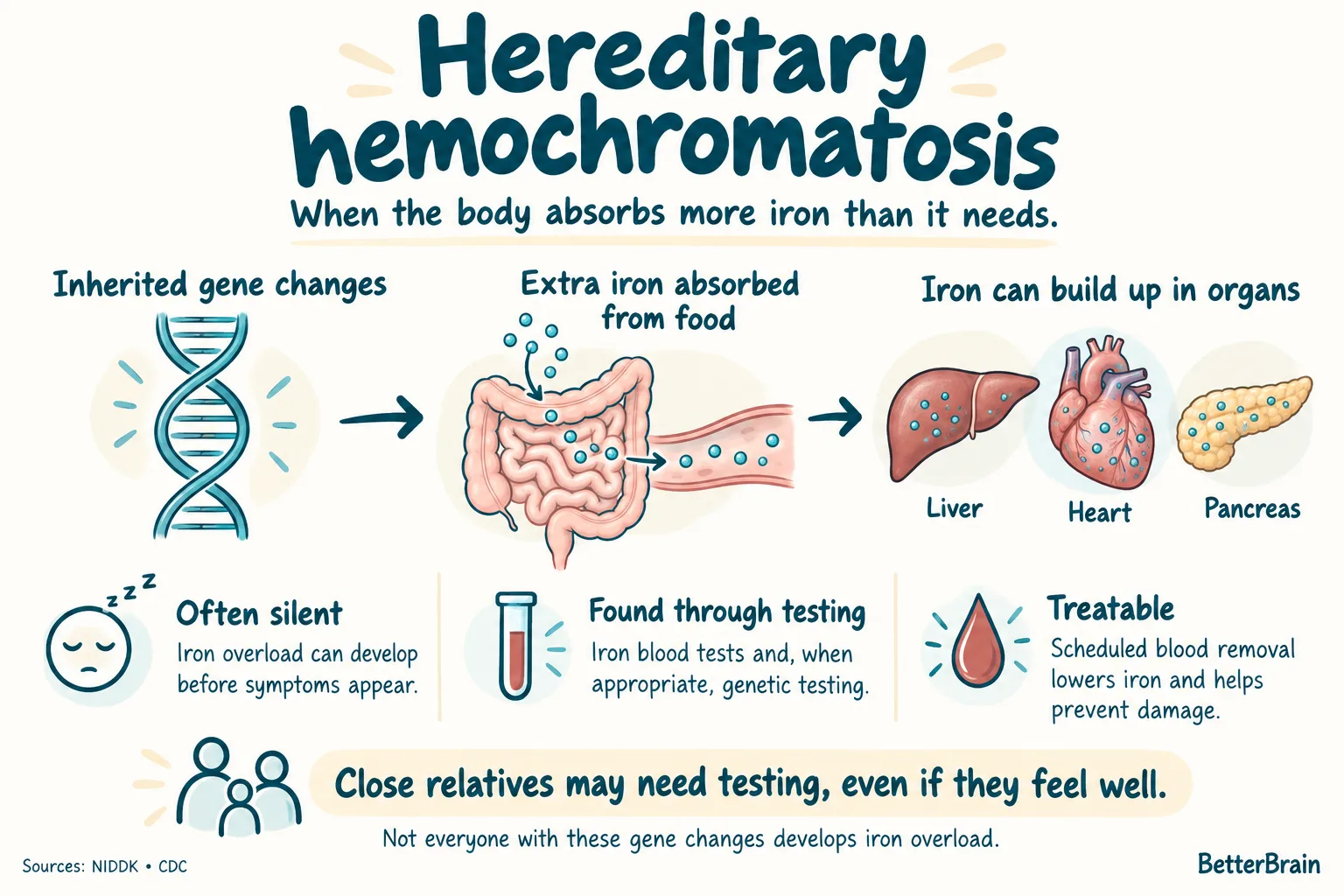
One of the markers that helps show it is ferritin, which reflects how much iron your body has stored.
What changed for Therese
Therese took her results to her primary care physician and a hematologist. Under their care, she began weekly phlebotomies to manage the iron overload.
Alongside that medical care, her Brain Health Coach helped her work on heart-healthy habits, with one-on-one advice and ongoing support to put them into practice.
She now reports that her ferritin is down to an acceptable level and she is feeling 100 percent. In her words:
“Through BetterBrain and the extensive lab work they provide, it was found that I have a genetic condition called hereditary hemochromatosis. These lab tests through BetterBrain are more in depth than one would get at their PCP and without having these tests, I would not have known I have this condition.
I am now down to an acceptable ferritin level and feeling 100 percent. Thank you BetterBrain for the awesome one on one coaching and for all the expert advice and support you provide. Knowledge is power and BetterBrain provides it!”
 Therese, 61, BetterBrain client
Seven siblings. Two children.
The discovery also gave Therese’s family information they could act on. Because the condition is inherited, she said her seven siblings and two children would be tested as well.
What's good for your heart is good for your brain
Your brain is about 2% of your body weight, but it uses roughly 20% of your body’s oxygen at rest. Your heart and blood vessels deliver the oxygen-rich blood your brain needs.
That’s why a finding like Therese’s matters beyond the liver. Left untreated, iron overload can affect the heart, including its rhythm and how well it pumps. Conditions that affect the heart and blood vessels are among the best-studied risk factors for memory and thinking problems later in life.
A risk factor you can act on: high blood pressure in midlife is one of the leading modifiable risk factors for dementia, according to the 2024 Lancet Commission on dementia. Over time, it can damage the small blood vessels that feed the brain. The good news: it’s something you can measure, track and treat.
That’s why BetterBrain looks at vascular health, metabolism and nutrient status alongside cognition. Many of the earliest signals for your brain show up in the rest of your body first. We look at 17 vascular factors connected to brain health, including:
- Blood pressure
- Resting heart rate
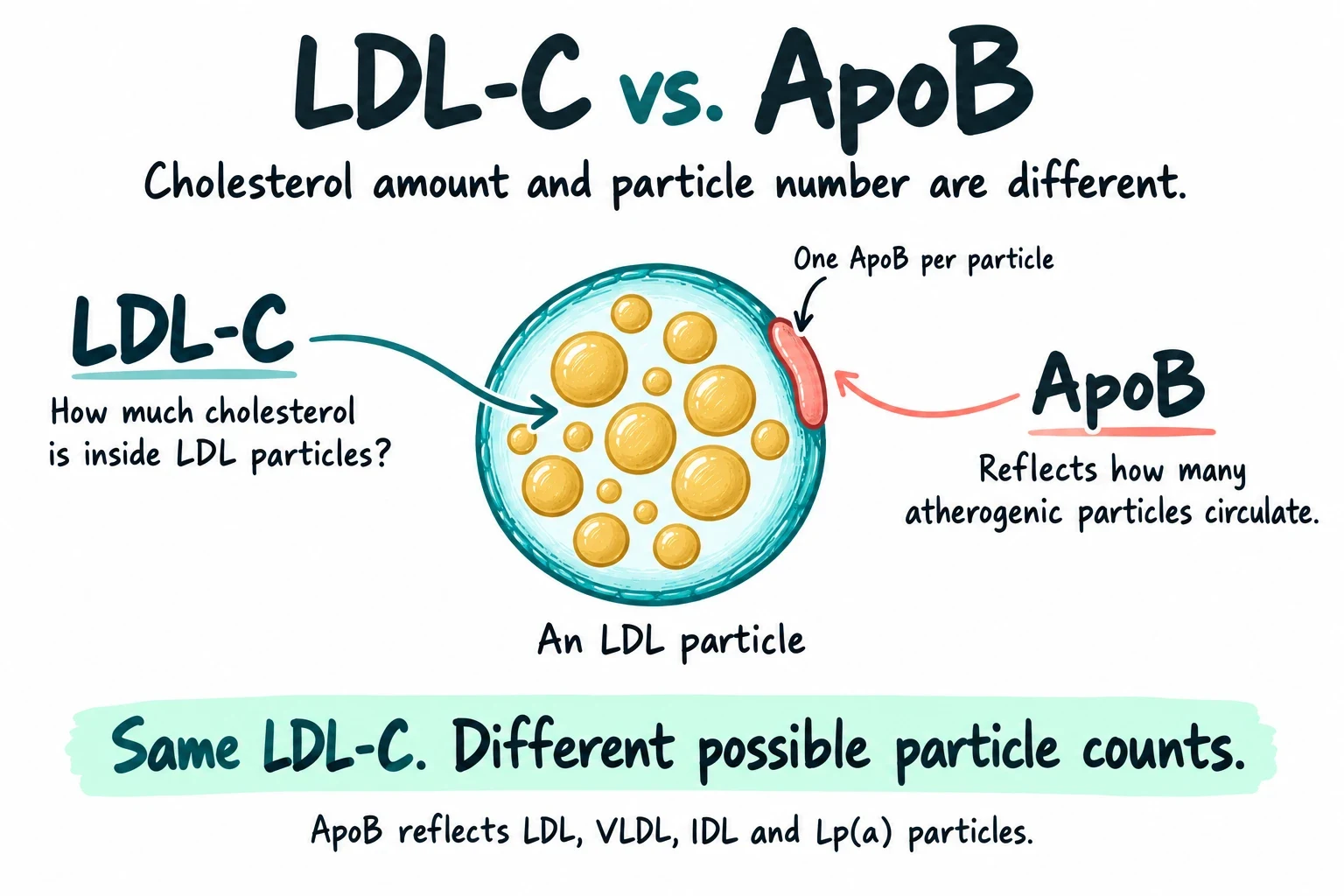
- ApoB
- LDL cholesterol
- HDL cholesterol
- Lipoprotein (a)
- Triglycerides
- Sleep apnea
We also measure ferritin, which shows how much iron your body has stored.