
GreyMatters
Educational articles, BetterBrain resources, latest in brain health, and news about us. Written for you, with expertise (and love).

The Lp(a) drug that lowered the number but not the risk: what the pelacarsen trial means for you | BetterBrain
What the Lp(a)HORIZON trial found
The short version: On September 4, 2026, Novartis announced that pelacarsen, its lipoprotein(a)-lowering drug, did not meet the primary goal of its Phase 3 trial. The drug lowered Lp(a). People taking it had heart attacks, strokes, and cardiovascular deaths at about the same rate as people on placebo.
That result surprised a lot of cardiologists. It is also a useful moment to explain a marker that sits on the BetterBrain panel and on very few standard cholesterol tests.
The trial, called Lp(a)HORIZON, enrolled 8,323 people who already had cardiovascular disease and an Lp(a) level of 70 mg/dL or higher. Participants received either pelacarsen or placebo on top of standard treatment for cholesterol and blood pressure. The question was whether lowering Lp(a) would mean fewer heart attacks, strokes, cardiovascular deaths, and urgent hospital procedures.
For this drug, in this group, the answer was no. In earlier studies pelacarsen had lowered Lp(a) by as much as 80 percent, and Novartis confirmed that levels came down in this trial as well. The combined rate of cardiovascular events did not.
Full data have not been published. Novartis says the results will be presented at an upcoming medical congress, so some of what follows will get sharper over the coming months.
What is Lp(a), in plain language
Lipoprotein(a), usually written Lp(a) and pronounced "L-P-little-a," is an LDL-like particle with an extra protein attached, called apolipoprotein(a). Three things make it different from the cholesterol numbers on a standard panel.
First, your level is set almost entirely by your genes. Diet and exercise barely move it.
Second, it stays roughly the same across your lifetime, which is why guidelines recommend measuring it once rather than every year.
Third, it is common and rarely tested. About one in five people has a high level, and high Lp(a) is associated with roughly a 40 percent higher long-term risk of heart attack or stroke. Yet in one analysis of 71 million US adults, only 0.1 percent had ever been tested. The 2026 ACC/AHA cholesterol guideline now recommends that every adult have Lp(a) measured at least once.
Why Lp(a) is a brain health marker
The stroke risk is why Lp(a) matters at BetterBrain. The vessels that feed your heart are the same kind of vessels that feed your brain, and vascular damage is one of the major pathways to cognitive decline. High cholesterol in midlife is now formally recognized as a modifiable dementia risk factor, and Lp(a) is one piece of that vascular picture. That is why it sits in the Blueprint panel alongside ApoB and hs-CRP.
Why a drug can lower the number and miss the outcome
This is the question cardiology is now arguing about, and nobody has the full answer yet. Three hypotheses are getting the most attention.
The reduction may need to be bigger
Lp(a) is measured in much larger units than LDL. A Mendelian randomization analysis estimated that Lp(a) would need to fall by about 66 mg/dL to produce the same heart benefit as a standard 39 mg/dL drop in LDL. For people starting near the trial's entry threshold, an 80 percent reduction may land right around that line. Two competing drugs, Amgen's olpasiran and Lilly's lepodisiran, lower Lp(a) by more than 90 percent, and their outcome trials are expected to read out in 2028 and 2029, with others behind them.
Everything else was already well controlled
Everyone in this trial had established cardiovascular disease and was already on aggressive treatment for LDL, blood pressure, and diabetes. When LDL has been driven very low and antiplatelet therapy is standard, there may be little room left for one more lipid-lowering drug to show a benefit over five years. The genetic studies that made Lp(a) look so important reflect a lifetime of exposure. Treating someone late, after decades of arterial damage and a first event, is a different experiment.
The number may not be the thing
Cardiologist Eric Topol wrote a sharp piece pairing the pelacarsen result with the failure of an anti-inflammatory heart drug in the ZEUS trial. His argument: both trials lowered a blood marker without confirming the marker was driving disease in those particular patients. Lp(a) particles carry oxidized phospholipids, which are thought to be the inflammatory cargo doing the damage, and a standard Lp(a) test does not tell you how much of that cargo a given person is carrying. Two people with the same Lp(a) can have very different amounts of inflammation in their arteries.
None of these is proven. What is clear is that a marker being causally linked to disease, which Lp(a) is, does not guarantee that a drug targeting it will help everyone with a high level.
The honest caveats
The full data are not out. Everything above is based on a topline announcement. The event rates, subgroups, and safety data will be presented at a medical congress later.
This was a secondary prevention trial. Everyone had already had a cardiovascular event or had established disease. The trial does not tell us what Lp(a) lowering would do in people who have never had an event.
One drug, one mechanism. Pelacarsen is an antisense oligonucleotide. Other Lp(a) drugs use different mechanisms and reach deeper reductions. Their results could differ.
The genetic evidence has not changed. Hundreds of studies link high Lp(a) to heart attack, stroke, peripheral arterial disease, and aortic stenosis. A failed drug trial does not undo that.
Our takeaway
We have watched this pattern before. Raising HDL looked like a great idea until the drugs that did it failed to prevent heart attacks. Lowering triglycerides with fibrates cleared the biomarker and did not move outcomes. In each case the lesson was the same: a biomarker is a signal about your biology, and the useful question is what that signal tells you to do differently.
For Lp(a), the answer today is the same as it was last month. Your number tells you how much genetic vascular risk you are carrying. It does not, yet, tell you to take a specific Lp(a) drug, because there is not one. What it does is raise the stakes on everything else that protects your blood vessels: the ApoB you can lower, the blood pressure you can control, the blood sugar and inflammation you can manage, the fitness you can build. High Lp(a) is a reason to be more aggressive on the levers that work, and the evidence for those levers did not change on September 4.
That is also why Lp(a) stays on our panel. A failed drug trial does not make a risk factor less real. It makes knowing about it early more important, because the tools you have are the ones that need time.
What this means for you, right now
If you have never had Lp(a) measured, get it done once. It is on every Blueprint panel. If you are already a BetterBrain client, your result is in the BetterBrain dashboard with your other vascular markers.
If your Lp(a) is high, push harder on what is proven. ApoB is the number to lower, through diet, movement, and, where your physician recommends them, medications. Blood pressure, blood sugar, and hs-CRP round out the picture. A BetterBrain coach can help turn that into a small set of priorities rather than a long list.
If you have already had a heart attack or stroke, the trial's most useful lesson is what modern secondary prevention looks like: every established risk factor treated aggressively, with your cardiologist.
If you want the background, we covered how to read a cholesterol panel in Cholesterol and your brain, and why ApoB matters more than LDL in our VERVE-102 issue.
Common questions
What is Lp(a) and why does it matter?
Lipoprotein(a) is an LDL-like particle with an extra protein attached. Levels are mostly inherited and stable over a lifetime. High Lp(a) is associated with higher long-term risk of heart attack, stroke, and aortic valve disease. About one in five people has an elevated level, and most have never been tested.
Did the pelacarsen trial fail?
Yes. The Lp(a)HORIZON trial of 8,323 people with established cardiovascular disease did not meet its primary endpoint. Pelacarsen lowered Lp(a), but the rate of cardiovascular death, heart attack, stroke, and urgent revascularization was not significantly different from placebo. Full results are expected at a medical congress later in 2026.
Does this mean Lp(a) does not matter?
No. The genetic and population evidence linking high Lp(a) to cardiovascular disease is strong and unchanged. The trial tested one drug in one group of already well-treated patients. It raises questions about how, when, and in whom Lp(a) lowering helps, not about whether Lp(a) is a real risk factor.
Should I still get my Lp(a) tested?
Yes. The 2026 ACC/AHA guideline recommends every adult have Lp(a) measured at least once. Knowing your number does not change the number, but it changes how aggressively you and your doctor treat the risk factors you can move. Lp(a) is included in every BetterBrain Blueprint panel.
Can I lower Lp(a) with diet or exercise?
Not meaningfully. Lp(a) is largely set by genetics. Some medications shift it modestly, but there is no approved therapy designed to lower it. The practical strategy is to lower the risk around it: ApoB, blood pressure, blood sugar, inflammation, and fitness.
Are other Lp(a) drugs still being tested?
Yes. Amgen's olpasiran and Lilly's lepodisiran both lower Lp(a) by more than 90 percent, and their outcome trials are expected in 2028 and 2029. Oral Lp(a) inhibitors are also in development.
How is Lp(a) connected to brain health?
Through your blood vessels. Lp(a) is associated with ischemic stroke, and vascular damage is one of the main pathways to cognitive decline. Protecting the vessels that feed your heart protects the ones that feed your brain.
Does BetterBrain test Lp(a)?
Yes. Lp(a) is part of the 50+ brain-relevant biomarkers in Blueprint, alongside ApoB, hs-CRP, homocysteine, and metabolic markers. Results are reviewed with a brain health coach who helps you decide what to act on first.
One number you can measure once, and act on for decades
Everything at BetterBrain starts the same way: your health history, your lifestyle, your brain-relevant health data, and a coach who helps you make sense of it, narrow it to a few priorities, and build a plan that adjusts as you go. The only thing you decide is where you start.
If you want to begin with your data, that is Blueprint: 50+ brain-relevant biomarkers including Lp(a), ApoB, and hs-CRP, cognitive testing, and a 90-minute consultation with a brain health coach. It starts at $89 with insurance. If you would rather talk to someone first, the Coaching Program starts with the conversation and adds testing later.

The 5 Brain Health Recommendations We Make Most Often
Move your body, build strength, eat well, get enough sleep, and close your nutritional gaps. Most brain health advice comes down to some version of that list, and it is good advice for almost everyone.
But knowing what is generally good for brain health is different from knowing what will be best for yours. The highest-impact action depends on your biology. Your blood pressure, metabolic health, nutrient levels, cardiovascular fitness, sleep, genetics, and lifestyle can all change what deserves your attention first.
Still, when we looked across BetterBrain coaching action plans, five recommendations appeared again and again. Some are among the most evidence-supported things anyone can do for healthy aging. Others come up because they address nutritional gaps that are easy to identify and act on. Here are the five, what the evidence says about each, and how to tell which one matters most for you.
Summary
- The five recommendations that appear most often in BetterBrain coaching plans are strength training, omega-3s, aerobic exercise, B vitamins, and adequate protein.
- Aerobic exercise and strength training carry the broadest evidence for healthy aging. Randomized trials suggest modest cognitive benefits for both.
- Omega-3s and B vitamins help most when they correct a real gap. In people who already have adequate levels, routine supplementation has not consistently improved cognition.
- Protein supports the muscle maintenance that keeps you moving, training, and independent as you age.
- The most common recommendations are not automatically your top priorities. Bloodwork and a full picture of your health decide where to start.
Why the same five recommendations keep coming up
Because brain health is whole-body health. Your brain does not age independently of the rest of your body: muscle, metabolic health, cardiovascular function, balance, and the ability to stay physically active are deeply interconnected with how well you age.
That is why coaching plans built from very different bloodwork still converge on some of the same actions. Two of the five below are foundational behaviors that benefit nearly everyone. Two are nutrients where common gaps can be identified with a blood test and corrected relatively easily. One supports all the others.
1. Strength training
Strength training comes up more consistently in BetterBrain coaching plans than almost anything else.
Resistance training supports strength, muscle mass, mobility, and physical function. It may support cognition too: a 2025 network meta-analysis of 58 randomized trials covering 4,349 participants found improvements in global cognitive scores among older adults who trained. These are short-term cognitive measures, not dementia outcomes, so the honest summary is modest benefit with a consistent direction. We broke down the science in more detail in what six months of lifting weights does to your hippocampus.
The brain health case for strength training is bigger than any single cognitive effect. Maintaining muscle protects the metabolic and cardiovascular systems your brain depends on, and it preserves the physical capacity to keep doing everything else on this list.
A useful general goal is to train the major muscle groups a few times per week and gradually increase what your body can do. The right starting point depends on your current fitness, health, and experience.
You can learn more about strength training on the BetterBrain App here.
2. Omega-3s
Omega-3s are fats involved in brain, cardiovascular, and metabolic health. EPA and especially DHA are structural components of neuronal membranes and play roles in inflammation and neurotransmission.
The trial evidence is genuinely mixed, and the pattern matters. Meta-analyses of randomized trials have reported modest cognitive benefits, mostly in people with low fish intake or mild cognitive impairment. The two largest trials in generally healthy adults, VITAL-Cog and AREDS2, found no cognitive benefit from supplementation.
That pattern is exactly why we prefer personalization over blanket recommendations. Someone who regularly eats fatty fish and already has healthy omega-3 status may have little reason to add a supplement. Someone who gets very little EPA and DHA through their diet may have a much clearer opportunity. We cover food sources, forms, and dosing in unlocking the power of omega-3s.
The BetterBrain approach: understand your diet and biomarkers first, then supplement when there is a reason to.
3. Aerobic exercise
Of the five, aerobic exercise has the broadest overall evidence base for healthy aging.
Regular cardiovascular activity supports cardiorespiratory fitness, blood pressure, glucose regulation, and metabolic health. Randomized trials suggest modest benefits for cognition, and observational research consistently associates higher physical activity with lower rates of cognitive decline and dementia. Observational findings show association rather than cause, but the direction is consistent across decades of research, and the cardiovascular and metabolic benefits are established on their own.
Walking counts. Cycling counts. Swimming counts. Running counts. The best form of cardio is usually the one you can keep doing consistently.
Learn more about aerobic training
4. B vitamins
B vitamins are an area with real opportunity, and context matters more here than almost anywhere else.
Vitamin B12 and folate are essential for normal neurological function, and correcting a true deficiency is important: frank B12 deficiency can cause neurological symptoms that are reversible when treated. Research in people with mild cognitive impairment has also produced interesting results. In the VITACOG trial, a randomized trial of 168 adults with mild cognitive impairment, B-vitamin treatment slowed the rate of brain atrophy on MRI, with the largest effect in participants who started with higher homocysteine.
That does not mean everyone benefits from a B-complex. Across 11 randomized trials covering roughly 22,000 participants, routine B-vitamin supplementation did not improve cognition in people who already had adequate levels.
This is another example of the importance of blood testing to understand your baseline and get a better view of what is going to impact your brain health the most.
Get started with BetterBrain bloodwork
Schedule your BetterBrain retest
5. Adequate protein
Protein might not be the first thing you associate with brain health. But healthy aging depends in part on maintaining the physical capacity to keep moving, exercising, and functioning independently, and adequate protein supports muscle maintenance, recovery, and the adaptations that come from resistance training.
How much protein someone needs depends on age, activity level, body size, health, and goals. A commonly used target is at least 0.7 grams of protein per pound of body weight daily, which works out to roughly 110 grams for a 160-pound adult, and possibly more if you are training intensely. Some experts recommend up to 1 gram per pound for strength and longevity goals, since hitting a protein target every day is hard and a higher target builds in a buffer.
Which recommendation should you start with?
The one that matches your biology, which is not necessarily the one that appears most often.
Omega-3s and B vitamins can sometimes be relatively simple gaps to correct. Strength training, aerobic exercise, and improving nutrition tend to require bigger and more sustained behavior change. Good brain health plans usually contain both kinds: quick wins, and habits you build into your life for years.
But even the most common recommendations are not automatically your top five. Someone with insulin resistance may need to focus heavily on metabolic health. Someone with low B12 needs a different plan. Someone with poor cardiovascular fitness, elevated ApoB, inadequate protein intake, or poor sleep has another set of priorities.
That is why BetterBrain starts by looking at the whole picture: your bloodwork, cardiovascular and metabolic health, nutrition, exercise, sleep, cognition, health history, and, where appropriate, genetics. Then you can take what science says about healthy brain aging and decide where to focus first.
The bottom line
The five recommendations above come up constantly because they address things that matter for almost every brain. Which of them belongs at the top of your plan is a question your biology answers.
If you have not seen your full picture yet, that is the place to start. Blueprint includes 50+ biomarkers, a consultation of up to 90 minutes with a brain health expert, and a personalized action plan ranked by impact. $89 with insurance, $399 cash pay.
Already a BetterBrain client? Open your protocol to see the science behind each technique and the recommendations most relevant to you.
Frequently asked questions
What is the best exercise for brain health?
The best-supported combination is aerobic exercise plus strength training. Aerobic activity supports the cardiovascular and metabolic systems the brain depends on, and randomized trials suggest modest cognitive benefits. Resistance training preserves muscle, mobility, and physical function, and a 2025 meta-analysis of 58 randomized trials found improvements in global cognition among older adults who trained. The most effective exercise in practice is the one you can sustain consistently.
Does strength training help your brain?
Research suggests it can. A 2025 network meta-analysis of 58 randomized trials found resistance training improved global cognitive scores in older adults. The broader case is indirect but strong: strength training preserves muscle mass, metabolic health, and physical function, all of which are interconnected with how well the brain ages. A common goal is training the major muscle groups a few times per week.
Should I take omega-3 supplements for brain health?
It depends on your starting point. Trial evidence suggests modest cognitive benefits mostly in people with low fish intake or mild cognitive impairment, while the two largest trials in generally healthy adults found no cognitive benefit from supplementation. If you regularly eat fatty fish, you may have little reason to supplement. Understanding your diet and biomarkers first is more useful than defaulting to a capsule.
Do B vitamins help memory?
Only in certain situations. Correcting a true B12 or folate deficiency is important, and in the VITACOG randomized trial, B vitamins slowed brain atrophy in adults with mild cognitive impairment, especially those with high homocysteine. But across 11 randomized trials of roughly 22,000 people with adequate levels, routine supplementation did not improve cognition. Testing your levels tells you which group you are in.
How much protein do you need for healthy aging?
Needs vary with age, activity, body size, and health, but a commonly used target is at least 0.7 grams of protein per pound of body weight daily, roughly 110 grams for a 160-pound adult. Some experts suggest up to 1 gram per pound for strength and longevity goals. Adequate protein supports the muscle maintenance and recovery that keep you active and independent.
How do I know which brain health habit to prioritize?
Start from your biology rather than from a generic list. Blood pressure, metabolic markers, nutrient levels, cardiovascular fitness, and sleep all change what deserves attention first. A comprehensive assessment that reads these together, the way BetterBrain's does, can rank actions by likely impact for you specifically, so you spend effort where it counts.
pTau-217: What the Alzheimer's Blood Test Can and Can't Tell You
pTau-217: What the Alzheimer's Blood Test Can and Can't Tell You
A simple blood draw can now flag Alzheimer's-related changes in the brain years before any symptom appears. For some people that is welcome news, an early window to act. For others it raises a harder question they are not sure how to answer: would they even want to know. Either way, the decision deserves more than a headline.
pTau-217 is the reason this is suddenly everywhere. On August 24, 2026, CNN reported that the FDA had cleared Elecsys pTau217, a new blood test from Roche and Eli Lilly, and a new study in JAMA suggests it may help estimate future cognitive risk in people who have no symptoms yet. The New York Times, meanwhile, focused on the confusion and distress these results can cause.
The test itself is not new to us. BetterBrain began offering direct-to-consumer, expert-supported pTau-217 testing in 2024. In April 2025, physician and scientist Eric Topol called it "one of the most exciting advances in neurology for decades", and that same month BetterBrain was featured in Nature's coverage of the rise of Alzheimer's blood tests. Our takeaway from that feature was as much about responsibility as access. Making a powerful test easier to get is only useful if people also get the context, guidance and support to understand the result.
What is pTau-217?
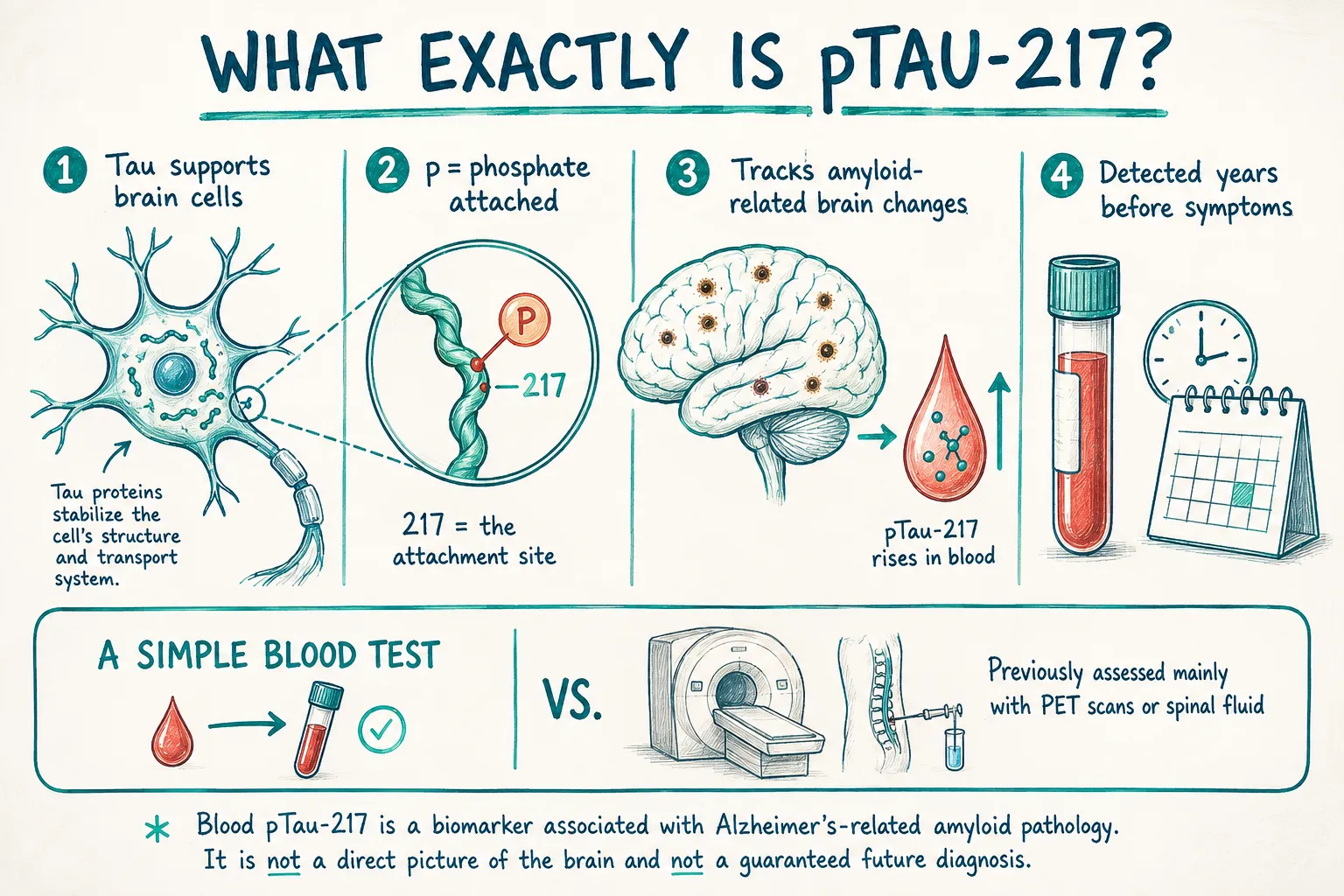
Tau is a protein found inside brain cells. In Alzheimer's disease, tau undergoes abnormal changes and can eventually form tangles that interfere with how those cells work.
The "p" stands for phosphorylated, meaning a phosphate group has attached to the tau protein. The number 217 points to the precise location where that change happened.
When Alzheimer's-related biology begins developing in the brain, levels of pTau-217 in the blood tend to rise. And although the name refers to tau, blood pTau-217 is especially good at tracking the buildup of amyloid plaques, another hallmark of Alzheimer's. Until recently, that kind of information generally required an expensive PET scan or a spinal tap.
Why pTau-217 matters for early detection
Alzheimer's-related brain changes can begin 15 to 20 years before memory problems show up, and pTau-217 may become abnormal during this preclinical period. That makes it one of the most promising tools we have for identifying Alzheimer's-related pathology before symptoms start, which is exactly when there is the most time to act.
Does an elevated pTau-217 result mean I have Alzheimer's?
No. An elevated pTau-217 result is a signal, not a diagnosis.
It suggests that Alzheimer's-related biological changes may be present and that your risk of developing cognitive symptoms is higher. It cannot tell you with certainty whether you will develop symptoms, or when. A negative result is reassuring, but it does not guarantee you will never develop Alzheimer's. It points to a lower likelihood of significant Alzheimer's-related pathology at the time you were tested.
This distinction between detection and prediction sits at the center of the current debate.
What the JAMA study actually found
In July, a JAMA study of nearly 2,700 cognitively healthy older adults found that higher pTau-217 levels were associated with faster cognitive decline and a greater chance of developing cognitive impairment. Among participants with very high levels, researchers estimated a 38% risk of cognitive impairment within five years and a 78% risk within ten years.
Those numbers understandably drew attention. But they were group-level estimates from selected research cohorts whose average age was about 70, and the researchers cautioned that the ten-year figure rested on a relatively small number of people followed for that long. It is meaningful information. It is not a personalized countdown.
Are all Alzheimer's blood tests the same?
Not quite. Several are now available, and each gives a slightly different view of Alzheimer's-related biology. Some measure pTau-217 alone, others combine it with additional markers, and each laboratory method comes with its own reference ranges and cutoffs. That makes the specific test an important part of understanding the result.
The first Alzheimer's blood test cleared by the FDA, in May 2025, measures the ratio of pTau-217 to an amyloid marker. Later that year the FDA cleared Elecsys pTau181, designed mainly to help rule out Alzheimer's-related pathology. In August 2026 it cleared PrecivityAD2, which combines several amyloid and tau measurements, followed by the newly cleared Elecsys pTau217, which measures pTau-217 alone.
These FDA clearances apply to tests used as part of a broader clinical evaluation for people who are experiencing cognitive concerns. The results are meant to be read alongside symptoms, cognitive testing, health history and other clinical information.
BetterBrain uses Quest's AD-Detect pTau-217 test, a laboratory-developed assay that uses different technology from both the newly cleared Elecsys test and the ALZpath test used in many published studies. Because each platform measures pTau-217 differently, each result is interpreted using the reference range established for that specific assay. We use the reference range provided by Quest, then interpret the result alongside cognitive testing, kidney function, other biomarkers, health history and lifestyle.
What a pTau-217 result does not tell you
Here is the part of the conversation that often gets missed. We agree with The New York Times that handing someone a frightening result without enough support can cause real distress. That does not mean the test cannot provide useful information. It means the information needs a fuller picture around it.
A pTau-217 result tells us about one part of Alzheimer's biology. It does not tell us why one person with elevated pathology develops symptoms while another stays cognitively healthy for years, and it says nothing about the many other factors shaping that person's brain health.
Those other factors carry real weight. The 2024 Lancet Commission estimated that addressing 14 modifiable risk factors across life could potentially prevent or delay around 45% of dementia cases at the population level. The U.S. POINTER randomized trial found that a program combining exercise, nutrition, cognitive and social activity, and regular health monitoring improved cognition in older adults at elevated risk. And a long-term observational study found that a healthier midlife lifestyle was associated with a lower incidence of cognitive impairment across pTau-217 levels and APOE4 status. Pathology is not the whole story. The real answers come from looking at all of your numbers together.
What should you do with a pTau-217 result?
Unlike LDL cholesterol or blood pressure, pTau-217 is not a marker you improve through one clearly established intervention. It is primarily a measurement tool.
If your level is elevated, the next step is to understand the complete picture. That may include further clinical evaluation, establishing a cognitive baseline, considering confirmatory testing, assessing eligibility for clinical trials or approved treatments when appropriate, and addressing the modifiable factors that contribute to overall dementia risk. Research into using pTau-217 to monitor treatment response is promising, though there is still a lot to learn about this relatively new test.
Why BetterBrain never offers pTau-217 alone
When we started BetterBrain, we were driven by personal experiences with Alzheimer's in our own families. We learned firsthand that brain health is not about one marker or one intervention. So we do not simply order a pTau-217 test and email you the result. We think that would be irresponsible.
We pair pTau-217 with more than 50 other brain-relevant biomarkers in our Essentials Panel, a cognitive assessment and a detailed look at your health history and lifestyle. We look under the hood for modifiable risk drivers across vascular, metabolic, inflammatory, hormonal and nutritional health. A trained clinical expert then walks you through the findings, explains what they do and do not mean, and builds a personalized action plan focused on the areas where you have the most opportunity to improve. If a result calls for more evaluation, we help you identify the right clinical next step alongside your existing doctor.
The real power does not come from one blood test. It comes from combining early detection with a much broader understanding of your biology, then turning that into meaningful action. Knowledge can be powerful, but only when you know what to do with it.
Learn about pTau-217 testing with BetterBrain, or start your brain health journey to see the full picture.
Frequently asked questions
What is pTau-217?
pTau-217 is a form of the tau protein, measurable in blood, that tends to rise as Alzheimer's-related biology develops in the brain. It is particularly good at tracking amyloid plaque buildup, a hallmark of Alzheimer's disease.
Does an elevated pTau-217 result mean I have Alzheimer's?
No. An elevated result suggests Alzheimer's-related changes may be present and that risk is higher, but it is a signal, not a diagnosis. It cannot confirm whether or when someone will develop symptoms.
Are all Alzheimer's blood tests the same?
No. Some measure pTau-217 alone and others combine it with additional markers, and each laboratory method has its own reference ranges. The specific test used is an important part of interpreting the result.
Can you lower your pTau-217?
pTau-217 is not a marker you improve through one established intervention the way you might lower LDL cholesterol. It is primarily a measurement tool. The action lives in the modifiable risk factors around it, such as vascular, metabolic and lifestyle health.
Who should consider pTau-217 testing?
It is often considered by people who want early insight into Alzheimer's-related risk, including those with a family history. It is most useful when the result is interpreted alongside cognitive testing, other biomarkers, health history and lifestyle, not in isolation.
How much does pTau-217 testing cost with BetterBrain?
The pTau-217 test is $299, offered as an add-on to a Blueprint assessment. It isn't sold on its own, and insurance doesn't cover it. See the full breakdown, including where it's available, on our pTau-217 cost page.
VERVE-102: A One-Time Gene Edit for Cholesterol, and Why It's a Brain Story | BetterBrain
One shot to lower cholesterol for life: what PCSK9 gene editing means for your brain
The short version: In the Heart-2 trial, a single infusion of a gene editing therapy called VERVE-102 lowered LDL cholesterol by up to 62% and kept it down for as long as 18 months. It is a phase 1b result in 35 people with inherited high cholesterol, so it is years away from a pharmacy. The part that matters to you now is the target. High LDL in midlife is one of the 14 modifiable dementia risk factors named by the Lancet Commission, and the particle count underneath it, ApoB, is something you can measure this month.
Most people learn their cholesterol is high at an annual physical, get told to watch it, and never find out what the number is actually doing. It is doing something to your brain.
That connection is why a cardiology result got our attention. In May 2026, researchers reported that a single infusion of a gene editing medicine lowered LDL cholesterol substantially, and that the reduction held for up to 18 months. The results were presented at the European Atherosclerosis Society Congress and published in the New England Journal of Medicine.
It is early research in a small, specific group of patients. But the biology it targets is among the most studied in all of cardiovascular medicine, and it runs straight to your brain.
What VERVE-102 actually did
Heart-2 is a phase 1b trial. The interim analysis covered 35 participants, average age 52, all with heterozygous familial hypercholesterolemia, premature coronary artery disease, or both, and all already on the maximum statin dose they could tolerate.
Each received one infusion, at doses from 0.3 to 1.0 mg/kg. The results, per Lilly's May 25, 2026 release:
- PCSK9 protein fell by 51% to 88%, depending on dose.
- LDL cholesterol fell by 9% to 62%. At the highest dose, the drop was 62%, or 78 mg/dL in absolute terms.
- Reductions were sustained, with durability observed for up to 18 months after a single treatment.
- There were no dose-limiting toxicities and no treatment-related serious adverse events. Side effects were mostly low-grade infusion reactions and fatigue. All 35 participants received their full dose and none withdrew.
One infusion. Effects still holding a year and a half later.
How PCSK9 works, in plain language
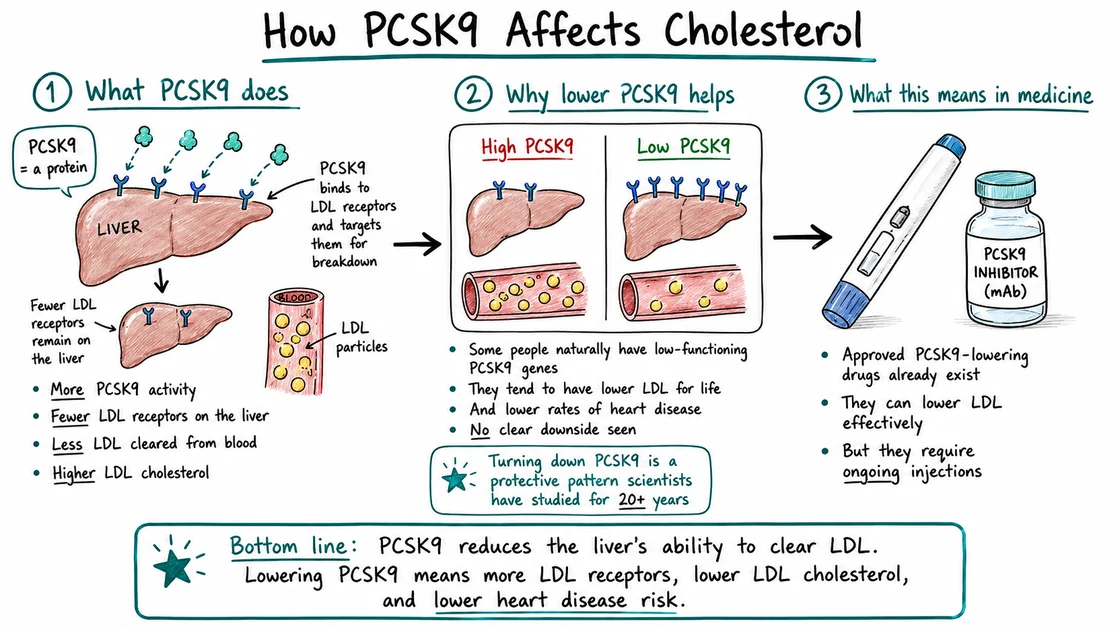
Your liver clears LDL cholesterol out of your blood using surface proteins called LDL receptors. Think of them as docking ports: the more ports available, the more LDL particles get pulled out of circulation.
PCSK9 is a protein that destroys those ports. More PCSK9 activity means fewer receptors, which means more LDL staying in your bloodstream.
Here is the part that makes this target unusually well understood. Some people are born with naturally low-functioning PCSK9 genes. They have markedly lower LDL across their entire lives and substantially lower rates of heart disease, with no apparent downside. Turning PCSK9 down is not a theory. It is a protective pattern that already exists in nature and has been studied for two decades.
Drugs that lower PCSK9 have been approved for years. What is new here is the delivery. VERVE-102 uses base editing, a precise form of gene editing, to make a single change to the PCSK9 gene inside liver cells. The goal is to do once, permanently, what existing drugs do by repeated injection.
The honest caveats
This headline is easy to over-read. The careful version:
It is a phase 1b trial. That stage is designed mainly to test safety and look for early signals in a small number of people. It has not been shown to prevent heart attacks, strokes, or cognitive decline. A phase 2 trial is the next step, with enrollment planned by the end of 2026.
It is a specific patient group. Everyone enrolled had an inherited form of very high cholesterol or early coronary artery disease and needed aggressive LDL lowering despite maximum oral therapy. These are not general-population results.
Gene editing is a young field. The PCSK9 mechanism is exceptionally well characterized, which is reassuring. Making a permanent edit to a gene is still new, and the long-term safety record takes years to build. Approval, if it comes, will likely start with very high-risk patients such as those with familial hypercholesterolemia, and the price is likely to be high.
It is years away. Nobody should be adjusting their plan today on the expectation that this arrives soon.
Why cholesterol is a brain story, not only a heart story
Brain health is whole-body health, and few things connect the two as directly as lipids.
ApoB is the number underneath LDL
You have probably heard of LDL cholesterol. ApoB is the more precise measurement sitting beneath it.
Every LDL particle carries exactly one ApoB protein. So LDL-C tells you how much cholesterol is being carried inside LDL particles, while ApoB tells you how many particles there actually are. Since it is the particles that lodge in artery walls and start plaque, ApoB is the better predictor of risk. When the two numbers disagree, ApoB is the one to trust.
Among BetterBrain clients, 86% come back with a suboptimal ApoB. It is the single most commonly out-of-range marker we see, and most people have never had it measured.
The Lancet Commission added LDL to the dementia list in 2024
The blood vessels feeding your brain are subject to the same lipid-driven damage as the ones feeding your heart, and that vascular damage is one of the major pathways of cognitive decline.
This is no longer a fringe position. In its 2024 update, the Lancet Commission on dementia prevention added high midlife LDL cholesterol as one of 14 modifiable risk factors, based on cohort studies covering more than a million participants plus a Mendelian randomization meta-analysis of 27 studies. The Commission attributes 7% of preventable dementia to high LDL alone, and links nearly half of dementia cases to the 14 factors combined.
High cholesterol in your forties and fifties is now formally a brain risk factor, not only a heart one.
If you carry APOE4
People who carry an APOE4 variant tend to run higher LDL, and APOE4 is the strongest common genetic risk factor for Alzheimer's disease. That combination is one reason lipid management is a core part of what we do, and one reason knowing your genotype can change what you prioritize rather than just giving you something to worry about.
The bigger picture
Between therapies like this one and the medications already on the shelf, the tools for managing cardiovascular disease are getting very good, and they will keep improving. But adding years to your life is only worth so much if your brain is not working well for those years. That is the conversation most people are not having yet, and it is the one that matters most to us.
What this means for you, right now
You do not have to wait for a therapy that is years away. The target itself, your lipid health, is measurable and movable today.
- Get ApoB tested, not just standard cholesterol. A routine lipid panel gives you total cholesterol, LDL, HDL, and triglycerides. ApoB counts the particles actually driving damage and is rarely ordered unless you ask for it. It is one of the most informative single markers for both heart and brain health.
- Treat lipids as a lifelong number, not a yearly one. The PCSK9 story works precisely because it lowers exposure over decades. Risk accumulates the same way. Small, steady improvements compound in your favor, and starting earlier is worth more than starting perfectly.
- Use the levers you already have. Diet, regular movement, and, where your physician recommends them, proven lipid-lowering medications all work today. Statins and existing PCSK9 inhibitors are not placeholders waiting for gene editing. They are the current standard of care.
- Look at the whole vascular picture. ApoB, Lp(a), triglycerides, blood pressure, and HbA1c interact. One number in isolation rarely tells you what to do first.
ApoB is one of the 50+ biomarkers in the BetterBrain panel, alongside homocysteine, hs-CRP, Lp(a), HbA1c and the rest of the vascular and metabolic markers. See everything we test.
Common questions
Is PCSK9 gene editing available now?
No. VERVE-102 is in phase 1b trials. A phase 2 trial is planned to begin enrolling by the end of 2026, and broad availability is years out. If it is approved, the first patients are likely to be people with familial hypercholesterolemia or other very high-risk conditions.
What is the difference between ApoB and LDL cholesterol?
LDL-C measures the amount of cholesterol carried inside LDL particles. ApoB measures the number of those particles, because each one carries exactly one ApoB protein. Two people can have the same LDL-C with very different particle counts. When the two disagree, ApoB is the better predictor of cardiovascular and cerebrovascular risk.
Does lowering cholesterol reduce dementia risk?
The 2024 Lancet Commission identified high midlife LDL cholesterol as one of 14 modifiable dementia risk factors and attributes 7% of preventable dementia to it. That is an association drawn from large cohort and genetic studies, not proof that lowering LDL prevents dementia in any individual. What is well established is that lipid-driven damage to blood vessels is one of the major pathways of cognitive decline, and that the vessels feeding your brain are affected the same way as the ones feeding your heart.
Should I get an ApoB test?
ApoB is not part of a standard lipid panel and usually has to be requested. It is most informative if you have a family history of early heart disease or dementia, if your LDL and triglycerides do not line up, if you carry an APOE4 variant, or if you simply want a clearer read than total cholesterol gives you. Discuss it with your physician or your Brain Health Coach.
Does BetterBrain test ApoB?
Yes. ApoB is included in the BetterBrain biomarker panel, which covers 50+ markers selected for their connection to brain health, across metabolic, cardiovascular, hormonal, inflammation, and nutrient categories. Blueprint is $89 with insurance and $399 without, and includes a cognitive assessment and an up-to-90-minute session with a Brain Health Coach who turns the results into a personalized action plan.
The bottom line
A one-time gene editing infusion produced large, durable reductions in LDL cholesterol in an early trial, by copying a protective genetic pattern that already exists in nature. It is not available, it is not proven to prevent anything yet, and it will not be in a clinic near you for years.
What is available is the target. Your lipid numbers are one of the few brain risk factors you can measure precisely, act on immediately, and improve over decades. Whatever arrives in five or ten years, the decades in between are the ones you protect now.
Fasting Insulin and Brain Health: The Metabolic Marker Most Physicals Skip
Key takeaways
- Fasting insulin usually moves before fasting glucose. Glucose tells you the result. Insulin tells you the effort behind it.
- In BetterBrain's dashboard, optimal fasting insulin is below 6 mcIU/mL. The fair range runs from 6 to 19.6.
- Higher fasting insulin has been associated with roughly double the Alzheimer's risk in adults 65 and older, with the strongest association in people who did not have diabetes.
- Metabolic syndrome has been associated with a 24% higher risk of young-onset dementia, with a dose response as components accumulate.
- These are observational findings. They establish association, not cause.
- Most standard panels stop at glucose and HbA1c. Fasting insulin is inexpensive and is included in BetterBrain's Essentials panel.
For most people, metabolic health shows up as one line on a lab report. Fasting glucose, 94 mg/dL, flagged normal, nothing to discuss, see you next year.
That reading is accurate. But fasting glucose is also one of the last things to change. Your body can spend years quietly working to hold that number in range, and the work it does to hold it is where the brain story actually starts.
What is fasting insulin?
Fasting insulin measures how much insulin your pancreas is releasing to keep your blood sugar steady after an overnight fast.
Insulin is the hormone that moves glucose out of your bloodstream and into your cells. A fasting insulin test tells you how much of that hormone your body needs to hold a normal blood sugar level while you are not eating. A low number means your cells are responding easily. A higher number means your body is working harder to reach the same result.
In your BetterBrain dashboard, the optimal range for fasting insulin is below 6 mcIU/mL. Above 6, and into the fair range of 6 to 19.6, the picture starts to shift.
The distinction that matters: glucose tells you the result, insulin tells you the effort behind it.
Why your glucose can look normal for years
When cells stop responding well to insulin, the pancreas compensates by producing more of it. Glucose can stay in range through that entire process, sometimes for years, while insulin climbs in the background.
This is why a single normal glucose reading is an incomplete picture. It is a true measurement of an outcome, not a measurement of how much work went into producing that outcome.

Fasting insulin can rise years before glucose looks abnormal.
What the research says about insulin and the brain
Older adults: Alzheimer's risk roughly doubled
In a study published in Neurology, researchers tracked 683 adults aged 65 and older for nearly 3,700 person-years. Alzheimer's risk roughly doubled among people with hyperinsulinemia, and the association was strongest in people who did not have diabetes.
That last detail is the important one. The association was not explained by diabetes being present.
Midlife: the same pattern, six years later
In the ARIC cohort, adults aged 45 to 64 had fasting insulin measured at baseline. Six years later, higher baseline insulin predicted greater decline in delayed word recall and verbal fluency.
The authors described insulin resistance as a potentially modifiable midlife risk factor. That phrase matters because it points at what you can do about it.
A note on complexity
Very low fasting insulin has also been associated with risk in some long follow-up studies, so the relationship is not a straight line. This is exactly why we read insulin alongside glucose, HbA1c, and the rest of the domain rather than treating any single number as a verdict.
What is actually happening in your brain
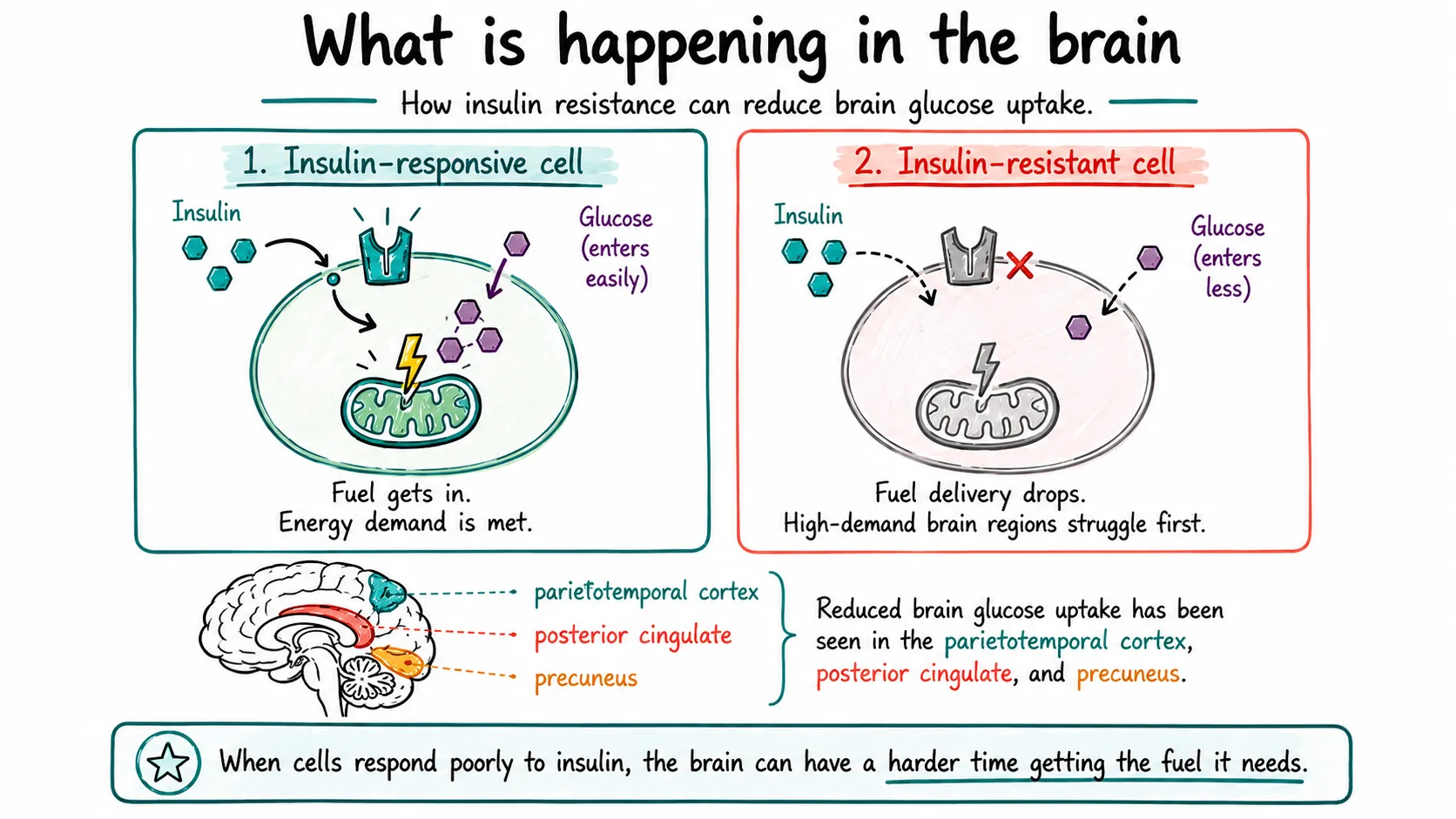
Your brain is roughly 2% of your body weight and uses about 20% of your resting energy, almost all of it from glucose. Getting that fuel where it needs to go depends on insulin signaling working.
A systematic review of 23 imaging studies covering 5,308 participants found that insulin resistance was associated with reduced glucose uptake in the brain across 22 of 23 studies. The regions involved, the parietotemporal cortex, posterior cingulate, and precuneus, are the same areas that show reduced metabolism in Alzheimer's disease. Some of those associations appeared in people who were cognitively normal at the time of scanning.
Cells that respond poorly to insulin have a harder time pulling in fuel. Consequently, the parts of your brain with the highest energy demand are the ones affected first.
Metabolic syndrome and dementia risk: when the components stack
A 2025 study in Neurology followed nearly 2 million Korean adults aged 40 to 60 for an average of 7.8 years.
Metabolic syndrome, defined as three or more of excess belly fat, high blood pressure, elevated fasting glucose, elevated triglycerides, and low HDL, was associated with a 24% higher risk of young-onset dementia. Each component added to the effect, and participants with all five had roughly 70% higher risk.
Two things worth noting: the association was stronger in people in their 40s than in their 50s, and stronger in women (34%) than in men (15%).
This is observational research, which establishes association, not cause. It is one national population, and the researchers could not account for APOE status. What it does establish clearly: the direction of the effect, a dose response across components, and earlier timing than most people assume.
The metabolic health domain: which markers we read together
When we assess metabolic health at BetterBrain, it is one of the ten health domains we track. We read a group of markers together rather than checking any one off in isolation:
GroupMarkersWhat it tells youGlucose controlFasting glucose, HbA1c, fasting insulinHow easily your body manages fuelLipid loadTriglycerides, ApoBHow much lipid your system is carryingLiver stressALT, ASTHow much metabolic work your liver is absorbingNutrient statusVitamin D, B12, folateWhether you have the raw materials to make and use energy
Any one of these can look unremarkable on its own. Read together, they tell you something a single value can't: whether your body is handling fuel comfortably, or working hard to look like it is.
What you can do
Test your fasting insulin, not just glucose. Most standard panels stop at fasting glucose and HbA1c. Fasting insulin tends to move first, it is inexpensive, and it is included in the 50+ biomarkers in the BetterBrain Essentials panel.
Move after you eat. A short walk in the hour after a meal meaningfully blunts the glucose rise. This is one of the higher-return habits in the metabolic domain because it costs almost nothing. One BetterBrain client liked the idea enough to build a free app for it, called Exercise Snacks for Health & Wellbeing.
Build meals around protein and fiber before the starch. Same food, different order, measurably flatter glucose response. Vegetables and protein first, then the carbohydrate portion.
Finish eating three to four hours before bed. Late meals land against a window when insulin sensitivity is at its lowest. Moving dinner earlier is one of the easiest and most impactful techniques to manage glucose spikes.
Retest and see it move. Fasting insulin and triglycerides respond within weeks. HbA1c takes two to three months to reflect a real change. Knowing which to watch first keeps you from concluding too early that nothing is happening.
Frequently asked questions
Can you have insulin resistance with normal blood sugar?
Yes. When cells stop responding well to insulin, the pancreas compensates by producing more of it, which can hold glucose in the normal range for years. Fasting glucose is typically one of the last metabolic markers to change, which is why a normal reading does not rule out insulin resistance.
What is a good fasting insulin level?
In BetterBrain's dashboard, the optimal range for fasting insulin is below 6 mcIU/mL, with a fair range of 6 to 19.6. Reference ranges vary between labs, and fasting insulin should be interpreted alongside fasting glucose and HbA1c rather than on its own.
Is fasting insulin included in a standard blood panel?
Usually not. Most standard panels stop at fasting glucose and HbA1c. Fasting insulin generally has to be requested specifically. It is included in BetterBrain's Essentials panel of 50+ biomarkers.
Does insulin resistance affect the brain?
Research as associated insulin resistance with reduced glucose uptake in the brain. A systematic review of 23 imaging studies covering 5,308 participants found this association in 22 of the 23 studies, in the parietotemporal cortex, posterior cingulate, and precuneus. Some of those associations appeared in people who were cognitively normal at the time of scanning. These are observational findings.
How quickl can fasting insulin improve?
Fasting inslin and triglycerides can respond within weeks. HbA1c reflects roughly two to three months of glucose exposure, so it takes longer to show a real change. Knowing which marker moves first prevents you from concluding too early that nothing is working.
What is metaolic syndrome?
Metabolic synrome is defined as having three or more of the following: excess belly fat, high blood pressure, elevated fasting glucose, elevated triglycerides, and low HDL cholesterol. A 2025 study of nearly 2 million adults associated it with a 24% higher risk of young-onset dementia, with risk increasing as more components were present.
The bottom line
Metabolic health is not a number you pass or fail. It is a set of markers that move together, and it is the domain where what you do this month shows up in your labs this quarter.
If you have not seen your full metabolic picture, that is a good place to start. Blueprint includes 50+ biomarkers, a consultation of up to 90 minutes with a brain health expert, and a personalized action plan ranked by impact. $89 with insurance, $399 cash pay.
Already have your results? View your metabolic markers to see where you sit and which techniques your Brain Health Coach recommends first.
.webp)
How to Personalize Your Brain Health Plan With Your Own Data
How to Personalize Your Brain Health Plan With Your Own Data
Most brain health advice is useful, but it is also designed for the average person.
Sleep more. Move often. Eat a nutritious diet. Manage stress. Build strength.
These fundamentals matter. But they cannot tell you which risk factors deserve the most attention, what may be changing in your body, or whether your current routine is producing the results you want.
Personalized brain health guidance uses your own labs, health history, sleep, activity, habits, and goals to help determine where to focus first.
BetterBrain members can now bring more of that information into My Vault, the health data home inside the BetterBrain platform. You can upload previous lab results, connect wearable data, and import relevant health context from an AI assistant such as ChatGPT, Claude, or Gemini.
All three tools are available free across BetterBrain accounts.
Why Does Generic Brain Health Advice Have a Ceiling?
General health advice tells you what tends to help people on average. It cannot tell you which intervention is likely to matter most for you.
Two people can follow the same routine and have very different needs because they begin with different:
- Biomarker levels
- Genetics and family histories
- Sleep patterns
- Activity levels
- Medical histories
- Medications and supplements
- Diets, habits, and goals
One person may need to focus on improving sleep consistency. Another may already sleep well but have an elevated cardiovascular risk marker that deserves more attention. A third may be exercising regularly but not recovering adequately.
That is why personalization matters. It helps turn broad recommendations into clearer priorities.
Research has also found that multidomain brain health interventions tailored to individual risk profiles can produce better cognitive outcomes than general health information alone. You can read the randomized controlled trial published in Nature Medicine here.
What Is Personalized Brain Health Guidance?
Personalized brain health guidance applies current research to information about your own health.
Instead of simply telling everyone that sleep is important, personalized guidance can consider:
- How much you are actually sleeping
- Whether your sleep duration or consistency is changing
- How your sleep relates to your activity and recovery
- Whether your current protocol appears to be helping
- Which other risk factors may deserve attention
Personalization does not replace the fundamentals. It helps identify which fundamentals matter most for you, where to begin, and what to monitor over time.
How Does My Vault Help Personalize Your Brain Health Plan?
My Vault brings several sources of health information together inside your BetterBrain account.
You can use it to:
- Upload previous laboratory results
- Connect sleep and activity data from a wearable
- Import relevant health context from another AI assistant
Together, these tools give BeBe, BetterBrain’s AI brain health coach, a more complete picture of your health and goals.
Upload Past Lab Results and Track Changes Over Time
A single laboratory result is only a snapshot. The trend often provides more useful context.
If you have previous results stored in a patient portal, computer folder, email, or paper file, you can upload them to My Vault as a PDF or image. BetterBrain can extract the biomarker results and display them alongside your current numbers.
Tracking results over time can help you understand:
- Whether a biomarker is moving in the desired direction
- Whether a change is new or part of a longer pattern
- How your results respond to changes in your routine
- Whether an intervention appears to be working
- Which markers may deserve further discussion with your clinician
For example, a cholesterol result may appear acceptable when viewed alone. But seeing several years of results together could reveal that the number has been steadily increasing or improving.
Your brain health plan should respond to what is changing, not just what appeared on one test.
Link Your Wearable Data
Questionnaires capture what you remember. Wearables can capture what is happening each day.
If you use a fitness tracker or smartwatch, you can connect it to BetterBrain through the BeBe app and Apple Health. You choose which information you want to share, and you can change the permissions or disconnect the integration at any time.
Depending on your device and permissions, wearable data may provide useful context about:
- Sleep duration
- Sleep consistency
- Daily movement
- Exercise
- Heart rate
- Recovery patterns
- Changes in routine
This can make guidance more specific.
Instead of receiving another reminder that sleep is important, you may be able to see that your sleep duration is adequate but inconsistent, or that your activity has declined over the past several weeks.
The goal is not to obsess over every daily number. It is to recognize meaningful patterns that may otherwise be easy to miss.
Import Your AI Memory
Many people already use ChatGPT, Claude, or Gemini to discuss their health, routines, goals, and preferences.
You may have already told an AI assistant about:
- Your health history
- Current symptoms or concerns
- Injuries
- Medications and supplements
- Family medical history
- Exercise habits
- Diet
- Sleep
- Health goals
- How you prefer advice to be delivered
- Strategies you have already tried
You can now bring that context into BetterBrain instead of starting from the beginning.
Visit Import AI Memory inside My Vault. You will see a prompt that you can open or paste into the AI assistant you use. The assistant will organize the relevant information it knows about you. You can then review the response and paste it into BetterBrain.
The process takes about a minute.
Once imported, BeBe can begin with more context about your history, preferences, goals, and previous efforts.
How Is BeBe Different From ChatGPT, Claude, or Gemini?
General AI assistants draw from broad knowledge across an enormous range of subjects. Their responses are also largely shaped by what you choose to tell them in each conversation.
BeBe is built specifically for brain health. It is grounded in brain health research that has been reviewed and interpreted by BetterBrain’s scientists and clinicians.
BeBe can then apply that specialized knowledge to information within your BetterBrain account, including:
- Your laboratory history
- Wearable sleep and activity data
- Health profile
- Current brain health protocol
- Uploaded documents
- Coaching insights
- Imported health context
- Personal goals and preferences
The distinction is specialized brain health science combined with your personal data.
A general assistant may repeat common recommendations. BeBe is designed to help you understand how the evidence relates to your own risks, results, and priorities.
Is My Health Information Private?
Your imported information stays private to your account and is used to personalize your guidance.
You control what you upload, what wearable information you share, and whether you want to delete information later. Wearable permissions can also be changed or turned off at any time.
Only import information you are comfortable storing in your BetterBrain account.
How Do I Get Started With My Vault?
You do not need to complete everything at once.
Start with whichever option is easiest:
- Upload one previous lab report.
- Connect your wearable through the BeBe app and Apple Health.
- Import relevant health context from ChatGPT, Claude, or Gemini.
- Review your health profile and current protocol.
- Ask BeBe what patterns or priorities stand out.
All three personalization tools are available with a free Self Directed BetterBrain account.
Members who want to go further can also purchase laboratory testing through Blueprint or enroll in the BetterBrain Coaching Program.
Frequently Asked Questions About Personalized Brain Health Guidance
What is personalized brain health guidance?
Personalized brain health guidance applies scientific evidence to information about your individual labs, health history, sleep, activity, habits, risk factors, and goals. It helps identify which actions may deserve the most attention for you.
What is BetterBrain My Vault?
My Vault is the health data home within your BetterBrain account. It allows you to upload lab reports and other files, complete your health profile, record your current protocol, connect wearable data, and import relevant health context from another AI assistant.
Why should I upload previous lab results?
Previous results help establish a trend. Comparing multiple tests over time can show whether a biomarker is improving, worsening, or remaining stable.
What wearable data can BetterBrain use?
Available data depends on your device and Apple Health permissions. It may include sleep, activity, exercise, heart rate, and other daily health metrics.
Can I control which wearable information I share?
Yes. You choose which Apple Health categories to share and can update your permissions or disconnect the integration later.
What does importing AI memory mean?
Importing AI memory means asking ChatGPT, Claude, or Gemini to summarize relevant information it already knows about your health, preferences, habits, and goals. You can review that response before pasting it into BetterBrain.
Does BetterBrain automatically access my ChatGPT or Claude conversations?
No. You choose what to export, review the response, and manually paste it into BetterBrain.
How long does it take to import AI memory?
The process typically takes about a minute. BetterBrain provides a prompt that helps your existing AI assistant organize the relevant information.
Are the My Vault personalization tools free?
Yes. Uploading previous labs, connecting wearable data, and importing AI memory are available across BetterBrain accounts, including free Self Directed accounts.
Does BeBe replace a doctor?
No. BeBe provides educational brain health guidance and helps you understand your data and potential priorities. It does not replace medical diagnosis, treatment, or care from a licensed healthcare professional.
Get immediate insights with a 3 minute assessment
Start now.webp)
GreyMatters
Grey Matters: Your genetics aren't your destiny
Featured Biomarker
APOE Genetic Status
Unlike other biomarkers we've covered, APOE isn't something you can directly improve—but it might be the most important piece of information you can have about your brain health future.
What it is: A gene that affects how your brain handles cholesterol and clears amyloid plaques; variants (2, 3, 4) determine Alzheimer's risk. Everyone has two copies, creating combinations like 3/3, 3/4, or 4/4.
Why it matters: APOE4 carriers have 2-3x higher risk (one copy) or 8-12x higher risk (two copies) for Alzheimer's disease. But here's the crucial part—this isn't a guarantee, it's a probability that can be significantly modified through targeted interventions.
The variants breakdown:
- APOE2 (protective): Associated with lower Alzheimer's risk and later onset if disease occurs
- APOE3 (neutral): The most common variant, representing baseline risk
- APOE4 (higher risk): Increases risk but also responds well to prevention strategies
Evidence-Based Strategies for APOE4 Carriers:
Here's where genetics gets exciting rather than scary. If you're an APOE4 carrier, your genetics actually make you more responsive to certain prevention techniques—meaning you may see greater benefits from targeted interventions than the general population.
Quick Wins for APOE4 Carriers:
- Prioritize heart-healthy fats (EPA/DHA omega-3s, olive oil, avocados)
- More stringent cholesterol management (target LDL <70 mg/dL)
- Aggressive anti-inflammatory lifestyle (regular exercise, stress management)
- Enhanced sleep hygiene (APOE4 carriers more sensitive to sleep disruption)
- Consider earlier/more frequent cognitive assessments
BetterBrain approach: Genetic testing combined with personalized intervention strategies. We use your APOE status to calibrate everything from exercise intensity to sleep optimization to nutritional protocols, ensuring your prevention plan matches your genetic risk profile.
Member Spotlight
Sarah's Story: From Fear to Empowerment
Background: Sarah came to BetterBrain with a family history—both her mother and grandmother developed Alzheimer's. "I was hesitant to find out my APOE status," she admits. "I wasn't sure I wanted that information."
The Discovery: When Sarah's genetic testing revealed she carries one copy of APOE4, she felt uncertain about what it meant. "My first thought was, 'Now what?' But my BetterBrain coach helped me understand this wasn't a verdict—it was valuable information for creating a prevention strategy."
Taking Action: Armed with her genetic information, Sarah and her coach developed a targeted protocol focusing on two critical areas for APOE4 carriers:
Lipid Management Results:
- LDL cholesterol: 142 mg/dL → 78 mg/dL (6 months)
- ApoB: 115 mg/dL → 85 mg/dL
- Triglycerides: 130 mg/dL → 75 mg/dL
Sleep Optimization: Sarah discovered she was getting only 5-6 hours of fragmented sleep. Through targeted interventions, she now consistently achieves 7-8 hours of deep, restorative sleep.
The Transformation: "Knowing my APOE status was the best thing I ever did for my brain health," Sarah reflects. "Instead of living with the uncertainty, I now have a clear plan. My energy is better, my focus is sharper, and I feel like I'm actively working toward a different outcome than my family history."
CONTENT CORNER
Rapamycin and APOE4: Potential Brain Protection for Genetic Risk Carriers?
Bottom Line: Recent research suggests that rapamycin, an mTOR inhibitor typically studied for longevity, may offer specific brain protection benefits for APOE4 carriers—potentially providing a pharmaceutical intervention for those at highest genetic risk for Alzheimer's disease.
About the episode: Matt Kaeberlein's Optispan Podcast episode explores emerging evidence on rapamycin's potential benefits for APOE4 carriers, addressing the critical question: should those with genetic predisposition to Alzheimer's consider this intervention?
Key Research Findings:
- Studies show rapamycin may improve cognitive function specifically in APOE4 carriers
- The drug works by inhibiting mTOR pathways, which become dysregulated in Alzheimer's disease
- APOE4 carriers show different metabolic responses that may make them more responsive to rapamycin's benefits
- Early intervention appears more promising than waiting for symptoms
The APOE4 Connection: APOE4 carriers have impaired ability to clear amyloid plaques and show altered brain metabolism. Rapamycin may help by enhancing autophagy (cellular cleanup) and improving metabolic efficiency—mechanisms that are particularly compromised in APOE4 carriers.
BetterBrain Takeaway: Rapamycin is emerging as a interesting candidate for intensive brain health prevention protocols, especially for APOE4 carriers. While the science is still developing, emerging evidence points to meaningful cognitive benefits and neuroprotection.
For those with significant genetic risk or family history, rapamycin may represent a proactive pharmaceutical intervention worth considering alongside lifestyle strategies. However, this isn't a one-size-fits-all decision—factors like your specific genetic profile, current health status, and risk tolerance all matter.
We recommend discussing rapamycin with your BetterBrain coach or doctor to determine if it aligns with your personalized prevention strategy. We're actively monitoring emerging studies, and the data continues to trend positive for brain health applications.
Grey Matters: Two temperature hacks for the changing season (plus more good news for prevention)
Technique Spotlight
Heat & Cold Therapy: Your Seasonal Brain Health Duo
This week we have two complementary hacks for you as we transition between seasons. Think of them as yin and yang for your nervous system—each powerful alone, but transformative when combined.
🔥 Sauna Therapy
Quick implementation: 3 sessions per week, 20 minutes each, at 180°F (dry sauna)
Science backing: Regular sauna use creates a cascade of neuroprotective benefits. The heat stress triggers heat shock proteins that repair damaged brain proteins while enhancing cardiovascular function and cerebral blood flow. The deep relaxation response counteracts chronic stress and reduces harmful cortisol levels. Combined with detoxification through sweating, these synergistic effects create a powerful defense against cognitive decline and may significantly reduce Alzheimer's risk.
Expected timeline: Immediate relaxation benefits, cardiovascular improvements within 2-4 weeks, potential neuroprotective effects with consistent long-term use.
❄️ Cold Therapy
Quick implementation: Daily cold exposure at 45-60°F, starting with 15 seconds and gradually increasing duration.
Science backing: Think of cold exposure as a vaccine for stress. Initially, that icy shock triggers your body's alarm system, but here's the beautiful part—with consistent practice, you build remarkable resilience to stress. Each cold plunge floods your brain with endorphins, nature's mood elevators, while stimulating the vagus nerve. This activation shifts you into parasympathetic mode, promoting deep calm and naturally lowering cortisol. It's like training your nervous system to stay cool under pressure, literally and figuratively.
Expected timeline: Immediate mood boost, stress resilience improvements within 1-2 weeks
🔄 Why Combine Them?
The magic happens when you use both therapies. Heat therapy activates your parasympathetic (rest and digest) nervous system, while cold exposure strengthens your sympathetic (fight or flight) response. Together, they create nervous system flexibility—your ability to handle stress and then recover efficiently. This combination enhances everything from sleep quality to cognitive performance.
Important timing note: Avoid cold plunging immediately after strength training, as evidence suggests it may impede muscle growth benefits.
You can access BetterBrain's full technique spotlights and product recommendations on Sauna Therapy and Cold Exposure in your Brain health arsenal.
CONTENT CORNER
Mediterranean Diet & APOE4: More Good News for Genetic Risk Carriers
Bottom Line: Following up on last month's newsletter about APOE genetics, new research brings encouraging news: people with the highest genetic risk for Alzheimer's (two copies of APOE4) can reduce their dementia risk by 35% through Mediterranean diet adherence—proving once again that genes are not destiny.
About the study: This groundbreaking 34-year study of over 5,700 people, published in Nature, found that Mediterranean diet benefits were actually highest for those with the greatest genetic risk, particularly APOE4/4 carriers who saw the most dramatic risk reduction.
Key Research Findings:
- APOE4/4 carriers (highest genetic risk) reduced dementia risk by 35% through Mediterranean diet adherence
- Higher adherence to the diet provided even greater protection for genetic risk carriers
- APOE4 carriers appear to have distinctive metabolic profiles that respond dramatically to healthy Mediterranean diet nutrients
- The diet's impact on metabolic function may explain the substantial risk reduction
The Mediterranean Advantage: The study focused on a diet rich in vegetables, fruits, nuts, whole grains, legumes, fish, and olive oil, while limiting alcohol, red meat, and processed foods. Researchers believe the diet improves metabolic function specifically in APOE4 carriers, potentially explaining the dramatic risk reduction.
Expert Perspective: Dr. Richard Isaacson called this a "stop the presses" finding, noting it should change the perception that having two APOE4 copies is inevitable doom. "If dementia risk can be cut by 35% just through diet, imagine what's possible when combining exercise, sleep, stress management, and other modifiable factors."
BetterBrain Takeaway: This research reinforces what we discussed in last month's APOE newsletter—genetic risk carriers often see greater benefits from targeted interventions. While the Mediterranean diet is beneficial for almost everyone; it appears to be especially powerful for those who need it most. This gives APOE4 carriers concrete hope and a clear action plan, proving that precision nutrition based on genetic status can be transformative.
Grey Matters: Expanded insurance coverage and why now matters
BetterBrain Update
From the beginning, we've believed in making brain health science accessible. Our mission is to empower every person to take charge of their brain health so they can live a full life, their whole life.
To date, that's been nearly impossible for most people. Dementia prevention programs have cost thousands of dollars with year-long waitlists, putting evidence-based care out of reach. By partnering with insurance providers, we're changing that.
We're excited to announce expert brain health coaching that's now covered by insurance - most clients pay $0 per session.
In our 90-day Coaching Program you will meet with a clinician up to weekly to understand your biology, build your personalized action plan, and dive deep on the techniques that will have the largest impact for you. Optional bloodwork helps you go even deeper. Clients are already sharing that they're thinking sharper, feeling more in control of their cognitive future, and making real progress on prevention.
We now work with most major insurance plans, including Blue Cross Blue Shield, Anthem, UnitedHealthcare, Aetna, and Cigna. Coaching is often covered by employer-sponsored insurance and Medicare coverage is coming soon.
Client Spotlight: Meet Sarah
We recently got amazing feedback from one of our first clients to complete the full 12-week Coaching Program. Sarah did 9 sessions with her coach Emily and completed lab testing both before and after the program. Here's what she had to say:
"Honestly, I've been so happy with the Coaching Program... I can't even believe something like this exists."
What stood out most to Sarah? The specifics. "The number one thing is telling me what lab results are important, and why." And the outcomes: "I actually can go to sleep now at a good time... it's a huge accomplishment after years of not being able to."
On her coach Emily: "She has just a sort of a nurturing vibe about her. She's a really amazing listener. And the way that she talks about everything for me to understand."
The value?"I wouldn't have done it without insurance, because I would not have known what the program was like. It's so helpful for anyone, not just someone whose dad has dementia and is concerned about brain health at the moment."
Why This Matters Now
We know more about preventing cognitive decline than ever before, and the research keeps getting better.Over the past decade, scientists have identified the modifiable risk factors that matter most: cardiovascular health, inflammation, nutrient status, metabolic function, sleep quality, social connection. The interventions work. People like Sarah are seeing real results.
But here's what makes the difference: knowing what to do and actually doing it are two different things. You can read all the research papers in the world, but translating that into sustainable habit change is where most people get stuck.
That's where coaching comes in. Our coaches help you bridge the gap between research and real life. They help you understand which interventions matter most for your specific biology, then work with you week after week to build the habits that stick. It's not just information—it's personalized implementation with accountability. You learn the techniques, practice them with support, troubleshoot what's not working, and celebrate what is.
The science exists. The techniques are proven. And now, with coaching covered by insurance, you have the support to actually put them into action.
If you have been wanting to feel sharper or prevent dementia in the future, check your insurance coverage. It takes about 3 minutes.
Grey Matters: How much protein do you actually need?
CONTENT CORNER
Peter Attia's Strength & Conditioning Expert Roundtable
About the episode: This isn't your typical fitness podcast. Peter assembled three of the most respected names in strength and conditioning to tackle the big questions: Why is maintaining muscle mass so critical for longevity? How should your training evolve as you age? And what are the biggest mistakes people make when trying to build strength?
The dream team breakdown:
- Gabrielle Lyon: Physician specializing in muscle-centric medicine and protein optimization
- Jeff Cavaliere: Physical therapist and trainer known for science-based approach to injury prevention
- Mike Boyle: Legendary strength coach who's trained everyone from professional athletes to everyday people
Key insights from the roundtable:
- Muscle mass isn't just about looks: It's literally your metabolic insurance policy for aging
- Exercise "graveyard": Which popular exercises they'd ban due to poor risk-reward ratios
- Women's training evolution: How peri- and post-menopausal women should adjust their approach
- Youth sports reality check: Why early specialization might be hurting our kids more than helping
The protein revelation: Perhaps the most practical takeaway is their discussion on protein needs. Spoiler alert: it's probably more nuanced than the "just eat more protein" advice you see everywhere.
BetterBrain Takeaway: What makes this roundtable so valuable is how it connects training and nutrition to measurable health outcomes. The protein strategies they discuss directly impact biomarkers we track, like the albumin/globulin ratio that reflects your body's protein utilization. It's not just about feeling stronger, it's about optimizing biomarkers that predict longevity.
Featured Biomarker
A/G Ratio (Albumin/Globulin Ratio)
Speaking of protein optimization, let's talk about a biomarker that actually shows you how well your body is handling all that protein you're eating. The A/G ratio is like a report card for your protein metabolism.
What it is: Think of albumin as your body's workhorse protein (made by your liver) and globulins as your immune system's protein squad. The ratio between them tells a surprisingly detailed story.
Why it matters more than you think: This isn't just about protein intake. Your A/G ratio reflects liver function, immune system balance, nutritional status, and even chronic inflammation. When this ratio gets out of whack, it can signal problems brewing long before you feel symptoms.
The protein connection: Albumin reflects your liver's ability to synthesize proteins from the food you eat. If you're eating all that protein but your albumin is low, your body might not be utilizing it effectively.
What affects your A/G ratio:
- Protein intake and quality: Obviously, but it's not just about quantity
- Liver health: Your liver makes albumin, so liver function directly impacts this ratio
- Chronic inflammation: Shifts the balance toward globulins
- Infections or autoimmune conditions: Also elevate globulins
- Age: Ratios naturally shift as we get older
The sweet spot: Your A/G ratio should ideally be between 1.1 and 2.2. Too high might indicate dehydration or kidney issues. Too low could signal liver problems, chronic inflammation, or inadequate protein utilization.
You can read more about A/G ratio optimization and protein metabolism on your BetterBrain account.
Evidence-Based Strategies
Optimizing Protein Intake for Longevity
Now for the practical implications.
In Peter Attia's podcast, the experts recommend protein intakes that vary significantly by expert and life stage. Some advocate for 0.8-1.0g per kg for younger adults, while others recommend 1.2-1.6g per kg across the board.
Here's what we actually know: The evidence on optimal protein intake is still not totally clear and different experts interpret the available research differently.
What we do know for certain:
- The concerns have been debunked: High protein doesn't cause kidney damage or gout in people without pre-existing kidney disease (CKD). The risks are extremely low for healthy individuals.
- Most people eat too little: The vast majority of Americans don't even hit the low end of recommended thresholds.
- Age matters: Protein needs increase with age as muscles become more resistant to protein synthesis
- Distribution counts: Your body can only use about 25-30g efficiently at once, so spreading intake throughout the day works better than one massive meal
BetterBrain's approach: We recommend 0.7-1.0g per lbs for most adults. This range is based on current evidence and addresses the real issue: getting enough protein in the first place.
An interesting data point: The Bolivian Tsimane, who have the lowest dementia rates in the world, consume around 2g per kg of body weight. This suggests the upper bounds of beneficial intake may be higher than current recommendations.
Bottom line: The science is still evolving on optimal amounts. What's clear is that increasing protein from typical intake levels provides significant benefits, and the risks of eating "too much" are minimal for people with healthy kidneys.
Grey Matters: Historic FDA Action on Hormone Therapy and Brain Health
Brain Health News
FDA Removes Black Box Warnings on Hormone Replacement Therapy
Bottom Line: The FDA is removing black box warnings from HRT products after comprehensive scientific review.
What happened: On November 10, 2025, HHS Secretary Robert F. Kennedy Jr. and FDA Commissioner Marty Makary announced the FDA is initiating removal of boxed warnings from HRT products following comprehensive review of scientific literature, an expert panel in July, and a public comment period.
Why the original warnings were misleading: The Women's Health Initiative study had important limitations:
- Average participant age was 63 years—over a decade past typical menopause age
- Used hormone formulations no longer in common use
- Found only a statistically non-significant increase in breast cancer risk
What the science shows: Women who initiate HRT within 10 years of menopause onset (generally before age 60) are associated with:
- Reduction in all-cause mortality
- Up to 50% reduction in cardiovascular disease risk
- Reduction in Alzheimer's disease risk (see Section 2)
- 50-60% reduction in bone fractures
What's changing: The FDA is working with companies to remove references to risks of cardiovascular disease, breast cancer, and probable dementia from product labels. The boxed warning for endometrial cancer for systemic estrogen-alone products remains.
Additional actions: The FDA is also approving the first generic version of Premarin in over 30 years (improving affordability) and a new non-hormonal treatment for moderate to severe hot flashes.
What This Means: This FDA decision is important because millions more women will now have access to updated, evidence-based guidelines to help facilitate informed conversations about a treatment option that may significantly benefit brain health when started at the right time.
Technique Spotlight
Hormone Replacement Therapy (HRT)
At BetterBrain, we consider HRT one of the highest-impact interventions for brain health in women navigating menopause.
The Science:Hormone replacement therapy (HRT) is commonly used to supplement declining hormone levels in post-menopausal women. Some hormones, like estrogen, appear to have a protective effect on the brain and may reduce inflammation and the accumulation of harmful proteins linked to neurodegenerative diseases, like Alzheimer's. By maintaining hormone levels throughout the critical menopause transition and beyond, HRT can reduce the risk of developing neurodegenerative disease.
Why We Prioritize HRT at BetterBrain
The evidence is compelling. While we need more randomized controlled trials, the observational evidence consistently points to significant brain health benefits when HRT is initiated during the menopause transition. The landmark Cache County Study found that women who used HRT for more than 10 years eliminated their sex-specific increased risk of Alzheimer's disease entirely—their risk became comparable to men's.
The impact can be substantial. The Cache County Study showed:
- 41% reduced Alzheimer's risk among all HRT users (adjusted HR 0.59)
- 67% reduced risk among former users who took HRT during menopause (adjusted HR 0.33)
- Complete elimination of women's excess Alzheimer's risk (compared to men) with 10+ years of use
The window doesn't stay open forever. This is perhaps the most important point: the protective benefits appear strongest when HRT is initiated within 10 years of menopause onset, typically before age 60. Starting too late (in your 60s or 70s) may not provide the same cognitive benefits. The brain benefits from continuous hormonal support during the transition, not replacement decades later.
HRT isn't right for everyone. Decisions should be individualized based on:
- Personal and family medical history
- Risk factors for breast cancer, blood clots, or cardiovascular disease
- Individual symptoms and quality of life
- Personal preferences and values
BetterBrain's Approach
When we assess hormone status in our clients, we evaluate whether they're within the critical timing window, assess individual risk factors, and provide evidence-based information to support informed conversations with their healthcare providers.
Partner Announcement
BetterBrain x The 'Pause Life
Dr. Mary Claire Haver's The 'Pause Life has become one of the most trusted voices in women's health and menopause. Her evidence-based approach to helping women navigate perimenopause and menopause which addresses everything from hormone health to metabolic changes, aligns perfectly with our mission at BetterBrain.
Dr. Haver understands the critical link between hormonal health and cognitive function during menopause, when dementia risk increases for women, which iswhy we're proud to partner with The 'Pause Life. Together, we're bringing cutting-edge brain health insights to her community, helping women optimize both hormonal and cognitive health during this crucial transition.
We're honored to be featured on The Pause Life's Brain Health Picks alongside other evidence-based resources for women's health.
Grey Matters: How a 42-year-old reversed his homocysteine levels in 3 months
Member Testimonial
From High-Risk Biomarkers to Remarkable Results
Background: Amit (blinded name for privacy) a 42-year-old professional, came to BetterBrain not because he felt unwell, but because he wanted to be proactive about his brain health. What his comprehensive testing revealed was initially alarming but also incredibly motivating.
The Discovery: Despite feeling fine, Amit's results showed elevated pTau-217 (indicating early Alzheimer's pathology), low vitamin D, deficient folate and B12, concentration difficulties, and poor short-term memory.
Taking Action: Working with his BetterBrain coach, Amit developed a comprehensive protocol targeting his specific risk factors:
The Protocol:
- Implemented targeted sleep hygiene for better brain recovery
- Started daily 20-minute sauna sessions (linked to 40% reduction in dementia risk)
- Began vitamin D and B vitamin supplementation to address deficiencies
- Experimented with a ketogenic diet for brain energy optimization
Transformative 3-Month Results:
- Cognitive transformation: Improved memory, concentration, and reasoning scores
- Biomarker success: Reduced homocysteine to optimal levels
- Quality of life wins: Falling asleep faster and feeling better rested in the mornings
- Overall outcome: Significantly reduced dementia risk and improved cognitive function
The Transformation: The systematic approach gave Amit confidence that he was taking real control of his brain health. Instead of hoping for the best, he now has concrete evidence that his interventions are working, with measurable improvements in cognitive function.
The power of knowing: "I'm not sure I want to know" is something we hear all the time when talking to clients about getting tested. We get it. Finding out you have multiple risk factors (or the thought of finding out) can be daunting. But having data is powerful. It transforms vague worry into actionable targets.
Amit caught potential problems before they became symptomatic and quickly reversed concerning biomarkers through targeted lifestyle changes, improving both his current cognitive function and his long-term brain health trajectory. His story shows that knowing your data transforms uncertainty and worry into empowering action.
Featured Biomarker
Homocysteine
Amit's success in reducing homocysteine to optimal levels was a crucial part of his brain health transformation. We featured this amino acid in our very first newsletter because it's both critically important for brain health and highly responsive to targeted interventions!
What it is: An amino acid that your body produces during protein metabolism. Normally, it's quickly converted into other beneficial compounds, but when this process gets disrupted, homocysteine builds up in your blood.
Why it matters for brain health: Elevated homocysteine damages blood vessels, including the delicate ones feeding your brain. It's also linked to oxidative stress and inflammation, both of which accelerate cognitive decline.
The vascular connection: Your brain depends on healthy blood flow for oxygen and nutrients. When homocysteine damages blood vessels, it reduces cerebral circulation and increases the risk of small strokes that contribute to cognitive decline.
What causes elevated levels:
- B vitamin deficiencies: Particularly B6, B12, and folate
- Age: Levels naturally increase as we get older
- Kidney problems: Reduced ability to clear homocysteine
- Certain medications: Including some blood pressure and cholesterol drugs
- Genetic factors: Some people have genetic variants affecting homocysteine metabolism
Amit's journey: His homocysteine dropped from 13.5 μmol/L (poor range) to 8.9 μmol/L (optimal levels) through B vitamin supplementation and dietary changes, directly contributing to his cognitive improvements.
Technique Spotlight
Methylated B Vitamins for Homocysteine Optimization
The most effective approach to lowering homocysteine: strategic B vitamin supplementation, specifically using methylated forms that work better for most people.
Why Methylated B Vitamins Matter: The key to lowering homocysteine is giving your body the right tools to convert it into beneficial compounds. This process requires three specific B vitamins, but not just any forms will do. Methylated versions are pre-activated and ready for your body to use immediately.
The Essential Trio:
- Methylfolate (L-5-MTHF): 400-800 mcg daily, the active form of folate that bypasses genetic conversion issues
- Methylcobalamin (B12): 500-1000 mcg daily, better absorbed than the synthetic cyanocobalamin form
- Pyridoxal-5-Phosphate (P5P): 25-50 mg daily, the active form of B6
Why Standard Forms Often Fall Short: Many people have genetic variants (like MTHFR mutations) that make it difficult to convert regular folic acid and cyanocobalamin into their active forms. Methylated versions skip this conversion step entirely, making them more effective for homocysteine reduction.
Who Benefits Most:
- People with elevated homocysteine despite eating B vitamin-rich foods
- Those with family history of heart disease or cognitive decline
- Anyone with genetic variants affecting B vitamin metabolism
- Individuals following plant-based diets (higher risk of B12 deficiency)
Quality Matters: Look for third-party tested supplements with the specific methylated forms listed above. We recommend Pure Encapsulations Methylated B complex vitamins.
BetterBrain Insight: Methylated B vitamins represent precision nutrition at its best. Rather than hoping your body can convert synthetic vitamins, you're providing the exact forms your cells need.