
GreyMatters
Educational articles, BetterBrain resources, latest in brain health, and news about us. Written for you, with expertise (and love).

The Lp(a) drug that lowered the number but not the risk: what the pelacarsen trial means for you | BetterBrain
What the Lp(a)HORIZON trial found
The short version: On September 4, 2026, Novartis announced that pelacarsen, its lipoprotein(a)-lowering drug, did not meet the primary goal of its Phase 3 trial. The drug lowered Lp(a). People taking it had heart attacks, strokes, and cardiovascular deaths at about the same rate as people on placebo.
That result surprised a lot of cardiologists. It is also a useful moment to explain a marker that sits on the BetterBrain panel and on very few standard cholesterol tests.
The trial, called Lp(a)HORIZON, enrolled 8,323 people who already had cardiovascular disease and an Lp(a) level of 70 mg/dL or higher. Participants received either pelacarsen or placebo on top of standard treatment for cholesterol and blood pressure. The question was whether lowering Lp(a) would mean fewer heart attacks, strokes, cardiovascular deaths, and urgent hospital procedures.
For this drug, in this group, the answer was no. In earlier studies pelacarsen had lowered Lp(a) by as much as 80 percent, and Novartis confirmed that levels came down in this trial as well. The combined rate of cardiovascular events did not.
Full data have not been published. Novartis says the results will be presented at an upcoming medical congress, so some of what follows will get sharper over the coming months.
What is Lp(a), in plain language
Lipoprotein(a), usually written Lp(a) and pronounced "L-P-little-a," is an LDL-like particle with an extra protein attached, called apolipoprotein(a). Three things make it different from the cholesterol numbers on a standard panel.
First, your level is set almost entirely by your genes. Diet and exercise barely move it.
Second, it stays roughly the same across your lifetime, which is why guidelines recommend measuring it once rather than every year.
Third, it is common and rarely tested. About one in five people has a high level, and high Lp(a) is associated with roughly a 40 percent higher long-term risk of heart attack or stroke. Yet in one analysis of 71 million US adults, only 0.1 percent had ever been tested. The 2026 ACC/AHA cholesterol guideline now recommends that every adult have Lp(a) measured at least once.
Why Lp(a) is a brain health marker
The stroke risk is why Lp(a) matters at BetterBrain. The vessels that feed your heart are the same kind of vessels that feed your brain, and vascular damage is one of the major pathways to cognitive decline. High cholesterol in midlife is now formally recognized as a modifiable dementia risk factor, and Lp(a) is one piece of that vascular picture. That is why it sits in the Blueprint panel alongside ApoB and hs-CRP.
Why a drug can lower the number and miss the outcome
This is the question cardiology is now arguing about, and nobody has the full answer yet. Three hypotheses are getting the most attention.
The reduction may need to be bigger
Lp(a) is measured in much larger units than LDL. A Mendelian randomization analysis estimated that Lp(a) would need to fall by about 66 mg/dL to produce the same heart benefit as a standard 39 mg/dL drop in LDL. For people starting near the trial's entry threshold, an 80 percent reduction may land right around that line. Two competing drugs, Amgen's olpasiran and Lilly's lepodisiran, lower Lp(a) by more than 90 percent, and their outcome trials are expected to read out in 2028 and 2029, with others behind them.
Everything else was already well controlled
Everyone in this trial had established cardiovascular disease and was already on aggressive treatment for LDL, blood pressure, and diabetes. When LDL has been driven very low and antiplatelet therapy is standard, there may be little room left for one more lipid-lowering drug to show a benefit over five years. The genetic studies that made Lp(a) look so important reflect a lifetime of exposure. Treating someone late, after decades of arterial damage and a first event, is a different experiment.
The number may not be the thing
Cardiologist Eric Topol wrote a sharp piece pairing the pelacarsen result with the failure of an anti-inflammatory heart drug in the ZEUS trial. His argument: both trials lowered a blood marker without confirming the marker was driving disease in those particular patients. Lp(a) particles carry oxidized phospholipids, which are thought to be the inflammatory cargo doing the damage, and a standard Lp(a) test does not tell you how much of that cargo a given person is carrying. Two people with the same Lp(a) can have very different amounts of inflammation in their arteries.
None of these is proven. What is clear is that a marker being causally linked to disease, which Lp(a) is, does not guarantee that a drug targeting it will help everyone with a high level.
The honest caveats
The full data are not out. Everything above is based on a topline announcement. The event rates, subgroups, and safety data will be presented at a medical congress later.
This was a secondary prevention trial. Everyone had already had a cardiovascular event or had established disease. The trial does not tell us what Lp(a) lowering would do in people who have never had an event.
One drug, one mechanism. Pelacarsen is an antisense oligonucleotide. Other Lp(a) drugs use different mechanisms and reach deeper reductions. Their results could differ.
The genetic evidence has not changed. Hundreds of studies link high Lp(a) to heart attack, stroke, peripheral arterial disease, and aortic stenosis. A failed drug trial does not undo that.
Our takeaway
We have watched this pattern before. Raising HDL looked like a great idea until the drugs that did it failed to prevent heart attacks. Lowering triglycerides with fibrates cleared the biomarker and did not move outcomes. In each case the lesson was the same: a biomarker is a signal about your biology, and the useful question is what that signal tells you to do differently.
For Lp(a), the answer today is the same as it was last month. Your number tells you how much genetic vascular risk you are carrying. It does not, yet, tell you to take a specific Lp(a) drug, because there is not one. What it does is raise the stakes on everything else that protects your blood vessels: the ApoB you can lower, the blood pressure you can control, the blood sugar and inflammation you can manage, the fitness you can build. High Lp(a) is a reason to be more aggressive on the levers that work, and the evidence for those levers did not change on September 4.
That is also why Lp(a) stays on our panel. A failed drug trial does not make a risk factor less real. It makes knowing about it early more important, because the tools you have are the ones that need time.
What this means for you, right now
If you have never had Lp(a) measured, get it done once. It is on every Blueprint panel. If you are already a BetterBrain client, your result is in the BetterBrain dashboard with your other vascular markers.
If your Lp(a) is high, push harder on what is proven. ApoB is the number to lower, through diet, movement, and, where your physician recommends them, medications. Blood pressure, blood sugar, and hs-CRP round out the picture. A BetterBrain coach can help turn that into a small set of priorities rather than a long list.
If you have already had a heart attack or stroke, the trial's most useful lesson is what modern secondary prevention looks like: every established risk factor treated aggressively, with your cardiologist.
If you want the background, we covered how to read a cholesterol panel in Cholesterol and your brain, and why ApoB matters more than LDL in our VERVE-102 issue.
Common questions
What is Lp(a) and why does it matter?
Lipoprotein(a) is an LDL-like particle with an extra protein attached. Levels are mostly inherited and stable over a lifetime. High Lp(a) is associated with higher long-term risk of heart attack, stroke, and aortic valve disease. About one in five people has an elevated level, and most have never been tested.
Did the pelacarsen trial fail?
Yes. The Lp(a)HORIZON trial of 8,323 people with established cardiovascular disease did not meet its primary endpoint. Pelacarsen lowered Lp(a), but the rate of cardiovascular death, heart attack, stroke, and urgent revascularization was not significantly different from placebo. Full results are expected at a medical congress later in 2026.
Does this mean Lp(a) does not matter?
No. The genetic and population evidence linking high Lp(a) to cardiovascular disease is strong and unchanged. The trial tested one drug in one group of already well-treated patients. It raises questions about how, when, and in whom Lp(a) lowering helps, not about whether Lp(a) is a real risk factor.
Should I still get my Lp(a) tested?
Yes. The 2026 ACC/AHA guideline recommends every adult have Lp(a) measured at least once. Knowing your number does not change the number, but it changes how aggressively you and your doctor treat the risk factors you can move. Lp(a) is included in every BetterBrain Blueprint panel.
Can I lower Lp(a) with diet or exercise?
Not meaningfully. Lp(a) is largely set by genetics. Some medications shift it modestly, but there is no approved therapy designed to lower it. The practical strategy is to lower the risk around it: ApoB, blood pressure, blood sugar, inflammation, and fitness.
Are other Lp(a) drugs still being tested?
Yes. Amgen's olpasiran and Lilly's lepodisiran both lower Lp(a) by more than 90 percent, and their outcome trials are expected in 2028 and 2029. Oral Lp(a) inhibitors are also in development.
How is Lp(a) connected to brain health?
Through your blood vessels. Lp(a) is associated with ischemic stroke, and vascular damage is one of the main pathways to cognitive decline. Protecting the vessels that feed your heart protects the ones that feed your brain.
Does BetterBrain test Lp(a)?
Yes. Lp(a) is part of the 50+ brain-relevant biomarkers in Blueprint, alongside ApoB, hs-CRP, homocysteine, and metabolic markers. Results are reviewed with a brain health coach who helps you decide what to act on first.
One number you can measure once, and act on for decades
Everything at BetterBrain starts the same way: your health history, your lifestyle, your brain-relevant health data, and a coach who helps you make sense of it, narrow it to a few priorities, and build a plan that adjusts as you go. The only thing you decide is where you start.
If you want to begin with your data, that is Blueprint: 50+ brain-relevant biomarkers including Lp(a), ApoB, and hs-CRP, cognitive testing, and a 90-minute consultation with a brain health coach. It starts at $89 with insurance. If you would rather talk to someone first, the Coaching Program starts with the conversation and adds testing later.

The 5 Brain Health Recommendations We Make Most Often
Move your body, build strength, eat well, get enough sleep, and close your nutritional gaps. Most brain health advice comes down to some version of that list, and it is good advice for almost everyone.
But knowing what is generally good for brain health is different from knowing what will be best for yours. The highest-impact action depends on your biology. Your blood pressure, metabolic health, nutrient levels, cardiovascular fitness, sleep, genetics, and lifestyle can all change what deserves your attention first.
Still, when we looked across BetterBrain coaching action plans, five recommendations appeared again and again. Some are among the most evidence-supported things anyone can do for healthy aging. Others come up because they address nutritional gaps that are easy to identify and act on. Here are the five, what the evidence says about each, and how to tell which one matters most for you.
Summary
- The five recommendations that appear most often in BetterBrain coaching plans are strength training, omega-3s, aerobic exercise, B vitamins, and adequate protein.
- Aerobic exercise and strength training carry the broadest evidence for healthy aging. Randomized trials suggest modest cognitive benefits for both.
- Omega-3s and B vitamins help most when they correct a real gap. In people who already have adequate levels, routine supplementation has not consistently improved cognition.
- Protein supports the muscle maintenance that keeps you moving, training, and independent as you age.
- The most common recommendations are not automatically your top priorities. Bloodwork and a full picture of your health decide where to start.
Why the same five recommendations keep coming up
Because brain health is whole-body health. Your brain does not age independently of the rest of your body: muscle, metabolic health, cardiovascular function, balance, and the ability to stay physically active are deeply interconnected with how well you age.
That is why coaching plans built from very different bloodwork still converge on some of the same actions. Two of the five below are foundational behaviors that benefit nearly everyone. Two are nutrients where common gaps can be identified with a blood test and corrected relatively easily. One supports all the others.
1. Strength training
Strength training comes up more consistently in BetterBrain coaching plans than almost anything else.
Resistance training supports strength, muscle mass, mobility, and physical function. It may support cognition too: a 2025 network meta-analysis of 58 randomized trials covering 4,349 participants found improvements in global cognitive scores among older adults who trained. These are short-term cognitive measures, not dementia outcomes, so the honest summary is modest benefit with a consistent direction. We broke down the science in more detail in what six months of lifting weights does to your hippocampus.
The brain health case for strength training is bigger than any single cognitive effect. Maintaining muscle protects the metabolic and cardiovascular systems your brain depends on, and it preserves the physical capacity to keep doing everything else on this list.
A useful general goal is to train the major muscle groups a few times per week and gradually increase what your body can do. The right starting point depends on your current fitness, health, and experience.
You can learn more about strength training on the BetterBrain App here.
2. Omega-3s
Omega-3s are fats involved in brain, cardiovascular, and metabolic health. EPA and especially DHA are structural components of neuronal membranes and play roles in inflammation and neurotransmission.
The trial evidence is genuinely mixed, and the pattern matters. Meta-analyses of randomized trials have reported modest cognitive benefits, mostly in people with low fish intake or mild cognitive impairment. The two largest trials in generally healthy adults, VITAL-Cog and AREDS2, found no cognitive benefit from supplementation.
That pattern is exactly why we prefer personalization over blanket recommendations. Someone who regularly eats fatty fish and already has healthy omega-3 status may have little reason to add a supplement. Someone who gets very little EPA and DHA through their diet may have a much clearer opportunity. We cover food sources, forms, and dosing in unlocking the power of omega-3s.
The BetterBrain approach: understand your diet and biomarkers first, then supplement when there is a reason to.
3. Aerobic exercise
Of the five, aerobic exercise has the broadest overall evidence base for healthy aging.
Regular cardiovascular activity supports cardiorespiratory fitness, blood pressure, glucose regulation, and metabolic health. Randomized trials suggest modest benefits for cognition, and observational research consistently associates higher physical activity with lower rates of cognitive decline and dementia. Observational findings show association rather than cause, but the direction is consistent across decades of research, and the cardiovascular and metabolic benefits are established on their own.
Walking counts. Cycling counts. Swimming counts. Running counts. The best form of cardio is usually the one you can keep doing consistently.
Learn more about aerobic training
4. B vitamins
B vitamins are an area with real opportunity, and context matters more here than almost anywhere else.
Vitamin B12 and folate are essential for normal neurological function, and correcting a true deficiency is important: frank B12 deficiency can cause neurological symptoms that are reversible when treated. Research in people with mild cognitive impairment has also produced interesting results. In the VITACOG trial, a randomized trial of 168 adults with mild cognitive impairment, B-vitamin treatment slowed the rate of brain atrophy on MRI, with the largest effect in participants who started with higher homocysteine.
That does not mean everyone benefits from a B-complex. Across 11 randomized trials covering roughly 22,000 participants, routine B-vitamin supplementation did not improve cognition in people who already had adequate levels.
This is another example of the importance of blood testing to understand your baseline and get a better view of what is going to impact your brain health the most.
Get started with BetterBrain bloodwork
Schedule your BetterBrain retest
5. Adequate protein
Protein might not be the first thing you associate with brain health. But healthy aging depends in part on maintaining the physical capacity to keep moving, exercising, and functioning independently, and adequate protein supports muscle maintenance, recovery, and the adaptations that come from resistance training.
How much protein someone needs depends on age, activity level, body size, health, and goals. A commonly used target is at least 0.7 grams of protein per pound of body weight daily, which works out to roughly 110 grams for a 160-pound adult, and possibly more if you are training intensely. Some experts recommend up to 1 gram per pound for strength and longevity goals, since hitting a protein target every day is hard and a higher target builds in a buffer.
Which recommendation should you start with?
The one that matches your biology, which is not necessarily the one that appears most often.
Omega-3s and B vitamins can sometimes be relatively simple gaps to correct. Strength training, aerobic exercise, and improving nutrition tend to require bigger and more sustained behavior change. Good brain health plans usually contain both kinds: quick wins, and habits you build into your life for years.
But even the most common recommendations are not automatically your top five. Someone with insulin resistance may need to focus heavily on metabolic health. Someone with low B12 needs a different plan. Someone with poor cardiovascular fitness, elevated ApoB, inadequate protein intake, or poor sleep has another set of priorities.
That is why BetterBrain starts by looking at the whole picture: your bloodwork, cardiovascular and metabolic health, nutrition, exercise, sleep, cognition, health history, and, where appropriate, genetics. Then you can take what science says about healthy brain aging and decide where to focus first.
The bottom line
The five recommendations above come up constantly because they address things that matter for almost every brain. Which of them belongs at the top of your plan is a question your biology answers.
If you have not seen your full picture yet, that is the place to start. Blueprint includes 50+ biomarkers, a consultation of up to 90 minutes with a brain health expert, and a personalized action plan ranked by impact. $89 with insurance, $399 cash pay.
Already a BetterBrain client? Open your protocol to see the science behind each technique and the recommendations most relevant to you.
Frequently asked questions
What is the best exercise for brain health?
The best-supported combination is aerobic exercise plus strength training. Aerobic activity supports the cardiovascular and metabolic systems the brain depends on, and randomized trials suggest modest cognitive benefits. Resistance training preserves muscle, mobility, and physical function, and a 2025 meta-analysis of 58 randomized trials found improvements in global cognition among older adults who trained. The most effective exercise in practice is the one you can sustain consistently.
Does strength training help your brain?
Research suggests it can. A 2025 network meta-analysis of 58 randomized trials found resistance training improved global cognitive scores in older adults. The broader case is indirect but strong: strength training preserves muscle mass, metabolic health, and physical function, all of which are interconnected with how well the brain ages. A common goal is training the major muscle groups a few times per week.
Should I take omega-3 supplements for brain health?
It depends on your starting point. Trial evidence suggests modest cognitive benefits mostly in people with low fish intake or mild cognitive impairment, while the two largest trials in generally healthy adults found no cognitive benefit from supplementation. If you regularly eat fatty fish, you may have little reason to supplement. Understanding your diet and biomarkers first is more useful than defaulting to a capsule.
Do B vitamins help memory?
Only in certain situations. Correcting a true B12 or folate deficiency is important, and in the VITACOG randomized trial, B vitamins slowed brain atrophy in adults with mild cognitive impairment, especially those with high homocysteine. But across 11 randomized trials of roughly 22,000 people with adequate levels, routine supplementation did not improve cognition. Testing your levels tells you which group you are in.
How much protein do you need for healthy aging?
Needs vary with age, activity, body size, and health, but a commonly used target is at least 0.7 grams of protein per pound of body weight daily, roughly 110 grams for a 160-pound adult. Some experts suggest up to 1 gram per pound for strength and longevity goals. Adequate protein supports the muscle maintenance and recovery that keep you active and independent.
How do I know which brain health habit to prioritize?
Start from your biology rather than from a generic list. Blood pressure, metabolic markers, nutrient levels, cardiovascular fitness, and sleep all change what deserves attention first. A comprehensive assessment that reads these together, the way BetterBrain's does, can rank actions by likely impact for you specifically, so you spend effort where it counts.
pTau-217: What the Alzheimer's Blood Test Can and Can't Tell You
pTau-217: What the Alzheimer's Blood Test Can and Can't Tell You
A simple blood draw can now flag Alzheimer's-related changes in the brain years before any symptom appears. For some people that is welcome news, an early window to act. For others it raises a harder question they are not sure how to answer: would they even want to know. Either way, the decision deserves more than a headline.
pTau-217 is the reason this is suddenly everywhere. On August 24, 2026, CNN reported that the FDA had cleared Elecsys pTau217, a new blood test from Roche and Eli Lilly, and a new study in JAMA suggests it may help estimate future cognitive risk in people who have no symptoms yet. The New York Times, meanwhile, focused on the confusion and distress these results can cause.
The test itself is not new to us. BetterBrain began offering direct-to-consumer, expert-supported pTau-217 testing in 2024. In April 2025, physician and scientist Eric Topol called it "one of the most exciting advances in neurology for decades", and that same month BetterBrain was featured in Nature's coverage of the rise of Alzheimer's blood tests. Our takeaway from that feature was as much about responsibility as access. Making a powerful test easier to get is only useful if people also get the context, guidance and support to understand the result.
What is pTau-217?
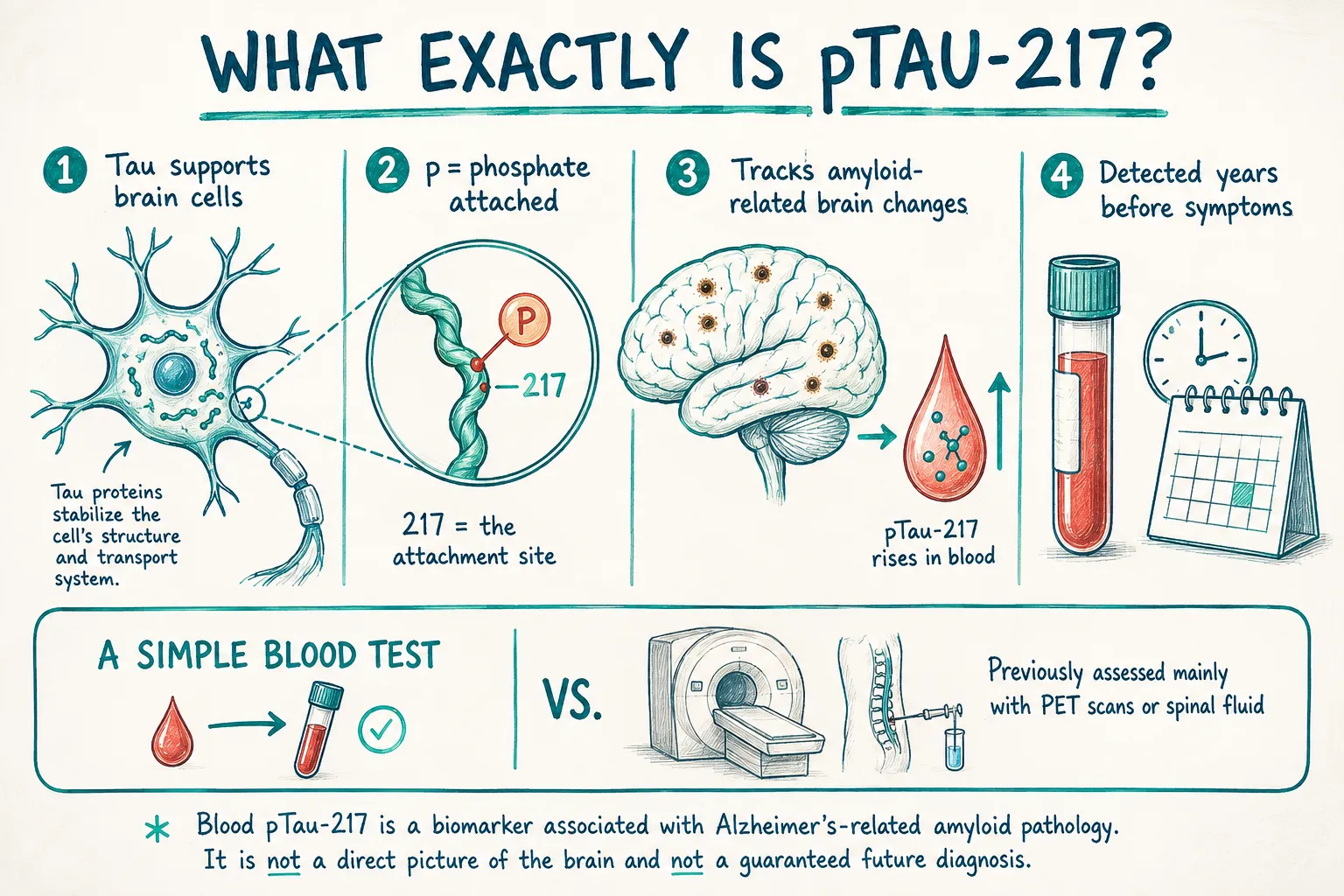
Tau is a protein found inside brain cells. In Alzheimer's disease, tau undergoes abnormal changes and can eventually form tangles that interfere with how those cells work.
The "p" stands for phosphorylated, meaning a phosphate group has attached to the tau protein. The number 217 points to the precise location where that change happened.
When Alzheimer's-related biology begins developing in the brain, levels of pTau-217 in the blood tend to rise. And although the name refers to tau, blood pTau-217 is especially good at tracking the buildup of amyloid plaques, another hallmark of Alzheimer's. Until recently, that kind of information generally required an expensive PET scan or a spinal tap.
Why pTau-217 matters for early detection
Alzheimer's-related brain changes can begin 15 to 20 years before memory problems show up, and pTau-217 may become abnormal during this preclinical period. That makes it one of the most promising tools we have for identifying Alzheimer's-related pathology before symptoms start, which is exactly when there is the most time to act.
Does an elevated pTau-217 result mean I have Alzheimer's?
No. An elevated pTau-217 result is a signal, not a diagnosis.
It suggests that Alzheimer's-related biological changes may be present and that your risk of developing cognitive symptoms is higher. It cannot tell you with certainty whether you will develop symptoms, or when. A negative result is reassuring, but it does not guarantee you will never develop Alzheimer's. It points to a lower likelihood of significant Alzheimer's-related pathology at the time you were tested.
This distinction between detection and prediction sits at the center of the current debate.
What the JAMA study actually found
In July, a JAMA study of nearly 2,700 cognitively healthy older adults found that higher pTau-217 levels were associated with faster cognitive decline and a greater chance of developing cognitive impairment. Among participants with very high levels, researchers estimated a 38% risk of cognitive impairment within five years and a 78% risk within ten years.
Those numbers understandably drew attention. But they were group-level estimates from selected research cohorts whose average age was about 70, and the researchers cautioned that the ten-year figure rested on a relatively small number of people followed for that long. It is meaningful information. It is not a personalized countdown.
Are all Alzheimer's blood tests the same?
Not quite. Several are now available, and each gives a slightly different view of Alzheimer's-related biology. Some measure pTau-217 alone, others combine it with additional markers, and each laboratory method comes with its own reference ranges and cutoffs. That makes the specific test an important part of understanding the result.
The first Alzheimer's blood test cleared by the FDA, in May 2025, measures the ratio of pTau-217 to an amyloid marker. Later that year the FDA cleared Elecsys pTau181, designed mainly to help rule out Alzheimer's-related pathology. In August 2026 it cleared PrecivityAD2, which combines several amyloid and tau measurements, followed by the newly cleared Elecsys pTau217, which measures pTau-217 alone.
These FDA clearances apply to tests used as part of a broader clinical evaluation for people who are experiencing cognitive concerns. The results are meant to be read alongside symptoms, cognitive testing, health history and other clinical information.
BetterBrain uses Quest's AD-Detect pTau-217 test, a laboratory-developed assay that uses different technology from both the newly cleared Elecsys test and the ALZpath test used in many published studies. Because each platform measures pTau-217 differently, each result is interpreted using the reference range established for that specific assay. We use the reference range provided by Quest, then interpret the result alongside cognitive testing, kidney function, other biomarkers, health history and lifestyle.
What a pTau-217 result does not tell you
Here is the part of the conversation that often gets missed. We agree with The New York Times that handing someone a frightening result without enough support can cause real distress. That does not mean the test cannot provide useful information. It means the information needs a fuller picture around it.
A pTau-217 result tells us about one part of Alzheimer's biology. It does not tell us why one person with elevated pathology develops symptoms while another stays cognitively healthy for years, and it says nothing about the many other factors shaping that person's brain health.
Those other factors carry real weight. The 2024 Lancet Commission estimated that addressing 14 modifiable risk factors across life could potentially prevent or delay around 45% of dementia cases at the population level. The U.S. POINTER randomized trial found that a program combining exercise, nutrition, cognitive and social activity, and regular health monitoring improved cognition in older adults at elevated risk. And a long-term observational study found that a healthier midlife lifestyle was associated with a lower incidence of cognitive impairment across pTau-217 levels and APOE4 status. Pathology is not the whole story. The real answers come from looking at all of your numbers together.
What should you do with a pTau-217 result?
Unlike LDL cholesterol or blood pressure, pTau-217 is not a marker you improve through one clearly established intervention. It is primarily a measurement tool.
If your level is elevated, the next step is to understand the complete picture. That may include further clinical evaluation, establishing a cognitive baseline, considering confirmatory testing, assessing eligibility for clinical trials or approved treatments when appropriate, and addressing the modifiable factors that contribute to overall dementia risk. Research into using pTau-217 to monitor treatment response is promising, though there is still a lot to learn about this relatively new test.
Why BetterBrain never offers pTau-217 alone
When we started BetterBrain, we were driven by personal experiences with Alzheimer's in our own families. We learned firsthand that brain health is not about one marker or one intervention. So we do not simply order a pTau-217 test and email you the result. We think that would be irresponsible.
We pair pTau-217 with more than 50 other brain-relevant biomarkers in our Essentials Panel, a cognitive assessment and a detailed look at your health history and lifestyle. We look under the hood for modifiable risk drivers across vascular, metabolic, inflammatory, hormonal and nutritional health. A trained clinical expert then walks you through the findings, explains what they do and do not mean, and builds a personalized action plan focused on the areas where you have the most opportunity to improve. If a result calls for more evaluation, we help you identify the right clinical next step alongside your existing doctor.
The real power does not come from one blood test. It comes from combining early detection with a much broader understanding of your biology, then turning that into meaningful action. Knowledge can be powerful, but only when you know what to do with it.
Learn about pTau-217 testing with BetterBrain, or start your brain health journey to see the full picture.
Frequently asked questions
What is pTau-217?
pTau-217 is a form of the tau protein, measurable in blood, that tends to rise as Alzheimer's-related biology develops in the brain. It is particularly good at tracking amyloid plaque buildup, a hallmark of Alzheimer's disease.
Does an elevated pTau-217 result mean I have Alzheimer's?
No. An elevated result suggests Alzheimer's-related changes may be present and that risk is higher, but it is a signal, not a diagnosis. It cannot confirm whether or when someone will develop symptoms.
Are all Alzheimer's blood tests the same?
No. Some measure pTau-217 alone and others combine it with additional markers, and each laboratory method has its own reference ranges. The specific test used is an important part of interpreting the result.
Can you lower your pTau-217?
pTau-217 is not a marker you improve through one established intervention the way you might lower LDL cholesterol. It is primarily a measurement tool. The action lives in the modifiable risk factors around it, such as vascular, metabolic and lifestyle health.
Who should consider pTau-217 testing?
It is often considered by people who want early insight into Alzheimer's-related risk, including those with a family history. It is most useful when the result is interpreted alongside cognitive testing, other biomarkers, health history and lifestyle, not in isolation.
How much does pTau-217 testing cost with BetterBrain?
The pTau-217 test is $299, offered as an add-on to a Blueprint assessment. It isn't sold on its own, and insurance doesn't cover it. See the full breakdown, including where it's available, on our pTau-217 cost page.
VERVE-102: A One-Time Gene Edit for Cholesterol, and Why It's a Brain Story | BetterBrain
One shot to lower cholesterol for life: what PCSK9 gene editing means for your brain
The short version: In the Heart-2 trial, a single infusion of a gene editing therapy called VERVE-102 lowered LDL cholesterol by up to 62% and kept it down for as long as 18 months. It is a phase 1b result in 35 people with inherited high cholesterol, so it is years away from a pharmacy. The part that matters to you now is the target. High LDL in midlife is one of the 14 modifiable dementia risk factors named by the Lancet Commission, and the particle count underneath it, ApoB, is something you can measure this month.
Most people learn their cholesterol is high at an annual physical, get told to watch it, and never find out what the number is actually doing. It is doing something to your brain.
That connection is why a cardiology result got our attention. In May 2026, researchers reported that a single infusion of a gene editing medicine lowered LDL cholesterol substantially, and that the reduction held for up to 18 months. The results were presented at the European Atherosclerosis Society Congress and published in the New England Journal of Medicine.
It is early research in a small, specific group of patients. But the biology it targets is among the most studied in all of cardiovascular medicine, and it runs straight to your brain.
What VERVE-102 actually did
Heart-2 is a phase 1b trial. The interim analysis covered 35 participants, average age 52, all with heterozygous familial hypercholesterolemia, premature coronary artery disease, or both, and all already on the maximum statin dose they could tolerate.
Each received one infusion, at doses from 0.3 to 1.0 mg/kg. The results, per Lilly's May 25, 2026 release:
- PCSK9 protein fell by 51% to 88%, depending on dose.
- LDL cholesterol fell by 9% to 62%. At the highest dose, the drop was 62%, or 78 mg/dL in absolute terms.
- Reductions were sustained, with durability observed for up to 18 months after a single treatment.
- There were no dose-limiting toxicities and no treatment-related serious adverse events. Side effects were mostly low-grade infusion reactions and fatigue. All 35 participants received their full dose and none withdrew.
One infusion. Effects still holding a year and a half later.
How PCSK9 works, in plain language
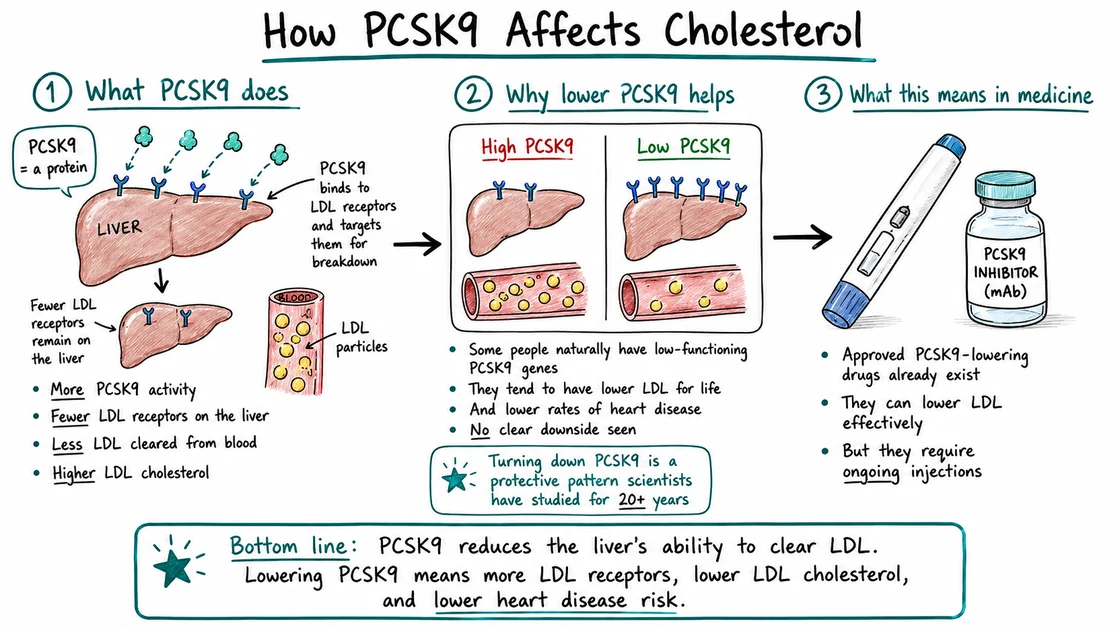
Your liver clears LDL cholesterol out of your blood using surface proteins called LDL receptors. Think of them as docking ports: the more ports available, the more LDL particles get pulled out of circulation.
PCSK9 is a protein that destroys those ports. More PCSK9 activity means fewer receptors, which means more LDL staying in your bloodstream.
Here is the part that makes this target unusually well understood. Some people are born with naturally low-functioning PCSK9 genes. They have markedly lower LDL across their entire lives and substantially lower rates of heart disease, with no apparent downside. Turning PCSK9 down is not a theory. It is a protective pattern that already exists in nature and has been studied for two decades.
Drugs that lower PCSK9 have been approved for years. What is new here is the delivery. VERVE-102 uses base editing, a precise form of gene editing, to make a single change to the PCSK9 gene inside liver cells. The goal is to do once, permanently, what existing drugs do by repeated injection.
The honest caveats
This headline is easy to over-read. The careful version:
It is a phase 1b trial. That stage is designed mainly to test safety and look for early signals in a small number of people. It has not been shown to prevent heart attacks, strokes, or cognitive decline. A phase 2 trial is the next step, with enrollment planned by the end of 2026.
It is a specific patient group. Everyone enrolled had an inherited form of very high cholesterol or early coronary artery disease and needed aggressive LDL lowering despite maximum oral therapy. These are not general-population results.
Gene editing is a young field. The PCSK9 mechanism is exceptionally well characterized, which is reassuring. Making a permanent edit to a gene is still new, and the long-term safety record takes years to build. Approval, if it comes, will likely start with very high-risk patients such as those with familial hypercholesterolemia, and the price is likely to be high.
It is years away. Nobody should be adjusting their plan today on the expectation that this arrives soon.
Why cholesterol is a brain story, not only a heart story
Brain health is whole-body health, and few things connect the two as directly as lipids.
ApoB is the number underneath LDL
You have probably heard of LDL cholesterol. ApoB is the more precise measurement sitting beneath it.
Every LDL particle carries exactly one ApoB protein. So LDL-C tells you how much cholesterol is being carried inside LDL particles, while ApoB tells you how many particles there actually are. Since it is the particles that lodge in artery walls and start plaque, ApoB is the better predictor of risk. When the two numbers disagree, ApoB is the one to trust.
Among BetterBrain clients, 86% come back with a suboptimal ApoB. It is the single most commonly out-of-range marker we see, and most people have never had it measured.
The Lancet Commission added LDL to the dementia list in 2024
The blood vessels feeding your brain are subject to the same lipid-driven damage as the ones feeding your heart, and that vascular damage is one of the major pathways of cognitive decline.
This is no longer a fringe position. In its 2024 update, the Lancet Commission on dementia prevention added high midlife LDL cholesterol as one of 14 modifiable risk factors, based on cohort studies covering more than a million participants plus a Mendelian randomization meta-analysis of 27 studies. The Commission attributes 7% of preventable dementia to high LDL alone, and links nearly half of dementia cases to the 14 factors combined.
High cholesterol in your forties and fifties is now formally a brain risk factor, not only a heart one.
If you carry APOE4
People who carry an APOE4 variant tend to run higher LDL, and APOE4 is the strongest common genetic risk factor for Alzheimer's disease. That combination is one reason lipid management is a core part of what we do, and one reason knowing your genotype can change what you prioritize rather than just giving you something to worry about.
The bigger picture
Between therapies like this one and the medications already on the shelf, the tools for managing cardiovascular disease are getting very good, and they will keep improving. But adding years to your life is only worth so much if your brain is not working well for those years. That is the conversation most people are not having yet, and it is the one that matters most to us.
What this means for you, right now
You do not have to wait for a therapy that is years away. The target itself, your lipid health, is measurable and movable today.
- Get ApoB tested, not just standard cholesterol. A routine lipid panel gives you total cholesterol, LDL, HDL, and triglycerides. ApoB counts the particles actually driving damage and is rarely ordered unless you ask for it. It is one of the most informative single markers for both heart and brain health.
- Treat lipids as a lifelong number, not a yearly one. The PCSK9 story works precisely because it lowers exposure over decades. Risk accumulates the same way. Small, steady improvements compound in your favor, and starting earlier is worth more than starting perfectly.
- Use the levers you already have. Diet, regular movement, and, where your physician recommends them, proven lipid-lowering medications all work today. Statins and existing PCSK9 inhibitors are not placeholders waiting for gene editing. They are the current standard of care.
- Look at the whole vascular picture. ApoB, Lp(a), triglycerides, blood pressure, and HbA1c interact. One number in isolation rarely tells you what to do first.
ApoB is one of the 50+ biomarkers in the BetterBrain panel, alongside homocysteine, hs-CRP, Lp(a), HbA1c and the rest of the vascular and metabolic markers. See everything we test.
Common questions
Is PCSK9 gene editing available now?
No. VERVE-102 is in phase 1b trials. A phase 2 trial is planned to begin enrolling by the end of 2026, and broad availability is years out. If it is approved, the first patients are likely to be people with familial hypercholesterolemia or other very high-risk conditions.
What is the difference between ApoB and LDL cholesterol?
LDL-C measures the amount of cholesterol carried inside LDL particles. ApoB measures the number of those particles, because each one carries exactly one ApoB protein. Two people can have the same LDL-C with very different particle counts. When the two disagree, ApoB is the better predictor of cardiovascular and cerebrovascular risk.
Does lowering cholesterol reduce dementia risk?
The 2024 Lancet Commission identified high midlife LDL cholesterol as one of 14 modifiable dementia risk factors and attributes 7% of preventable dementia to it. That is an association drawn from large cohort and genetic studies, not proof that lowering LDL prevents dementia in any individual. What is well established is that lipid-driven damage to blood vessels is one of the major pathways of cognitive decline, and that the vessels feeding your brain are affected the same way as the ones feeding your heart.
Should I get an ApoB test?
ApoB is not part of a standard lipid panel and usually has to be requested. It is most informative if you have a family history of early heart disease or dementia, if your LDL and triglycerides do not line up, if you carry an APOE4 variant, or if you simply want a clearer read than total cholesterol gives you. Discuss it with your physician or your Brain Health Coach.
Does BetterBrain test ApoB?
Yes. ApoB is included in the BetterBrain biomarker panel, which covers 50+ markers selected for their connection to brain health, across metabolic, cardiovascular, hormonal, inflammation, and nutrient categories. Blueprint is $89 with insurance and $399 without, and includes a cognitive assessment and an up-to-90-minute session with a Brain Health Coach who turns the results into a personalized action plan.
The bottom line
A one-time gene editing infusion produced large, durable reductions in LDL cholesterol in an early trial, by copying a protective genetic pattern that already exists in nature. It is not available, it is not proven to prevent anything yet, and it will not be in a clinic near you for years.
What is available is the target. Your lipid numbers are one of the few brain risk factors you can measure precisely, act on immediately, and improve over decades. Whatever arrives in five or ten years, the decades in between are the ones you protect now.
Fasting Insulin and Brain Health: The Metabolic Marker Most Physicals Skip
Key takeaways
- Fasting insulin usually moves before fasting glucose. Glucose tells you the result. Insulin tells you the effort behind it.
- In BetterBrain's dashboard, optimal fasting insulin is below 6 mcIU/mL. The fair range runs from 6 to 19.6.
- Higher fasting insulin has been associated with roughly double the Alzheimer's risk in adults 65 and older, with the strongest association in people who did not have diabetes.
- Metabolic syndrome has been associated with a 24% higher risk of young-onset dementia, with a dose response as components accumulate.
- These are observational findings. They establish association, not cause.
- Most standard panels stop at glucose and HbA1c. Fasting insulin is inexpensive and is included in BetterBrain's Essentials panel.
For most people, metabolic health shows up as one line on a lab report. Fasting glucose, 94 mg/dL, flagged normal, nothing to discuss, see you next year.
That reading is accurate. But fasting glucose is also one of the last things to change. Your body can spend years quietly working to hold that number in range, and the work it does to hold it is where the brain story actually starts.
What is fasting insulin?
Fasting insulin measures how much insulin your pancreas is releasing to keep your blood sugar steady after an overnight fast.
Insulin is the hormone that moves glucose out of your bloodstream and into your cells. A fasting insulin test tells you how much of that hormone your body needs to hold a normal blood sugar level while you are not eating. A low number means your cells are responding easily. A higher number means your body is working harder to reach the same result.
In your BetterBrain dashboard, the optimal range for fasting insulin is below 6 mcIU/mL. Above 6, and into the fair range of 6 to 19.6, the picture starts to shift.
The distinction that matters: glucose tells you the result, insulin tells you the effort behind it.
Why your glucose can look normal for years
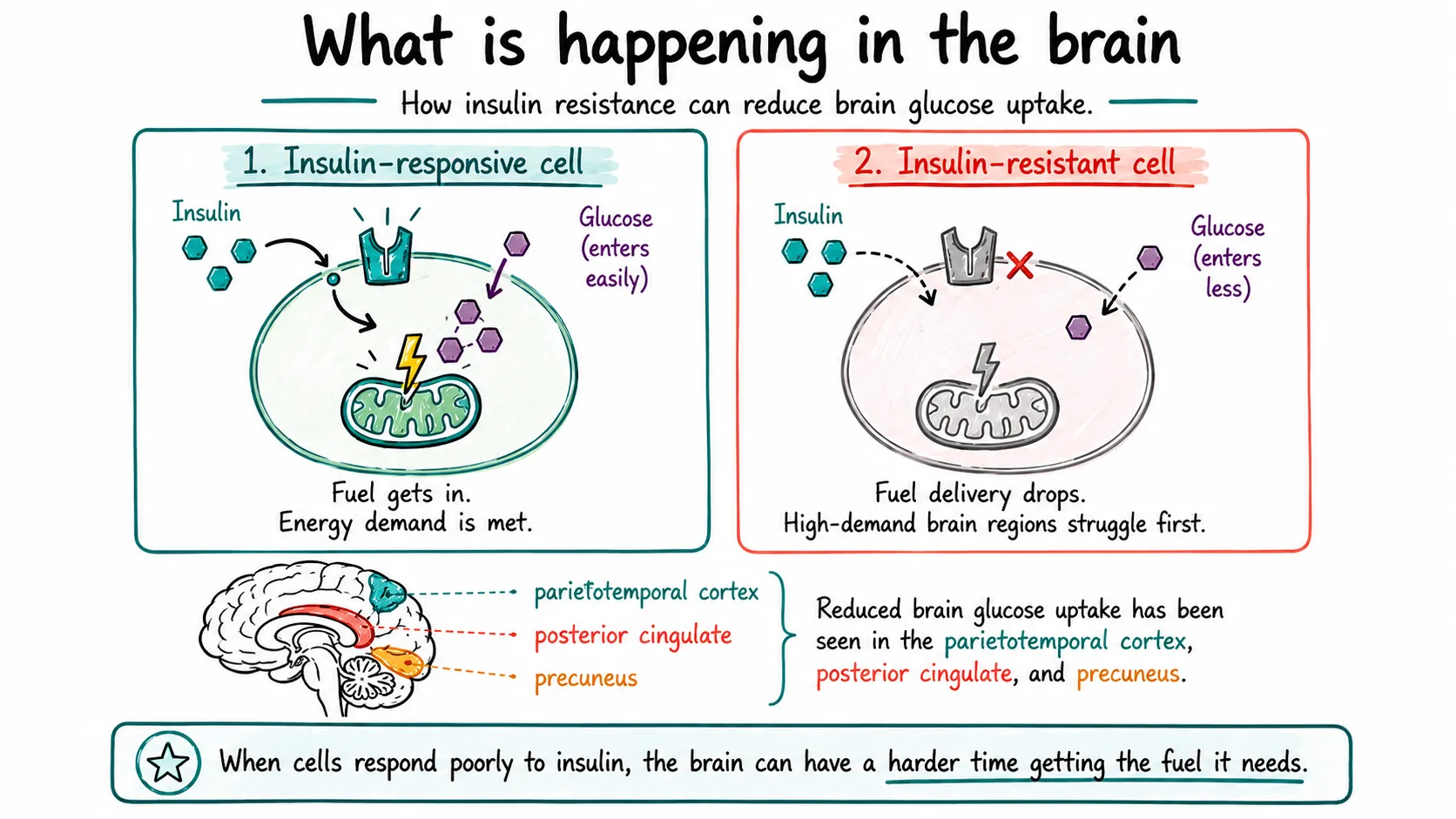
When cells stop responding well to insulin, the pancreas compensates by producing more of it. Glucose can stay in range through that entire process, sometimes for years, while insulin climbs in the background.
This is why a single normal glucose reading is an incomplete picture. It is a true measurement of an outcome, not a measurement of how much work went into producing that outcome.

Fasting insulin can rise years before glucose looks abnormal.
What the research says about insulin and the brain
Older adults: Alzheimer's risk roughly doubled
In a study published in Neurology, researchers tracked 683 adults aged 65 and older for nearly 3,700 person-years. Alzheimer's risk roughly doubled among people with hyperinsulinemia, and the association was strongest in people who did not have diabetes.
That last detail is the important one. The association was not explained by diabetes being present.
Midlife: the same pattern, six years later
In the ARIC cohort, adults aged 45 to 64 had fasting insulin measured at baseline. Six years later, higher baseline insulin predicted greater decline in delayed word recall and verbal fluency.
The authors described insulin resistance as a potentially modifiable midlife risk factor. That phrase matters because it points at what you can do about it.
A note on complexity
Very low fasting insulin has also been associated with risk in some long follow-up studies, so the relationship is not a straight line. This is exactly why we read insulin alongside glucose, HbA1c, and the rest of the domain rather than treating any single number as a verdict.
What is actually happening in your brain
Your brain is roughly 2% of your body weight and uses about 20% of your resting energy, almost all of it from glucose. Getting that fuel where it needs to go depends on insulin signaling working.
A systematic review of 23 imaging studies covering 5,308 participants found that insulin resistance was associated with reduced glucose uptake in the brain across 22 of 23 studies. The regions involved, the parietotemporal cortex, posterior cingulate, and precuneus, are the same areas that show reduced metabolism in Alzheimer's disease. Some of those associations appeared in people who were cognitively normal at the time of scanning.
Cells that respond poorly to insulin have a harder time pulling in fuel. Consequently, the parts of your brain with the highest energy demand are the ones affected first.
Metabolic syndrome and dementia risk: when the components stack
A 2025 study in Neurology followed nearly 2 million Korean adults aged 40 to 60 for an average of 7.8 years.
Metabolic syndrome, defined as three or more of excess belly fat, high blood pressure, elevated fasting glucose, elevated triglycerides, and low HDL, was associated with a 24% higher risk of young-onset dementia. Each component added to the effect, and participants with all five had roughly 70% higher risk.
Two things worth noting: the association was stronger in people in their 40s than in their 50s, and stronger in women (34%) than in men (15%).
This is observational research, which establishes association, not cause. It is one national population, and the researchers could not account for APOE status. What it does establish clearly: the direction of the effect, a dose response across components, and earlier timing than most people assume.
The metabolic health domain: which markers we read together
When we assess metabolic health at BetterBrain, it is one of the ten health domains we track. We read a group of markers together rather than checking any one off in isolation:
GroupMarkersWhat it tells youGlucose controlFasting glucose, HbA1c, fasting insulinHow easily your body manages fuelLipid loadTriglycerides, ApoBHow much lipid your system is carryingLiver stressALT, ASTHow much metabolic work your liver is absorbingNutrient statusVitamin D, B12, folateWhether you have the raw materials to make and use energy
Any one of these can look unremarkable on its own. Read together, they tell you something a single value can't: whether your body is handling fuel comfortably, or working hard to look like it is.
What you can do
Test your fasting insulin, not just glucose. Most standard panels stop at fasting glucose and HbA1c. Fasting insulin tends to move first, it is inexpensive, and it is included in the 50+ biomarkers in the BetterBrain Essentials panel.
Move after you eat. A short walk in the hour after a meal meaningfully blunts the glucose rise. This is one of the higher-return habits in the metabolic domain because it costs almost nothing. One BetterBrain client liked the idea enough to build a free app for it, called Exercise Snacks for Health & Wellbeing.
Build meals around protein and fiber before the starch. Same food, different order, measurably flatter glucose response. Vegetables and protein first, then the carbohydrate portion.
Finish eating three to four hours before bed. Late meals land against a window when insulin sensitivity is at its lowest. Moving dinner earlier is one of the easiest and most impactful techniques to manage glucose spikes.
Retest and see it move. Fasting insulin and triglycerides respond within weeks. HbA1c takes two to three months to reflect a real change. Knowing which to watch first keeps you from concluding too early that nothing is happening.
Frequently asked questions
Can you have insulin resistance with normal blood sugar?
Yes. When cells stop responding well to insulin, the pancreas compensates by producing more of it, which can hold glucose in the normal range for years. Fasting glucose is typically one of the last metabolic markers to change, which is why a normal reading does not rule out insulin resistance.
What is a good fasting insulin level?
In BetterBrain's dashboard, the optimal range for fasting insulin is below 6 mcIU/mL, with a fair range of 6 to 19.6. Reference ranges vary between labs, and fasting insulin should be interpreted alongside fasting glucose and HbA1c rather than on its own.
Is fasting insulin included in a standard blood panel?
Usually not. Most standard panels stop at fasting glucose and HbA1c. Fasting insulin generally has to be requested specifically. It is included in BetterBrain's Essentials panel of 50+ biomarkers.
Does insulin resistance affect the brain?
Research as associated insulin resistance with reduced glucose uptake in the brain. A systematic review of 23 imaging studies covering 5,308 participants found this association in 22 of the 23 studies, in the parietotemporal cortex, posterior cingulate, and precuneus. Some of those associations appeared in people who were cognitively normal at the time of scanning. These are observational findings.
How quickl can fasting insulin improve?
Fasting inslin and triglycerides can respond within weeks. HbA1c reflects roughly two to three months of glucose exposure, so it takes longer to show a real change. Knowing which marker moves first prevents you from concluding too early that nothing is working.
What is metaolic syndrome?
Metabolic synrome is defined as having three or more of the following: excess belly fat, high blood pressure, elevated fasting glucose, elevated triglycerides, and low HDL cholesterol. A 2025 study of nearly 2 million adults associated it with a 24% higher risk of young-onset dementia, with risk increasing as more components were present.
The bottom line
Metabolic health is not a number you pass or fail. It is a set of markers that move together, and it is the domain where what you do this month shows up in your labs this quarter.
If you have not seen your full metabolic picture, that is a good place to start. Blueprint includes 50+ biomarkers, a consultation of up to 90 minutes with a brain health expert, and a personalized action plan ranked by impact. $89 with insurance, $399 cash pay.
Already have your results? View your metabolic markers to see where you sit and which techniques your Brain Health Coach recommends first.
.webp)
How to Personalize Your Brain Health Plan With Your Own Data
How to Personalize Your Brain Health Plan With Your Own Data
Most brain health advice is useful, but it is also designed for the average person.
Sleep more. Move often. Eat a nutritious diet. Manage stress. Build strength.
These fundamentals matter. But they cannot tell you which risk factors deserve the most attention, what may be changing in your body, or whether your current routine is producing the results you want.
Personalized brain health guidance uses your own labs, health history, sleep, activity, habits, and goals to help determine where to focus first.
BetterBrain members can now bring more of that information into My Vault, the health data home inside the BetterBrain platform. You can upload previous lab results, connect wearable data, and import relevant health context from an AI assistant such as ChatGPT, Claude, or Gemini.
All three tools are available free across BetterBrain accounts.
Why Does Generic Brain Health Advice Have a Ceiling?
General health advice tells you what tends to help people on average. It cannot tell you which intervention is likely to matter most for you.
Two people can follow the same routine and have very different needs because they begin with different:
- Biomarker levels
- Genetics and family histories
- Sleep patterns
- Activity levels
- Medical histories
- Medications and supplements
- Diets, habits, and goals
One person may need to focus on improving sleep consistency. Another may already sleep well but have an elevated cardiovascular risk marker that deserves more attention. A third may be exercising regularly but not recovering adequately.
That is why personalization matters. It helps turn broad recommendations into clearer priorities.
Research has also found that multidomain brain health interventions tailored to individual risk profiles can produce better cognitive outcomes than general health information alone. You can read the randomized controlled trial published in Nature Medicine here.
What Is Personalized Brain Health Guidance?
Personalized brain health guidance applies current research to information about your own health.
Instead of simply telling everyone that sleep is important, personalized guidance can consider:
- How much you are actually sleeping
- Whether your sleep duration or consistency is changing
- How your sleep relates to your activity and recovery
- Whether your current protocol appears to be helping
- Which other risk factors may deserve attention
Personalization does not replace the fundamentals. It helps identify which fundamentals matter most for you, where to begin, and what to monitor over time.
How Does My Vault Help Personalize Your Brain Health Plan?
My Vault brings several sources of health information together inside your BetterBrain account.
You can use it to:
- Upload previous laboratory results
- Connect sleep and activity data from a wearable
- Import relevant health context from another AI assistant
Together, these tools give BeBe, BetterBrain’s AI brain health coach, a more complete picture of your health and goals.
Upload Past Lab Results and Track Changes Over Time
A single laboratory result is only a snapshot. The trend often provides more useful context.
If you have previous results stored in a patient portal, computer folder, email, or paper file, you can upload them to My Vault as a PDF or image. BetterBrain can extract the biomarker results and display them alongside your current numbers.
Tracking results over time can help you understand:
- Whether a biomarker is moving in the desired direction
- Whether a change is new or part of a longer pattern
- How your results respond to changes in your routine
- Whether an intervention appears to be working
- Which markers may deserve further discussion with your clinician
For example, a cholesterol result may appear acceptable when viewed alone. But seeing several years of results together could reveal that the number has been steadily increasing or improving.
Your brain health plan should respond to what is changing, not just what appeared on one test.
Link Your Wearable Data
Questionnaires capture what you remember. Wearables can capture what is happening each day.
If you use a fitness tracker or smartwatch, you can connect it to BetterBrain through the BeBe app and Apple Health. You choose which information you want to share, and you can change the permissions or disconnect the integration at any time.
Depending on your device and permissions, wearable data may provide useful context about:
- Sleep duration
- Sleep consistency
- Daily movement
- Exercise
- Heart rate
- Recovery patterns
- Changes in routine
This can make guidance more specific.
Instead of receiving another reminder that sleep is important, you may be able to see that your sleep duration is adequate but inconsistent, or that your activity has declined over the past several weeks.
The goal is not to obsess over every daily number. It is to recognize meaningful patterns that may otherwise be easy to miss.
Import Your AI Memory
Many people already use ChatGPT, Claude, or Gemini to discuss their health, routines, goals, and preferences.
You may have already told an AI assistant about:
- Your health history
- Current symptoms or concerns
- Injuries
- Medications and supplements
- Family medical history
- Exercise habits
- Diet
- Sleep
- Health goals
- How you prefer advice to be delivered
- Strategies you have already tried
You can now bring that context into BetterBrain instead of starting from the beginning.
Visit Import AI Memory inside My Vault. You will see a prompt that you can open or paste into the AI assistant you use. The assistant will organize the relevant information it knows about you. You can then review the response and paste it into BetterBrain.
The process takes about a minute.
Once imported, BeBe can begin with more context about your history, preferences, goals, and previous efforts.
How Is BeBe Different From ChatGPT, Claude, or Gemini?
General AI assistants draw from broad knowledge across an enormous range of subjects. Their responses are also largely shaped by what you choose to tell them in each conversation.
BeBe is built specifically for brain health. It is grounded in brain health research that has been reviewed and interpreted by BetterBrain’s scientists and clinicians.
BeBe can then apply that specialized knowledge to information within your BetterBrain account, including:
- Your laboratory history
- Wearable sleep and activity data
- Health profile
- Current brain health protocol
- Uploaded documents
- Coaching insights
- Imported health context
- Personal goals and preferences
The distinction is specialized brain health science combined with your personal data.
A general assistant may repeat common recommendations. BeBe is designed to help you understand how the evidence relates to your own risks, results, and priorities.
Is My Health Information Private?
Your imported information stays private to your account and is used to personalize your guidance.
You control what you upload, what wearable information you share, and whether you want to delete information later. Wearable permissions can also be changed or turned off at any time.
Only import information you are comfortable storing in your BetterBrain account.
How Do I Get Started With My Vault?
You do not need to complete everything at once.
Start with whichever option is easiest:
- Upload one previous lab report.
- Connect your wearable through the BeBe app and Apple Health.
- Import relevant health context from ChatGPT, Claude, or Gemini.
- Review your health profile and current protocol.
- Ask BeBe what patterns or priorities stand out.
All three personalization tools are available with a free Self Directed BetterBrain account.
Members who want to go further can also purchase laboratory testing through Blueprint or enroll in the BetterBrain Coaching Program.
Frequently Asked Questions About Personalized Brain Health Guidance
What is personalized brain health guidance?
Personalized brain health guidance applies scientific evidence to information about your individual labs, health history, sleep, activity, habits, risk factors, and goals. It helps identify which actions may deserve the most attention for you.
What is BetterBrain My Vault?
My Vault is the health data home within your BetterBrain account. It allows you to upload lab reports and other files, complete your health profile, record your current protocol, connect wearable data, and import relevant health context from another AI assistant.
Why should I upload previous lab results?
Previous results help establish a trend. Comparing multiple tests over time can show whether a biomarker is improving, worsening, or remaining stable.
What wearable data can BetterBrain use?
Available data depends on your device and Apple Health permissions. It may include sleep, activity, exercise, heart rate, and other daily health metrics.
Can I control which wearable information I share?
Yes. You choose which Apple Health categories to share and can update your permissions or disconnect the integration later.
What does importing AI memory mean?
Importing AI memory means asking ChatGPT, Claude, or Gemini to summarize relevant information it already knows about your health, preferences, habits, and goals. You can review that response before pasting it into BetterBrain.
Does BetterBrain automatically access my ChatGPT or Claude conversations?
No. You choose what to export, review the response, and manually paste it into BetterBrain.
How long does it take to import AI memory?
The process typically takes about a minute. BetterBrain provides a prompt that helps your existing AI assistant organize the relevant information.
Are the My Vault personalization tools free?
Yes. Uploading previous labs, connecting wearable data, and importing AI memory are available across BetterBrain accounts, including free Self Directed accounts.
Does BeBe replace a doctor?
No. BeBe provides educational brain health guidance and helps you understand your data and potential priorities. It does not replace medical diagnosis, treatment, or care from a licensed healthcare professional.
Get immediate insights with a 3 minute assessment
Start now.webp)
GreyMatters
Grey Matters: What happens when brain health coaching actually clicks
The idea that changed everything
Exercise snacks. Short, two-minute movement breaks sprinkled throughout the day, designed to keep your body active and your brain engaged without requiring a gym, a plan, or even a change of clothes.
For Kate, who has ADHD and had always found traditional exercise routines overwhelming, this landed differently than most wellness advice. As she puts it, going to the gym always felt like too many steps, and even home workouts were hard to start. But the idea of standing up once an hour, moving for two minutes, and sitting back down? That felt doable. She built the habit into her coaching Action Plan, and those small bursts of movement started adding up across the day.
Then she started thinking bigger. What if someone is on an airplane and can't do floor exercises? What about people in wheelchairs, or people who are bed-bound and need gentle ways to stay active? What about someone in a professional setting who wants something more meditative, like tai chi? She kept imagining more situations, more people who could benefit, and eventually she thought: wouldn't it be great if there were an app built entirely around this?
So she built one herself
Kate had never written a line of code. She's comfortable with email, Google products, and Zoom, and that's about it. But she started watching YouTube tutorials on using AI to build apps, taught herself how to use a computer terminal along the way, and over the course of about a month designed, built, and shipped a fully functional app to the App Store.
The app is calledExercise Snacks for Health & Wellbeing, and it's free. It sends hourly movement reminders, offers exercises for different settings and mobility levels, and tracks your activity so you can watch those two-minute sessions add up across the day. She uses it herself every day, and she also published a companion book (free with Kindle unlimited).
Cognitive Engagement
Here's something worth noting: the process of learning to build the app may have been just as good for Kate's brain as the exercise snacks themselves. Research consistently shows that picking up unfamiliar, challenging skills is one of the most powerful ways to build cognitive reserve and support long-term brain health. It's why Learn is one of BetterBrain's 12 core brain health practices. Working through frustration, solving new problems, and learning something completely outside your comfort zone is exactly the kind of stimulation your brain thrives on. Kate came to BetterBrain looking for answers about movement and ended up giving her brain a workout in two completely different ways.
Why we wanted to share this
Because the science only matters when someone picks it up and does something with it. Kate worked with a coach, understood what her body and brain needed, and took one piece of her plan and turned it into something that could help thousands of other people move more throughout their day. That's exactly what this whole approach is designed to make possible.
Huge kudos to Kate. And hopefully her story inspires you to try something new, whether that's exercise snacks, a skill you've been putting off, or finally booking that first coaching session.
Know someone who might benefit from BetterBrain?
Share this referral link and they'll get Essentials labs (50+ biomarkers) for just $39 (normally $89), plus access to $0 coaching with insurance.
Grey Matters: One coach’s most effective brain health strategies
Meet Sarah Ferreira, MS, MPH, RD, IFNCP: Brain Health Coach
Sarah Ferreira, MS, MPH, RD, IFNCPis an integrative and functional dietitian with dual master's degrees in Nutrition and Public Health, plus additional training in applied neuroscience and brain health. Her clinical interests include dementia prevention, neurological conditions, thyroid and digestive health, and the psychology of eating behavior.
Sarah's career spans inpatient clinical nutrition, eating disorder treatment, community nutrition with WIC, and 1:1 and group work at the Cleveland Clinic Center for Functional Medicine. She's passionate about helping people build confidence through knowledge and celebrating strategic successes over time.
Outside of her professional life, Sarah can often be found with a stack of library books, at a flamenco dance class, or spending time outdoors with her young son. She believes the fullest life is best lived with strong black coffee, flavorful curries, and mango in just about any form.
Sarah's Top Recommendations
Her new favorite brain health technique:
"My new favorite brain health technique is supplementing with Magnesium L-Threonate, a form of magnesium with some evidence of the ability to cross the blood brain barrier more efficiently than other types. I love it because it supports clearer thinking, better focus, and a calmer nervous system without feeling sedating. It's become a simple daily ritual that I plan to keep!"
Here's one of our favorite magnesium picks.
A simple strategy that's been especially effective for clients:
"Sleep troubles are so frustrating, and make it much more difficult to focus, maintain healthy blood sugar, and keep energy levels up. A simple strategy I've been talking about with clients who struggle with sleep is lowering the room temperature at night.
As bedtime approaches, core body temperature should drop; a cooler environment reinforces this process and signals the brain that it's time to wind down. Sleeping in a cooler room, typically around 60 to 67°F, has been shown to promote deeper slow wave sleep and reduce nighttime awakenings. A cooler setting can also prevent overheating, which is a common disruptor of REM sleep. Altogether, adjusting the thermostat is a simple, evidence aligned way to improve both the depth and consistency of your sleep."
A mindset shift that makes a big difference:
"Shifting away from 'ideal or nothing' thinking can be incredibly freeing and supportive of long term success. When clients think in extremes like 'I need to be at the gym for 45 minutes in order to exercise,' or 'If I can't do this perfectly, it's pointless,' I encourage them to think about the next best step and adopt a mindset of purposeful experimentation as they try out new things.
Over time and with consistency, small wins accumulate and foster self compassion, shape our sense of self, increase motivation, and create a positive sense of control over our brain health."
Her go-to brain boosting ritual:
"My go to brain boosting ritual is early morning movement. In the winter, I notice the best benefits for mood and mental clarity with a challenging Pilates session, weight lifting, and indoor cycling. It feels like a major win if I can get it done before my toddler wakes up!"
What she's most excited about in brain health research:
"I'm really excited about the ongoing accumulation of evidence around nutrition and brain health. Studies increasingly show that long term, nutrient dense eating patterns can support memory, focus, and even slow age related cognitive decline. Key nutrients like omega 3 fatty acids, antioxidants, and choline appear to protect neurons, reduce inflammation, and support healthy brain signaling.
What I find especially uplifting is how practical and adaptable these findings are, both for personal habits and for guiding clients. Framing food as a tool for cognitive resilience makes healthy eating feel meaningful and empowering, rather than restrictive."
Content Corner
Huberman Lab: Nutrients For Brain Health & Performance
Bottom line: This Huberman Labs episode is a practical companion to what Sarah shared about nutrition and brain health. Dr. Andrew Huberman, Stanford neuroscientist, breaks down the specific nutrients proven to support brain function, both for immediate cognitive performance and long term brain health.
The episode covers ten science supported tools, starting with the fact that fat is the most important element for brain function because it provides the structural building blocks for neurons. Huberman explains that omega 3 fatty acids, particularly DHA, are essential for brain health, with foods like salmon, mackerel, and sardines being top sources. He recommends 1.5 to 2 grams of DHA daily for those not consuming enough fish.
Beyond omega 3s, he dives into choline (500mg to 1g daily), which supports focus by providing the substrate for acetylcholine, a key neurotransmitter. He also covers anthocyanins from blueberries (60 to 120 grams of fresh berries daily has been shown to enhance cognition in older adults), phosphatidylserine for reducing cognitive decline, and creatine for brain energy, particularly beneficial for those who don't eat meat.
The key insight? Huberman emphasizes that the goal is to get proper nutrients via food first, then use supplements as a backup. He also explores something fascinating: how we can actually rewire our food preferences toward healthier choices by understanding the gut brain connection and the psychology of taste. Our brains can learn to crave the foods that are good for us.
BetterBrain Takeaway:The nutrients Huberman highlights, omega 3s, choline, and antioxidants, are exactly the ones Sarah mentioned being excited about. Whether you're looking to optimize focus now or protect your brain for the long term, this episode offers specific, actionable guidance on what to eat and how much.
Grey Matters: What Sardinians can teach us about brain health
What Makes Sardinia Special
Sardinia is one of five validated Blue Zones, geographically defined areas with disproportionately high concentrations of people living past 100. The others are Okinawa (Japan), Nicoya (Costa Rica), Ikaria (Greece), Loma Linda (California), and Singapore (the most recent addition).
What makes Sardinia particularly fascinating is the male-to-female centenarian ratio: approximately one-to-one, unlike most populations where women vastly outnumber men among centenarians. This gender parity suggests environmental and lifestyle factors, not just genetics, drive exceptional longevity.
The Mediterranean Diet: What the Science Shows
The Mediterranean dietary pattern is central to Blue Zone longevity. Here's what actually matters:
Olive oil is the cornerstone. Extra virgin olive oil is linked to improved cognitive function and a lower risk of cognitive decline in elderly populations. The magic is in the polyphenols, compounds that reduce lipid peroxidation and increase cellular glutathione, enhancing protection against oxidative damage.
Fish and omega-3s provide neuroprotection. Omega-3 fatty acids abundant in fish and nuts have powerful anti-inflammatory properties. Mediterranean populations eat fish multiple times weekly.
Plant-based foods deliver antioxidant firepower. Vegetables, fruits, and whole grains are rich in flavonoids and bioactive compounds with antioxidant and anti-inflammatory properties.
Coffee and tea matter too. A recent JAMA study of 131,821 participants over up to 43 years found higher caffeinated coffee intake was associated with 18% lower dementia risk, with the sweet spot at 2-3 cups daily. Notably, decaffeinated coffee showed no protective effect, suggesting caffeine itself provides neuroprotection.
The complete lifestyle formula: Sardinians don't just eat well. They engage in constant movement through shepherding, farming, gardening, and walking rather than isolated gym sessions. They remain close with friends and family throughout their lives, gathering to laugh together. Laughter reduces stress, which can lower cardiovascular disease risk.
The diet works through multiple mechanisms, exerting protective effects through vasoprotective and neuroprotective pathways that deliver anti-aging benefits to both vascular cells and central nervous system cells. It counteracts mitochondrial dysfunction, oxidative stress, and chronic inflammation (the cellular processes driving brain aging).
Experience Sardinia's Secrets Firsthand with Dr. Annie Fenn
Dr. Annie Fenn is a physician, chef, and leading voice in brain-health nutrition. Through her Substack and bestselling book Brain Health Kitchen, she's made the science of brain-protective eating accessible and delicious for thousands of people. Her approach combines rigorous research with practical cooking techniques, making Mediterranean dietary patterns achievable in everyday life.
This October 12-18, 2026, Dr. Fenn is leading Sardinia's Secrets for a Long and Healthy Life, an immersive retreat in one of the world's original Blue Zones.
Set on the island of Sardinia, this experience blends science-backed education with pure Italian joy: trekking and e-biking, olive oil tasting, cooking with locals, and unforgettable meals rooted in the traditional Mediterranean pattern.
Along the way, you'll be learning practical tools from Dr. Fenn that you can apply to your own brain-healthy lifestyle back home. Learn more and reserve your spot here, or call 877-298-9677.
We're huge supporters of the impact Dr. Fenn is having in the brain health community. Her science-backed techniques align with what we believe about prevention and personalized nutrition. That's why we're thrilled to be a founding sponsor of her new podcast,The Brain Health Kitchen Podcast.This season features BetterBrain's own co-founder Cedric Gousseau, Chief Science Officer, Dr. Tommy Wood, and brain health coach Barbie Boules, among other guests, sharing their expertise on brain-healthy nutrition and lifestyle.
What You Can Do
You don't need to move to Sardinia to benefit (although Dr. Fenn's retreat seems like the perfect compromise). Here's how to implement these patterns on your own:
Build your diet around Mediterranean staples:
Use extra virgin olive oil as your primary fat (2-4 tablespoons daily). Eat fish 2-3 times weekly (salmon, sardines, mackerel). Fill half your plate with vegetables and fruits. Choose whole grains, beans, and legumes. Limit red meat to a few times monthly. Enjoy 2-3 cups of coffee or 1-2 cups of tea daily.
Move constantly: Take walking meetings. Use stairs, garden, cook from scratch. Build activity into daily tasks rather than treating exercise as something separate from life.
Prioritize social connection: Share regular meals with family and friends. Maintain multi-generational relationships. Laugh regularly.
Explore brain-healthy nutrition in your BetterBrain Dashboard. Get personalized guidance on implementing Mediterranean dietary patterns based on your biomarkers, genetics, and health goals.
Bottom Line
Sardinian longevity is about comprehensive lifestyle: Mediterranean dietary patterns rich in olive oil, fish, and plants; constant movement; deep social connections; and purpose. The evidence is strong, the mechanisms are understood, and the principles are implementable today.
Ready to live like a Sardinian and build your brain health foundation? BetterBrain helps you identify and implement the dietary and lifestyle interventions that matter most for your biology. Our coaches create personalized protocols based on your biomarkers, genetics, and health goals.
Grey Matters: The four Essential Techniques our coaches keep recommending
Move Practice: The post meal walk
Maggie works with clients across the metabolic-health side of our client base. The trend she keeps seeing: HbA1c and fasting insulin numbers creeping into pre-diabetic ranges, often without the client realizing it. Many of them are exercising, but most of them are not walking after meals.
"Ten minutes after each meal. That is the rule I get the highest compliance on, because nobody can argue they don't have ten minutes. And it does more than people expect."
The evidence behind post meal walks is broad and the bar to entry is low. A short walk after eating blunts the post-meal glucose spike. Repeated over months, it is one of the most reliable ways we have seen to shift HbA1c, fasting insulin, and the metabolic conditions that drive midlife brain atrophy. The cost is nothing, the schedule disruption is minimal, and the long-term payoff compounds. It is essential because it works for almost everyone.
Sleep Practice: Consistent wake time and morning light
Emily works with a large share of our clients who came to BetterBrain because of family history of dementia. The trend she keeps seeing: anxious clients arriving with long supplement lists, wanting to talk about pTau-217 and APOE4, while sleeping six or fewer hours a night.
"One night of four hours isn't really the question. The question is why someone is typically sleeping four or five hours at most. Patterns matter. What we identify from the first visit and where we end up is more than one night of poor sleep. Sleep is the foundation. Exercise goals, stress management, eating, they all land once sleep patterns are optimized."
The Essential Technique Emily points to first is in our Sleep Practice: a consistent wake time paired with morning light. The reason this is essential for almost everyone is the glymphatic system. Sleep is the period during which the brain runs its only clearance system, including the clearance of amyloid. A consistent wake time anchors the circadian rhythm, and morning light reinforces it. The evidence is strong, the intervention is free, and it works for clients in their 30s and their 70s.
Move Practice: Strength Training
Wendy works with many of our clients in their late fifties and sixties. The trend she keeps seeing: clients who are doing aerobic exercise faithfully, often three or four days a week, and skipping strength training entirely.
“I’m flexible with many aspects of a health plan, but strength training is one area I strongly encourage people not to overlook. The research connecting muscle mass and brain health after 50 is incredibly compelling, and maintaining strength now can have a major impact on long-term health and quality of life.”
Strength training is another Essential Technique in our Move Practice. The reason it is essential, not optional: muscle is the primary site of glucose disposal in the body, the pathways linked to neurogenesis are responsive to resistance training, and sarcopenia is one of the strongest predictors of cognitive decline in older adults. The evidence supports two sessions a week, moderate intensity, sustained for at least six months. Bodyweight work and resistance bands are enough to start. The technique is essential because everyone past 30 is slowly losing muscle, and the cost of skipping it is too high.
Supplement Practice: Methylated B Vitamins
Another trend we keep seeing across our client base: people arriving with homocysteine in the 11 to 14 range, told by their primary care that it is fine. The gap between what is flagged at most labs and what is optimal for brain health is one of the cleanest examples of where our framework differs from standard care.
The optimal range for homocysteine is under 9 μmol/L. Most labs flag a result only above 15. The 9 to 14 range is where a meaningful number of clients are quietly carrying elevated risk that has been waved off. A methylated B-complex moves the marker for the majority of clients within three months, and the cognitive payoff is real.
The Essential Technique in our Eat Practice is targeted methylated B-complex supplementation. The reason this is essential for almost everyone has to do with the underlying biology. Homocysteine is cleared through methylation pathways that depend on the active forms of folate, B12, and B6. A significant portion of the population carries variants of the MTHFR gene that reduce how well the body converts standard folic acid into the active form.
Methylated B-complexes deliver the active forms directly. For anyone over 40 thinking about long-term brain health, this is one of the highest-leverage interventions available.
What the pattern reveals
Across our coaches with different specialties and different client populations, the same Essential Techniques keep coming up. These are the techniques that consistently move the needle, regardless of who is doing them. What our coaches actually do day to day is build action plans that span the full technique library: prioritizing among the Essentials and layering in the context-dependent techniques that fit each client’s panel and life.
The Essentials are universal. The action plan is personal.
If you are thinking about long-term brain health, the Essential Techniques are the highest-leverage place to start. They are the techniques our clinical advisors backed because the evidence is strong and they work for almost everyone.
If you’d like a quick read on which Essential Techniques to prioritize based on what you are already doing, take the free Essential Scan. Open to anyone, whether you’re already a BetterBrain client or just starting.
If you’d like a deeper personalized action plan, BetterBrain coachingpairs you with a Brain Health Coach who builds the plan with you based on your biology and lifestyle.
How to Personalize Your Brain Health Plan With Your Own Data
How to Personalize Your Brain Health Plan With Your Own Data
Most brain health advice is useful, but it is also designed for the average person.
Sleep more. Move often. Eat a nutritious diet. Manage stress. Build strength.
These fundamentals matter. But they cannot tell you which risk factors deserve the most attention, what may be changing in your body, or whether your current routine is producing the results you want.
Personalized brain health guidance uses your own labs, health history, sleep, activity, habits, and goals to help determine where to focus first.
BetterBrain members can now bring more of that information into My Vault, the health data home inside the BetterBrain platform. You can upload previous lab results, connect wearable data, and import relevant health context from an AI assistant such as ChatGPT, Claude, or Gemini.
All three tools are available free across BetterBrain accounts.
Why Does Generic Brain Health Advice Have a Ceiling?
General health advice tells you what tends to help people on average. It cannot tell you which intervention is likely to matter most for you.
Two people can follow the same routine and have very different needs because they begin with different:
- Biomarker levels
- Genetics and family histories
- Sleep patterns
- Activity levels
- Medical histories
- Medications and supplements
- Diets, habits, and goals
One person may need to focus on improving sleep consistency. Another may already sleep well but have an elevated cardiovascular risk marker that deserves more attention. A third may be exercising regularly but not recovering adequately.
That is why personalization matters. It helps turn broad recommendations into clearer priorities.
Research has also found that multidomain brain health interventions tailored to individual risk profiles can produce better cognitive outcomes than general health information alone. You can read the randomized controlled trial published in Nature Medicine here.
What Is Personalized Brain Health Guidance?
Personalized brain health guidance applies current research to information about your own health.
Instead of simply telling everyone that sleep is important, personalized guidance can consider:
- How much you are actually sleeping
- Whether your sleep duration or consistency is changing
- How your sleep relates to your activity and recovery
- Whether your current protocol appears to be helping
- Which other risk factors may deserve attention
Personalization does not replace the fundamentals. It helps identify which fundamentals matter most for you, where to begin, and what to monitor over time.
How Does My Vault Help Personalize Your Brain Health Plan?
My Vault brings several sources of health information together inside your BetterBrain account.
You can use it to:
- Upload previous laboratory results
- Connect sleep and activity data from a wearable
- Import relevant health context from another AI assistant
Together, these tools give BeBe, BetterBrain’s AI brain health coach, a more complete picture of your health and goals.
Upload Past Lab Results and Track Changes Over Time
A single laboratory result is only a snapshot. The trend often provides more useful context.
If you have previous results stored in a patient portal, computer folder, email, or paper file, you can upload them to My Vault as a PDF or image. BetterBrain can extract the biomarker results and display them alongside your current numbers.
Tracking results over time can help you understand:
- Whether a biomarker is moving in the desired direction
- Whether a change is new or part of a longer pattern
- How your results respond to changes in your routine
- Whether an intervention appears to be working
- Which markers may deserve further discussion with your clinician
For example, a cholesterol result may appear acceptable when viewed alone. But seeing several years of results together could reveal that the number has been steadily increasing or improving.
Your brain health plan should respond to what is changing, not just what appeared on one test.
Link Your Wearable Data
Questionnaires capture what you remember. Wearables can capture what is happening each day.
If you use a fitness tracker or smartwatch, you can connect it to BetterBrain through the BeBe app and Apple Health. You choose which information you want to share, and you can change the permissions or disconnect the integration at any time.
Depending on your device and permissions, wearable data may provide useful context about:
- Sleep duration
- Sleep consistency
- Daily movement
- Exercise
- Heart rate
- Recovery patterns
- Changes in routine
This can make guidance more specific.
Instead of receiving another reminder that sleep is important, you may be able to see that your sleep duration is adequate but inconsistent, or that your activity has declined over the past several weeks.
The goal is not to obsess over every daily number. It is to recognize meaningful patterns that may otherwise be easy to miss.
Import Your AI Memory
Many people already use ChatGPT, Claude, or Gemini to discuss their health, routines, goals, and preferences.
You may have already told an AI assistant about:
- Your health history
- Current symptoms or concerns
- Injuries
- Medications and supplements
- Family medical history
- Exercise habits
- Diet
- Sleep
- Health goals
- How you prefer advice to be delivered
- Strategies you have already tried
You can now bring that context into BetterBrain instead of starting from the beginning.
Visit Import AI Memory inside My Vault. You will see a prompt that you can open or paste into the AI assistant you use. The assistant will organize the relevant information it knows about you. You can then review the response and paste it into BetterBrain.
The process takes about a minute.
Once imported, BeBe can begin with more context about your history, preferences, goals, and previous efforts.
How Is BeBe Different From ChatGPT, Claude, or Gemini?
General AI assistants draw from broad knowledge across an enormous range of subjects. Their responses are also largely shaped by what you choose to tell them in each conversation.
BeBe is built specifically for brain health. It is grounded in brain health research that has been reviewed and interpreted by BetterBrain’s scientists and clinicians.
BeBe can then apply that specialized knowledge to information within your BetterBrain account, including:
- Your laboratory history
- Wearable sleep and activity data
- Health profile
- Current brain health protocol
- Uploaded documents
- Coaching insights
- Imported health context
- Personal goals and preferences
The distinction is specialized brain health science combined with your personal data.
A general assistant may repeat common recommendations. BeBe is designed to help you understand how the evidence relates to your own risks, results, and priorities.
Is My Health Information Private?
Your imported information stays private to your account and is used to personalize your guidance.
You control what you upload, what wearable information you share, and whether you want to delete information later. Wearable permissions can also be changed or turned off at any time.
Only import information you are comfortable storing in your BetterBrain account.
How Do I Get Started With My Vault?
You do not need to complete everything at once.
Start with whichever option is easiest:
- Upload one previous lab report.
- Connect your wearable through the BeBe app and Apple Health.
- Import relevant health context from ChatGPT, Claude, or Gemini.
- Review your health profile and current protocol.
- Ask BeBe what patterns or priorities stand out.
All three personalization tools are available with a free Self Directed BetterBrain account.
Members who want to go further can also purchase laboratory testing through Blueprint or enroll in the BetterBrain Coaching Program.
Frequently Asked Questions About Personalized Brain Health Guidance
What is personalized brain health guidance?
Personalized brain health guidance applies scientific evidence to information about your individual labs, health history, sleep, activity, habits, risk factors, and goals. It helps identify which actions may deserve the most attention for you.
What is BetterBrain My Vault?
My Vault is the health data home within your BetterBrain account. It allows you to upload lab reports and other files, complete your health profile, record your current protocol, connect wearable data, and import relevant health context from another AI assistant.
Why should I upload previous lab results?
Previous results help establish a trend. Comparing multiple tests over time can show whether a biomarker is improving, worsening, or remaining stable.
What wearable data can BetterBrain use?
Available data depends on your device and Apple Health permissions. It may include sleep, activity, exercise, heart rate, and other daily health metrics.
Can I control which wearable information I share?
Yes. You choose which Apple Health categories to share and can update your permissions or disconnect the integration later.
What does importing AI memory mean?
Importing AI memory means asking ChatGPT, Claude, or Gemini to summarize relevant information it already knows about your health, preferences, habits, and goals. You can review that response before pasting it into BetterBrain.
Does BetterBrain automatically access my ChatGPT or Claude conversations?
No. You choose what to export, review the response, and manually paste it into BetterBrain.
How long does it take to import AI memory?
The process typically takes about a minute. BetterBrain provides a prompt that helps your existing AI assistant organize the relevant information.
Are the My Vault personalization tools free?
Yes. Uploading previous labs, connecting wearable data, and importing AI memory are available across BetterBrain accounts, including free Self Directed accounts.
Does BeBe replace a doctor?
No. BeBe provides educational brain health guidance and helps you understand your data and potential priorities. It does not replace medical diagnosis, treatment, or care from a licensed healthcare professional.
The Glymphatic System: Why Deep Sleep Is Your Brain's Best Cleanup Tool
Featured System: How Your Brain Takes Out the Trash
Every other tissue in your body has lymphatic vessels to carry away metabolic waste. For a long time the brain was thought to be the exception, with no obvious plumbing for the job. That changed in 2013, when researchers described what’s now called the glymphatic system: a network that uses cerebrospinal fluid to flush waste out of brain tissue, including amyloid-beta and tau, the proteins that accumulate in Alzheimer’s disease.
The finding that reshaped how we think about sleep came alongside it. Glymphatic clearance is not constant. It ramps up dramatically during deep, slow-wave sleep, when the spaces between brain cells expand and fluid can move through more freely. This is one of the clearest biological reasons that sleep is not optional maintenance. It is when a specific, measurable cleanup process actually runs.
So the existence of the system is well established. The question researchers have kept working on is mechanical: what physically moves the fluid?
What the newer research adds
A 2025 study in Cell from Maiken Nedergaard’s group (one of the labs behind the original glymphatic work) helps answer that question. In mice, the team showed that during deep sleep a small brainstem region called the locus coeruleus releases norepinephrine in slow, rhythmic waves, roughly one every fifty seconds. Each wave gently tightens and relaxes the blood vessels, and that slow oscillation appears to act like a pump, driving cerebrospinal fluid through the brain to move waste along.
It’s an elegant result because it connects three things we already knew were related (deep sleep, blood-vessel tone, and fluid clearance) into a single mechanism. It reframes deep sleep not as the brain idling, but as the brain running a coordinated pump.
Two points of rigor worth keeping straight, because they change how much weight any single study can carry:
- This is animal research. The norepinephrine-wave mechanism has been demonstrated in mice, whose sleep biology is a strong but imperfect model for ours. It tells us how the system likely works; it is not a human clinical trial.
- And the same study raised a careful question about sleep medication. The researchers found that zolpidem (the active ingredient in Ambien) suppressed these norepinephrine waves in mice and reduced fluid flow. That is a genuinely interesting signal, but it is a finding in animals about a mechanism, not evidence that a prescription harms people. If you take a sleep aid, this is not a reason to stop. It is a reason to make the underlying sleep quality a real conversation with your doctor.
Bottom Line: The glymphatic system and its dependence on deep sleep are well established. The newer work gives us a plausible engine for it, the slow norepinephrine rhythm of deep sleep, and a reminder that how you sleep, not just how long, is what lets the system do its job.
What this means for you
None of this requires a new gadget or supplement. It reinforces the fundamentals, and gives you a sharper reason to take them seriously.
Protect the deep-sleep window. Slow-wave sleep is concentrated in the first half of the night. A consistent wake time, morning light exposure, and a cool, dark room are the most reliable ways to protect it.
Be honest about alcohol and late meals. Both fragment the deep-sleep stages where clearance is most active. You may fall asleep fine and still lose the part of the night that matters most here.
Treat sleep as something you can measure. The same way we track a biomarker, sleep consistency and quality are worth paying attention to over time rather than guessing at.
Take loud snoring or daytime exhaustion seriously. These can signal sleep apnea, which repeatedly interrupts the deep sleep this system depends on, and it is both common and treatable. It’s worth flagging to a clinician.
Keep prescriptions in your doctor’s hands. If you use a sleep medication, bring the goal of better sleep quality to your prescriber rather than changing anything on your own.
Your BetterBrain coach can help you turn any of this into a specific, trackable Sleep Practice rather than a vague intention to "sleep better."